Loading...
Done
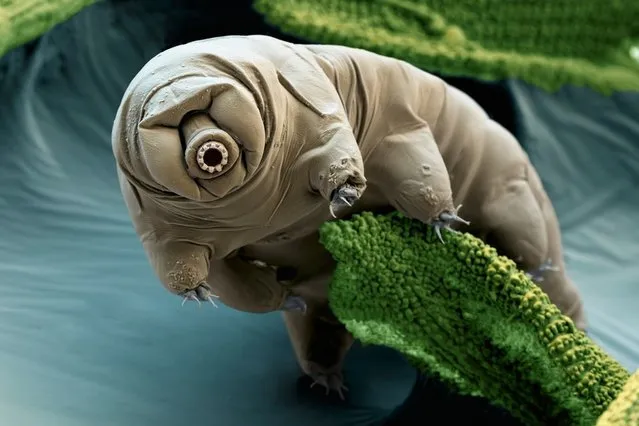
Tardigrades (commonly known as waterbears or moss piglets). (Photo by SPL/East News)

“Tardigrades (commonly known as waterbears or moss piglets) are small, water-dwelling, segmented animals with eight legs. Tardigrades were first discovered in 1773 by Johann August Ephraim Goeze, who called them kleiner Wasserbär, meaning “little water bear” in German. The name Tardigrada means “slow walker” and was given by Lazzaro Spallanzani in 1777. The name water bear comes from the way they walk, reminiscent of a bear's gait. The biggest adults may reach a body length of 1.5 millimetres (0.059 in), the smallest below 0.1 mm. Freshly hatched tardigrades may be smaller than 0.05 mm”. – Wikipedia. Photo: Tardigrades. (Photo by SPL/East News)
Details
26 Sep 2012 09:55:00
Las Vegas

circa 1930: The neon illuminations of a wedding Chapel in Las Vegas.
Details
19 Mar 2011 09:41:00
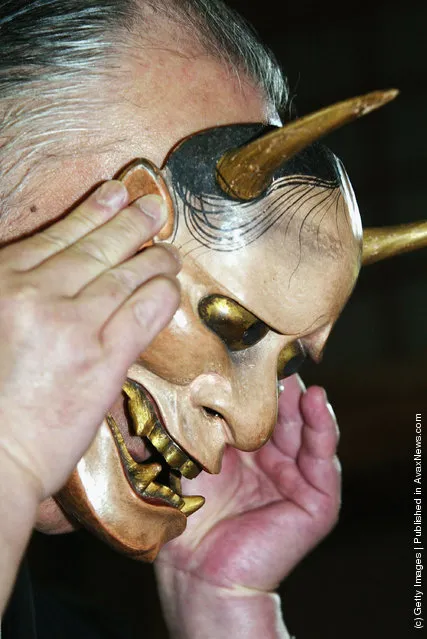
A renowned Noh actor, Otoshige Sakai, demostrates how to put on a Noh mask

“Noh, or Nogaku – derived from the Japanese word for “skill” or “talent” – is a major form of classical Japanese musical drama that has been performed since the 14th century. Many characters are masked, with men playing male and female roles. Traditionally, a Noh “performance day” lasts all day and consists of five Noh plays interspersed with shorter, humorous kyōgen pieces. However, present-day Noh performances often consist of two Noh plays with one Kyōgen play in between”. – Wikipedia

Photo: A renowned Noh actor, Otoshige Sakai, demostrates how to put on a Noh mask, on May 17, 2004 in Tokyo, Japan. (Photo by Koichi Kamoshida/Getty Images)
Details
02 Aug 2011 14:09:00
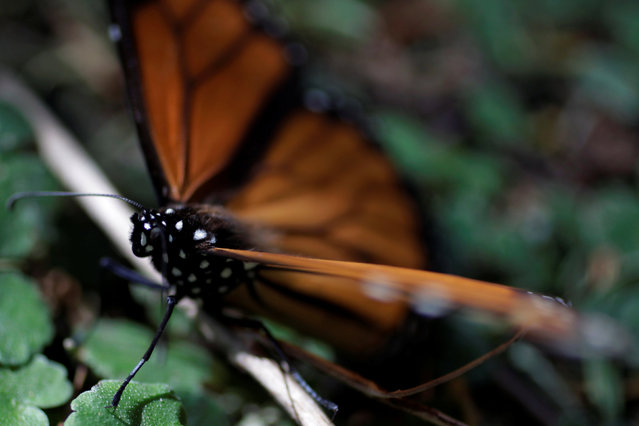
A monarch butterfly rests on the ground at the Sierra Chincua butterfly sanctuary on a mountain in Angangeo, Michoacan November 24, 2016. Angangueo is a town and municipality located in far eastern Michoacán state in central Mexico noted for its history of mining and its location in the Monarch Butterfly Biosphere Reserve. The Monarch Butterfly Biosphere Reserve is a World Heritage Site containing most of the over-wintering sites of the eastern population of the monarch butterfly. The reserve is located in the Trans-Mexican Volcanic Belt pine-oak forests ecoregion on the border of Michoacán and State of Mexico, 100 km (62 miles), northwest of Mexico City. Millions of butterflies arrive in the reserve annually. Butterflies only inhabit a fraction of the 56,000 hectares of the reserve from October–March. (Photo by Carlos Jasso/Reuters)

A monarch butterfly rests on the ground at the Sierra Chincua butterfly sanctuary on a mountain in Angangeo, Michoacan November 24, 2016. Angangueo is a town and municipality located in far eastern Michoacán state in central Mexico noted for its history of mining and its location in the Monarch Butterfly Biosphere Reserve. The Monarch Butterfly Biosphere Reserve is a World Heritage Site containing most of the over-wintering sites of the eastern population of the monarch butterfly. (Photo by Carlos Jasso/Reuters)
Details
26 Nov 2016 10:20:00
Chinese actress Fan Bingbing poses on the champagne-colored red carpet during the Oscars arrivals at the 95th Academy Awards in Hollywood, Los Angeles, California, U.S., March 12, 2023. (Photo by Mario Anzuoni/Reuters)

Chinese actress Fan Bingbing poses on the champagne-colored red carpet during the Oscars arrivals at the 95th Academy Awards in Hollywood, Los Angeles, California, U.S., March 12, 2023. (Photo by Mario Anzuoni/Reuters)
Details
14 Mar 2023 05:19:00
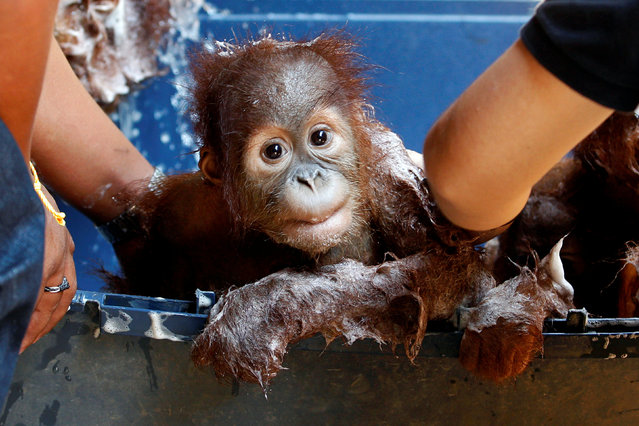
A baby Sumatran orangutan is bathed after arriving at a wildlife center at Ratchaburi province in Thailand  September 13, 2017. (Photo by Kerek Wongsa/Reuters)

A baby Sumatran orangutan is bathed after arriving at a wildlife center at Ratchaburi province in Thailand September 13, 2017. (Photo by Kerek Wongsa/Reuters)
Details
17 Sep 2017 07:39:00
A boy bursts a soap-bubble at Gorky Park in Moscow on July 19, 2017. (Photo by Mladen Antonov/AFP Photo)

A boy bursts a soap-bubble at Gorky Park in Moscow on July 19, 2017. (Photo by Mladen Antonov/AFP Photo)
Details
13 Dec 2017 07:30:00
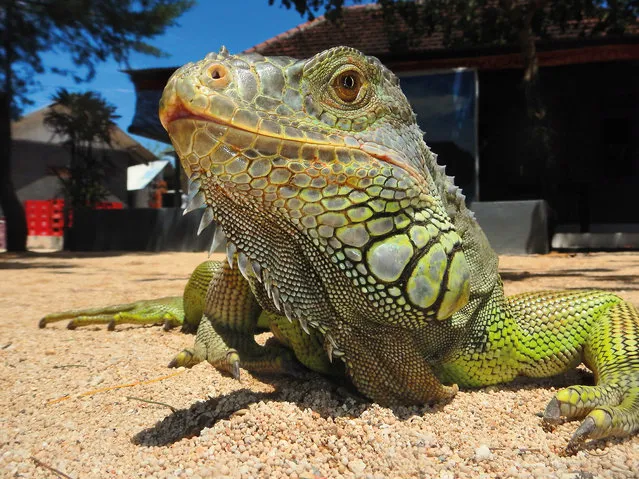
An iguana in Bali helped Julij Kopilović, age eight, from Slovenia, earn second runner-up in Amazing Animals. (Photo by Julij Kopilović/National Geographic)

An iguana in Bali helped Julij Kopilović, age eight, from Slovenia, earn second runner-up in Amazing Animals. (Photo by Julij Kopilović/National Geographic)
Details
04 Feb 2016 11:15:00