Loading...
Done
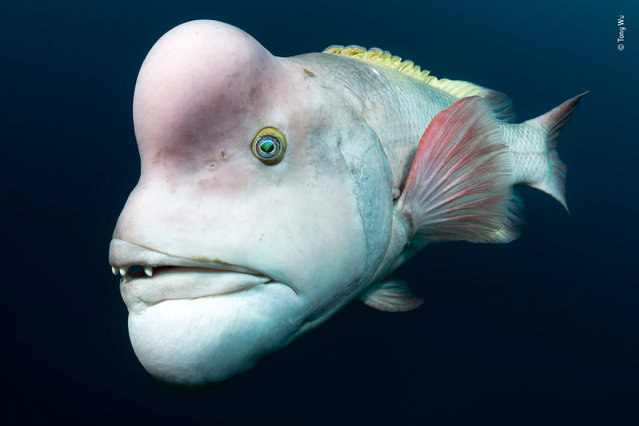
Looking for love by Tony Wu, USA. Highly commended, Animal Portraits. “Accentuating his mature appearance with pastel colours, protruding lips and an outstanding pink forehead, this Asian sheepshead wrasse sets out to impress females and see off rivals, which he will head-butt and bite, near Japan’s remote Sado Island. Individuals start out as females, and when they reach a certain age and size – up to a metre (more than 3 feet) long – can transform into males. Long-lived and slow-growing, the species is intrinsically vulnerable to overfishing”. (Photo by Tony Wu/2018 Wildlife Photographer of the Year)

Looking for love by Tony Wu, USA. Highly commended, Animal Portraits. “Accentuating his mature appearance with pastel colours, protruding lips and an outstanding pink forehead, this Asian sheepshead wrasse sets out to impress females and see off rivals, which he will head-butt and bite, near Japan’s remote Sado Island. Individuals start out as females, and when they reach a certain age and size – up to a metre (more than 3 feet) long – can transform into males. Long-lived and slow-growing, the species is intrinsically vulnerable to overfishing”. (Photo by Tony Wu/2018 Wildlife Photographer of the Year)
Details
03 Sep 2018 08:17:00
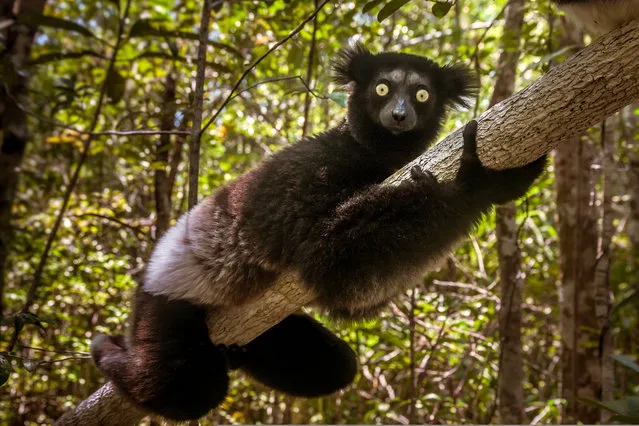
The secretive indri (Indri indri) of Madagascar, the largest living lemur. It is also critically endangered and highly evolutionarily distinct with no close relatives, which makes its branch one of most precarious on the mammal evolutionary tree. In the likely event that the indri goes extinct, we will lose 19m years of unique evolutionary history from the mammal tree of life. (Photo by Pierre-Yves Babelon/Aarhus University)

The secretive indri (Indri indri) of Madagascar, the largest living lemur. It is also critically endangered and highly evolutionarily distinct with no close relatives, which makes its branch one of most precarious on the mammal evolutionary tree. In the likely event that the indri goes extinct, we will lose 19m years of unique evolutionary history from the mammal tree of life. (Photo by Pierre-Yves Babelon/Aarhus University)
Details
18 Nov 2018 00:02:00
“The Storm”. During I was taking photo with my nephew, the storm came and I caught this beautiful moment. Photo location: Kocaeli, Turkey. (Photo and caption by Aytül Akbaş/National Geographic Photo Contest)

Honorable Mention: “The Storm”. During I was taking photo with my nephew, the storm came and I caught this beautiful moment. Photo location: Kocaeli, Turkey. (Photo and caption by Aytül Akbaş/National Geographic Photo Contest)
Details
28 Dec 2014 10:58:00
Children play near an apartment complex on the outskirts of Yangon, Myanmar on July 29, 2019. (Photo by Sai Aung Main/AFP Photo)

Children play near an apartment complex on the outskirts of Yangon, Myanmar on July 29, 2019. (Photo by Sai Aung Main/AFP Photo)
Details
10 Aug 2019 00:01:00
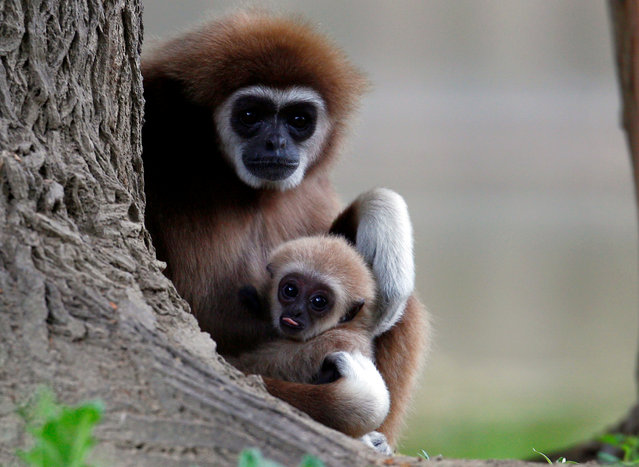
A first white-handed gibbon infant born at the Skopje Zoo is seen with his mother in Skopje, North Macedonia on May 9, 2019. (Photo by Ognen Teofilovski/Reuters)

A first white-handed gibbon infant born at the Skopje Zoo is seen with his mother in Skopje, North Macedonia on May 9, 2019. (Photo by Ognen Teofilovski/Reuters)
Details
12 May 2019 00:03:00
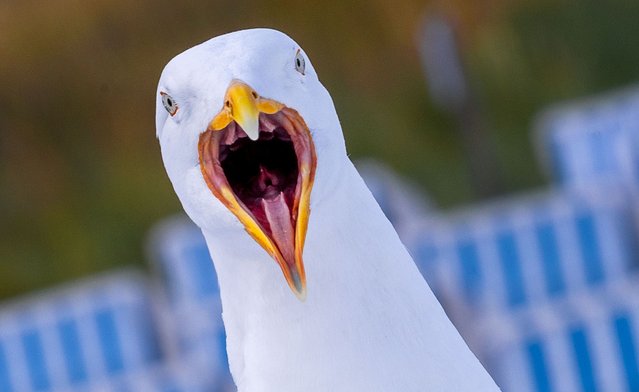
A gull gives its familiar cry on the roof of a beach bar on the Baltic coast on July 16, 2024. (Photo by Jens Büttner/dpa)

A gull gives its familiar cry on the roof of a beach bar on the Baltic coast on July 16, 2024. (Photo by Jens Büttner/dpa)
Details
28 Jul 2024 04:59:00
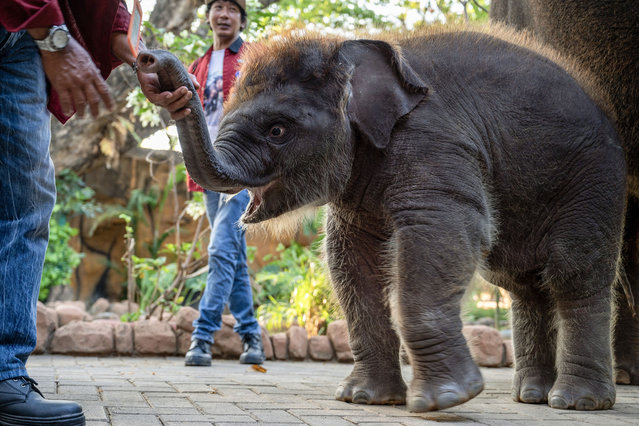
A male Sumatran elephant calf named Rocky Balboa, born on May 25, 2024, stands next to its mother, a 40-year-old elephant named Lembang, at the Surabaya Zoo during the introduction of the 3-month-old calf to the public in Surabaya on August 31, 2024. (Photo by Juni Kriswanto/AFP Photo)

A male Sumatran elephant calf named Rocky Balboa, born on May 25, 2024, stands next to its mother, a 40-year-old elephant named Lembang, at the Surabaya Zoo during the introduction of the 3-month-old calf to the public in Surabaya on August 31, 2024. (Photo by Juni Kriswanto/AFP Photo)
Details
15 Sep 2024 04:20:00
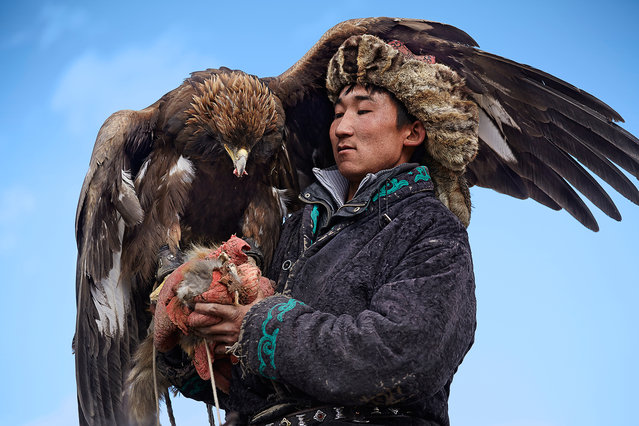
In one of the planet’s most desolate and harsh terrains, the Altai Mountains which run from Siberia in Russia down to Mongolia’s Gobi Desert, hunting with eagles is currently only practiced by a handful of Kyrgyz and Kazakhs. This form of falconry, the practice of hunting with the aid of birds of prey, can be traced back as far as 4,000 years in Central Asia. (Photo by Tariq Zaidi/The Washington Post)

In one of the planet’s most desolate and harsh terrains, the Altai Mountains which run from Siberia in Russia down to Mongolia’s Gobi Desert, hunting with eagles is currently only practiced by a handful of Kyrgyz and Kazakhs. This form of falconry, the practice of hunting with the aid of birds of prey, can be traced back as far as 4,000 years in Central Asia. Here: after a successful hunt, a proud hunter rewards his eagle by feeding it the lungs of the prey, which is considered the most highly prized part of the animal. (Photo by Tariq Zaidi/The Washington Post)
Details
22 Aug 2015 12:46:00