A firefighter passes through fire in a firefighting drill on December 7, 2021 in Aba Tibetan and Qiang Autonomous Prefecture, Sichuan Province of China. (Photo by Zeng Peng/VCG via Getty Images)
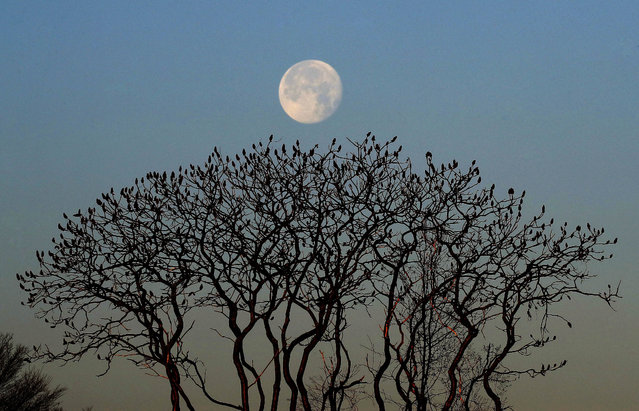
The waning moon sets behind leafless sumac trees on a crisp, clear morning, Thursday, December 15, 2016, in Portland, Maine. Much of the northern Mid-Atlantic and Northeast will stay cold for the next couple of days as the arctic air remains stuck over the northern Appalachians, the National Weather Service said. (Photo by Robert F. Bukaty/AP Photo)
Bangladeshi artists wear floral attire as they join celebrations of the spring festival “Basanta Utsav” at the Faculty of Fine Arts of the University of Dhaka, in Bangladesh, 14 February 2024. The Bashanta Utshab, or Spring Festival, is a local traditional festival which marks the beginning of the Spring Season while young people also celebrate it along with Valentine's Day. (Photo by Monirul Alam/EPA/EFE)
Kyrgyz girls pose in traditional costumes during the Nowruz celebration in Bishkek, Kyrgyzstan, 20 March 2024. Nowruz is the Persian New Year celebrated by various ethnic groups worldwide and it traditionally marks the first day of spring. (Photo by Igor Kovalenko/EPA/EFE)
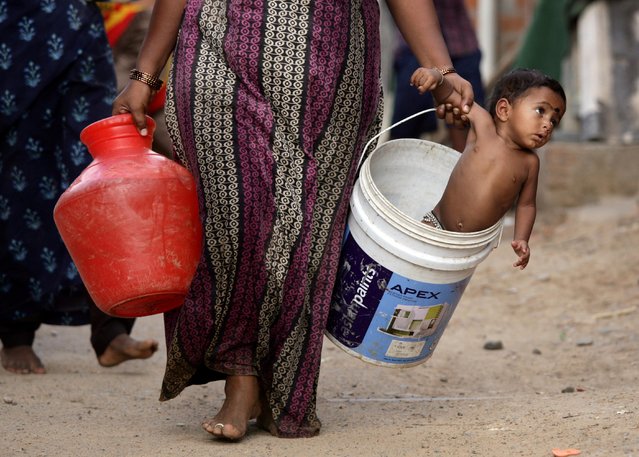
A woman carries her son in a bucket after collecting water from a municipal water tanker on the outskirts of Chennai, India, July 4, 2019. (Photo by P. Ravikumar/Reuters)
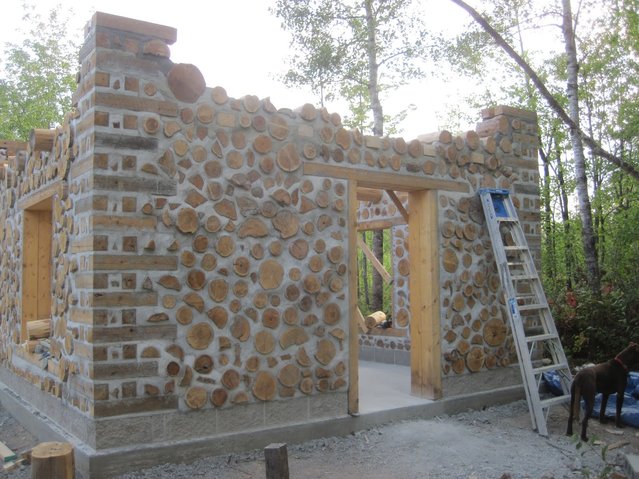
Cordwood construction is a method of natural building that originated roughly one thousand years ago in Greece and Siberia. This method involves using pieces of wood that slightly protrude from the mortar, giving the walls an attractive appearance. Usually, the walls are made 12 to 24 inches thick. However, in some parts of Canada, the walls can be as thick as 36 inches. This method appeals to many people due to its ease of construction economy of resources. Cordwood Construction can be separated into two main types: mortar-insulation-mortar (M-I-M) and Throughwall. M-I-M is a more preferable and widely used choice as it allows for better insulating properties.
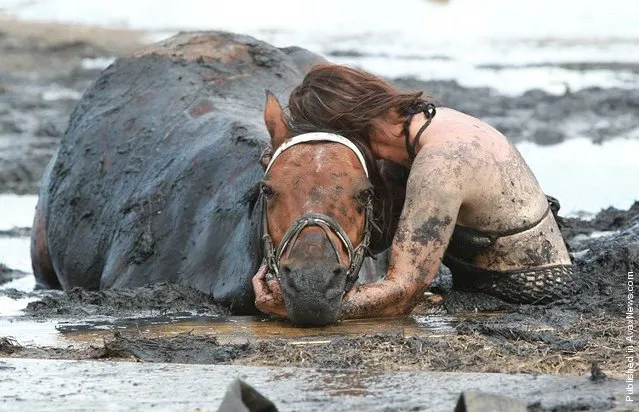
Owner Nicole Graham works with volunteers from CFA and SES tries to dig out her horse “Astro” who became stuck up to his neck in mud at Avalon Beach on February 26, 2012 in Geelong, Australia. The tide was fast-rising, but the rescuers managed to get him out in time. (Photo by Peter Ristevski/Newspix)
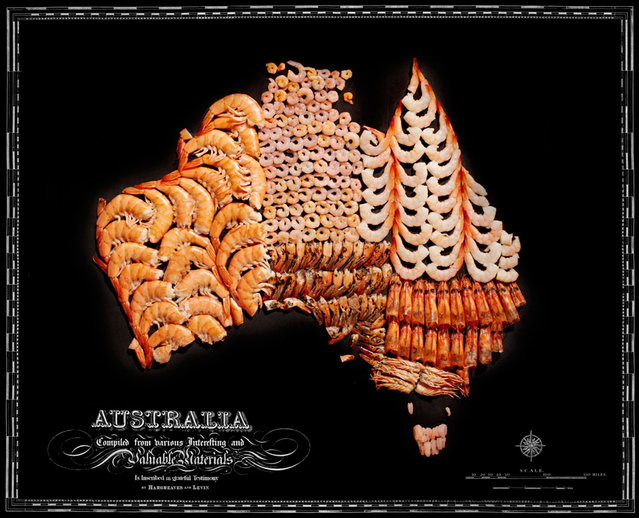
Photographer Henry Hargreaves and artist Caitlin Levin have been working together for about decade. Their shared love for “food, photography, travel, and art” has found an outlet in a series of maps that they have illustrated with food.