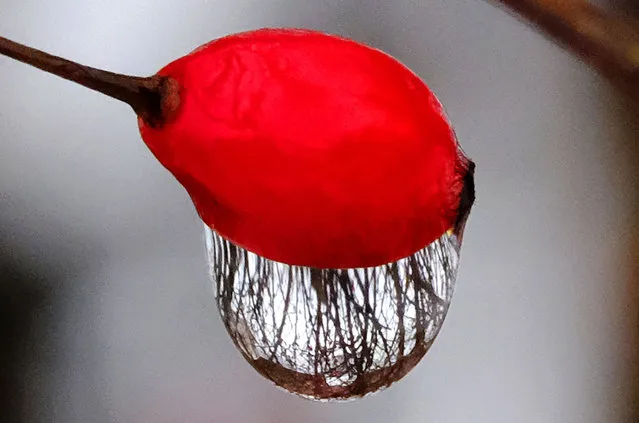
A photograph taken on November 20, 2021 shows the barberry berries with water drops after a rain in the garden outside Moscow. (Photo by Yuri Kadobnov/AFP Photo)
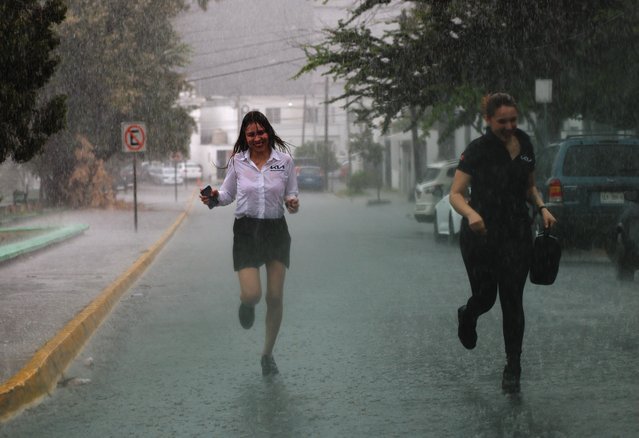
People run along a street as rain caused by tropical storm Alberto, the first named storm of 2024 Atlantic hurricane season, falls, in Monterrey, Mexico. on June 19, 2024. (Photo by Daniel Becerril/Reuters)
The drag artist Wet Mess performs Testo – a show about testosterone – at the Here & Now Showcase, Edinburgh international festival fringe in 2024. (Photo by Murdo MacLeod/The Guardian)
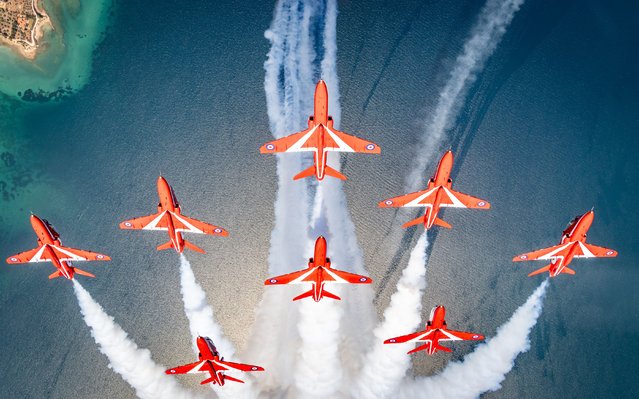
Hawk T1 aircraft of the Royal Air Force Aerobatic Team, the Red Arrows, perform a vertical loop during a practice display in Fitties, Greece on November 10, 2025. The team conducted the display practice as part of Exercise SpringHawk 2025. (Photo by AS1 Iwan Lewis/RAF)
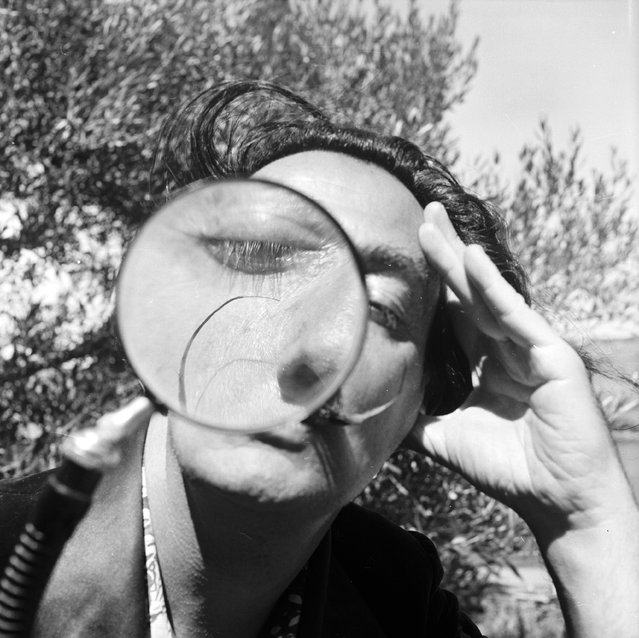
Spanish surrealist artist Salvador Dali (1904–1989) viewing the camera through a magnifying glass at his home in Cadaques on the Spanish Costa Brava, 1955. (Photo by Charles Hewitt). P.S. All pictures are presented in high resolution.
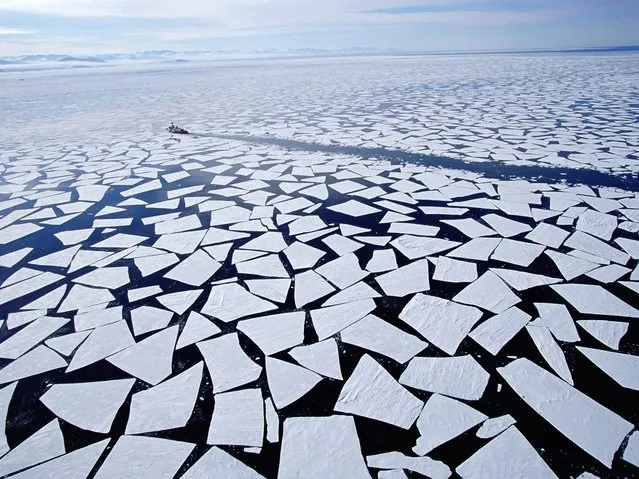
McMurdo Station is a U.S. Antarctic research centre located on the southern tip of Ross Island, which is in the New Zealand-claimed Ross Dependency on the shore of McMurdo Sound in Antarctica. It is operated by the United States through the United States Antarctic Program, a branch of the National Science Foundation. The station is the largest community in Antarctica, capable of supporting up to 1,258 residents, and serves as the United States Antarctic science facility. All personnel and cargo going to or coming from Amundsen–Scott South Pole Station first pass through McMurdo.
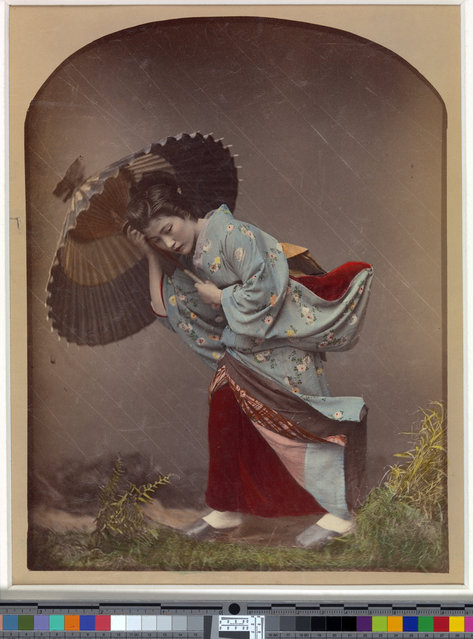
“Woman with Umbrella in Rain” by Raimund von Stillfried. Artist: Kusakabe Kimbei (Japanese, 1841–1934), 1870s. Commercial photography studios in Meiji-era Japan were renowned for the subtlety and refinement of their coloring techniques. This hand-tinted image of a young woman caught in a heavy rainstorm achieved its naturalistic effect by knitting together multiple strands of artifice: the greenery in the foreground was a studio prop; the flaps of the kimono were suspended by thin wires to create the impression of a strong wind; and long, diagonal marks were made on the negative to suggest streaks of rain. (Photo courtesy of The Metropolitan Museum of Art)