Loading...
Done
“A Well Earned Rest in the Sahara”. This photo of Moussa Macher, our Tuareg guide, was taken at the summit of Tin-Merzouga, the largest dune (or erg) in the Tadrat region of the Sahara desert in southern Algeria. Moussa rested while waiting for us to finish our 45-minute struggle to the top. Photo location: Summit of Tin-Merzouga, Tadrat, Tassili N'Ajjer National Park, Algeria. (Photo and caption by Evan Cole/National Geographic Photo Contest)

Merit Prize Winner: “A Well Earned Rest in the Sahara”. This photo of Moussa Macher, our Tuareg guide, was taken at the summit of Tin-Merzouga, the largest dune (or erg) in the Tadrat region of the Sahara desert in southern Algeria. Moussa rested while waiting for us to finish our 45-minute struggle to the top. It only took ten minutes of rolling, running, and jumping to get back down. The Tadrat is part of the Tassili N'Ajjer National Park World Heritage area, famous for its red sand and engravings and rock paintings of cattle, elephants, giraffes, and rhinos that lived there when the climate was milder. Photo location: Summit of Tin-Merzouga, Tadrat, Tassili N'Ajjer National Park, Algeria. (Photo and caption by Evan Cole/National Geographic Photo Contest)
Details
01 Aug 2014 11:38:00
People enjoy themselves as they dance to Dominican music at a refugee camp for Haitians returning from the Dominican Republic on the outskirts of Anse-a-Pitres, Haiti, September 6, 2015. (Photo by Andres Martinez Casares/Reuters)

People enjoy themselves as they dance to Dominican music at a refugee camp for Haitians returning from the Dominican Republic on the outskirts of Anse-a-Pitres, Haiti, September 6, 2015. Dominican officials last month began implementing a controversial immigration program targeting Haitian migrants and Dominican-born people of Haitian descent. The program centers on round-ups and deportations that have triggered concerns about a slow-growing border migration crisis in the poorest country in the Americas. So far about 1,500 people have been deported at a pace of 50 to 100 per day, according to relief officials with access to records supplied by the Dominican government. (Photo by Andres Martinez Casares/Reuters)
Details
21 Sep 2015 11:29:00
Fantasy Animals By Wood-Splitter-Lee

This deviantART artist Wood-Splitter-Lee creates her own animal sculptures without the use of any dead carcasses. The basis of each animal's shape is made out of materials such as wood, clay and chicken wire, and is then wrapped up in a soft padding. On top of that, she adds imitation fur that she hand dyes and as many details and decorative elements as she sees fit. The result are truly one-of-a-kind fantasy creatures.
Details
30 Jun 2014 12:31:00


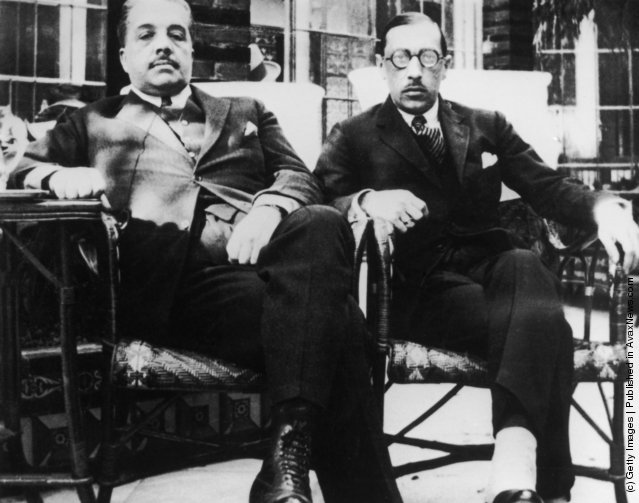
“Igor Fyodorovich Stravinsky (17 June [O.S. 5 June] 1882 – 6 April 1971) was a Russian-born, naturalized French, later naturalized American composer, pianist, and conductor. He is widely acknowledged as one of the most important and influential composers of 20th century music. He was a quintessentially cosmopolitan Russian who was named by Time magazine as one of the 100 most influential people of the century. He became a naturalized French citizen in 1934 and a naturalized US citizen in 1945. In addition to the recognition he received for his compositions, he also achieved fame as a pianist and a conductor, often at the premieres of his works”. – Wikipedia

Photo: Composer Igor Stravinsky (right) and impresario Sergei Diaghilev in Seville during their Ballets Russes collaboration. (Photo by Hulton Archive/Getty Images). 1921
Details
06 Apr 2011 07:59:00
Faruk, 17, a Rohingya refugee trader holds betel leaves which are on sale at a stall in Palong Khali refugee camp near Cox's Bazar, Bangladesh, November 3, 2017. He left his village in Myanmar when the military opened fire towards the Rohingya. “I buy this betel leaf from Palong Khali market, in one bundle there are 160 pieces, I buy it for 80 taka and I sell it for 100 taka. Bangladeshi's and I sell for the same rate in the camp. Outside in the local market it is 80 taka per bundle. My problem is that I don't have money so I can't buy anything to eat, I can't buy fish to eat”, he said. (Photo by Hannah McKay/Reuters)

Faruk, 17, a Rohingya refugee trader holds betel leaves which are on sale at a stall in Palong Khali refugee camp near Cox's Bazar, Bangladesh, November 3, 2017. He left his village in Myanmar when the military opened fire towards the Rohingya. “I buy this betel leaf from Palong Khali market, in one bundle there are 160 pieces, I buy it for 80 taka and I sell it for 100 taka (1 Bangladeshi Taka = 0.012 US Dollar). Bangladeshi's and I sell for the same rate in the camp. Outside in the local market it is 80 taka per bundle. My problem is that I don't have money so I can't buy anything to eat, I can't buy fish to eat”, he said. (Photo by Hannah McKay/Reuters)
Details
27 Nov 2017 08:54:00
English singer Dua Lupa, 25, poses in Puma Mayu trainers in her latest advertising campaign for the brand in Herzogenaurach, Germany on August 16, 2021. (Photo by Mario Sorrenti)

English singer Dua Lupa, 25, poses in Puma Mayu trainers in her latest advertising campaign for the brand in Herzogenaurach, Germany on August 16, 2021. The singer posed in the new suede trainers and a black skirt and top with chainmail underneath. Dua Lipa is featured in Puma's latest women's brand campaign “She Moves Us”, which, celebrates women who move together to achieve and connect through fashion, community and sport. (Photo by Mario Sorrenti)
Details
29 Aug 2021 06:49:00

A hallway within an abandoned hospital. (Photo by Thomas Windisch/Caters News)

These images of abandoned hospitals across Italy are not for the faint-hearted. Both of the hospitals featured in the photographs are Italian asylums – known as manicomios – that were used as mental hospitals. Shut down by law in 1978, the derelict buildings are visibly overgrown and make for very eerie portraits. Photographer Thomas Windisch, 32, of Graz, Austria, said the asylums, located in top-secret spots, can get very creepy when there aren't many people there with him. Here: a hallway within an abandoned hospital. (Photo by Thomas Windisch/Caters News)
Details
09 Sep 2015 12:35:00
World War Two veteran Abla Begaliyev, 91, is seen in an undated handout picture (L), poses for a picture in Arashan (Top R) and at home in Kyrgyzstan April 14, 2015. Begaliyev served in the border guard cavalry from February 1942 until April 1947. Originally from Kyrgyzstan, he fought on the Ukrainian front and relocated to the border with Afghanistan at the end of World War Two. (Photo by Vladimir Pirogov/Reuters/Family handout (L))

World War Two veteran Abla Begaliyev, 91, is seen in an undated handout picture (L), poses for a picture in Arashan (Top R) and at home in Kyrgyzstan April 14, 2015. Begaliyev served in the border guard cavalry from February 1942 until April 1947. Originally from Kyrgyzstan, he fought on the Ukrainian front and relocated to the border with Afghanistan at the end of World War Two. As the world marks the 70th anniversary of the end of World War Two, Reuters photographers the length and breadth of the former Soviet republics (CCCP) captured portraits of Red Army veterans, mostly now in their 80s and 90s, today and through archive pictures at the time. More than 20 million Soviet citizens were killed in the war. (Photo by Vladimir Pirogov/Reuters/Family handout (L))
Details
08 May 2015 14:22:00