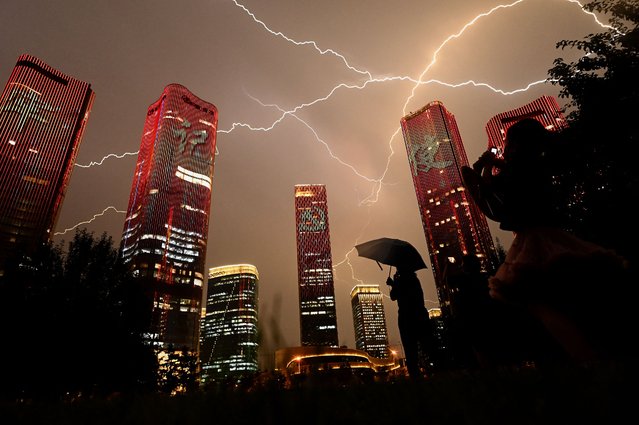
People look at buildings displaying a light show on the eve of the 100th anniversary of the Chinese Communist Party in Beijing on June 30, 2021. (Photo by Noel Celis/AFP Photo)
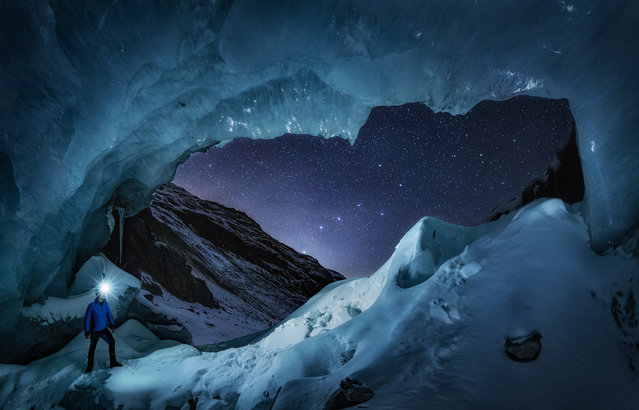
“Mr Big Dipper”, Nicholas Roemmelt (Denmark). A stargazer observes the constellation of the Big Dipper perfectly aligned with the window of the entrance to a large glacier cave in Engadin, Switzerland. This is a panorama of two pictures, and each is a stack of another two pictures: one for the stars and another one for the foreground, but with no composing or time blending. (Photo by Nicholas Roemmelt/National Maritime Museum/The Guardian)
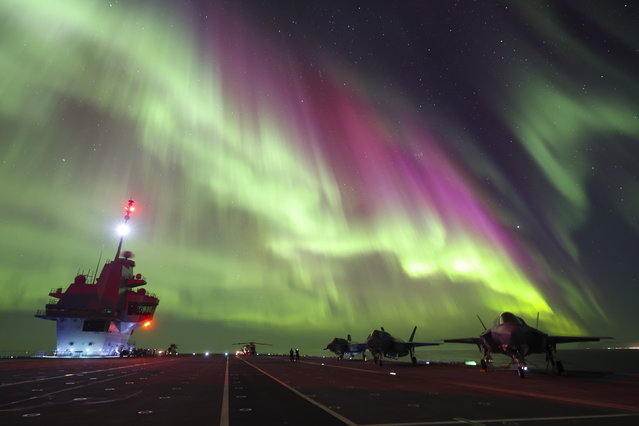
In this photo provided by Britain's Ministry of Defense, on Monday, March 4, 2024, F-35B Lightning jets are parked at a flight deck of HMS Prince of Wales aircraft carrier of the Royal Navy, under the northern lights (Aurora Borealis) near the coast of Norway, Sunday, March 3, 2024. (Photo by UK Ministry of Defence via AP Photo)
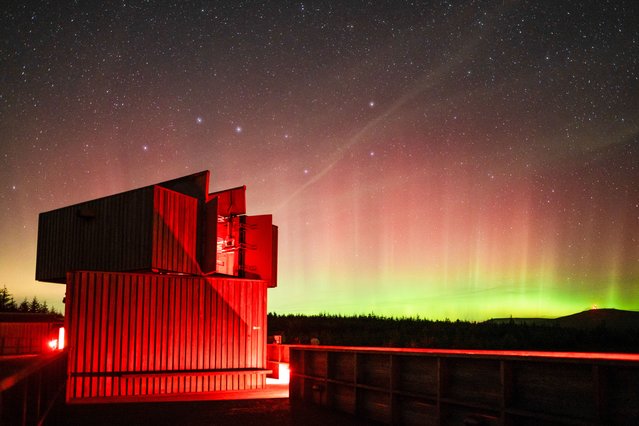
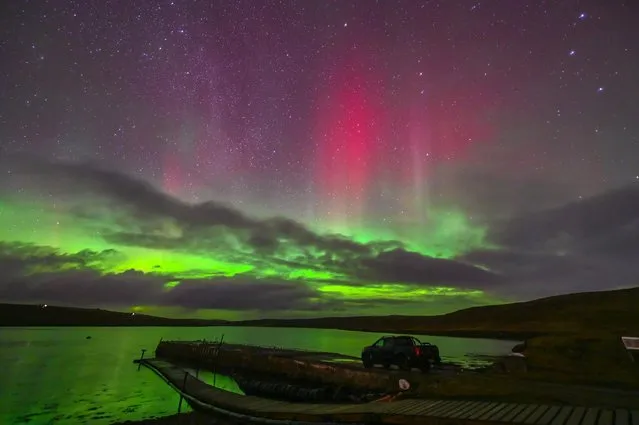
The northern lights as seen from from Yell in the Shetland Islands, Scotland on January 15, 2023. The aurora borealis is caused by collisions between electrically charged particles released from the sun that enter the Earth’s atmosphere and collide with gases such as oxygen and nitrogen. (Photo by Ryan Nisbet/Capture Media Agency)
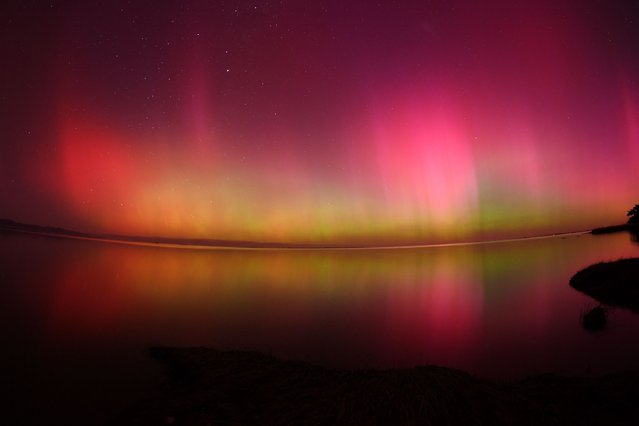
The Aurora Australis, also known as the Southern Lights, glow on the horizon over waters of Lake Ellesmere on the outskirts of Christchurch on May 11, 2024. (Photo by Sanka Vidanagama/AFP Photo)
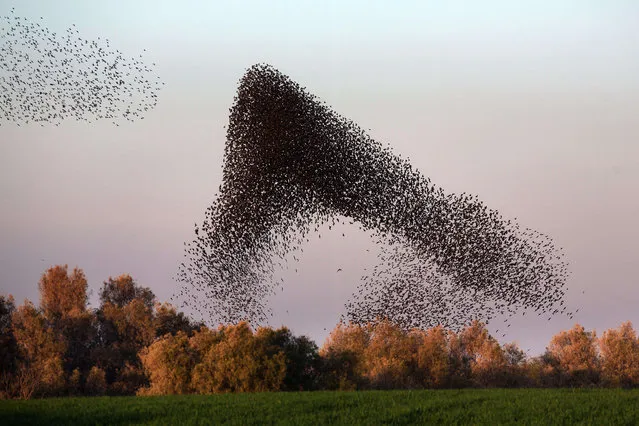
A flock of starlings is seen as they perform their traditional dance fly before landing to sleep during the sunset near the southern Arab Israeli city of Rahat, in the northern Israeli Negev desert, on February 2, 2015. (Photo by Menahem Kahana/AFP Photo)