Loading...
Done
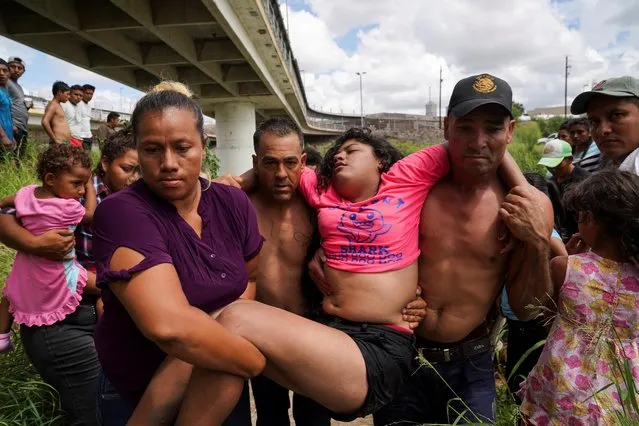
Brenda, a Honduran girl who is seeking asylum in the U.S., is carried from the Rio Grande in distress, where she had been bathing across the river from a Brownsville, Texas U.S. Customs and Border Protection tent facility as immigration hearings were being held by video teleconference, in Matamoros, Mexico September 12, 2019. Most of the people living in an encampment near the Gateway International Bridge have been sent back under the “Remain in Mexico” program, officially named Migrant Protection Protocols (MPP). (Photo by Veronica G. Cardenas/Reuters)

Brenda, a Honduran girl who is seeking asylum in the U.S., is carried from the Rio Grande in distress, where she had been bathing across the river from a Brownsville, Texas U.S. Customs and Border Protection tent facility as immigration hearings were being held by video teleconference, in Matamoros, Mexico September 12, 2019. Most of the people living in an encampment near the Gateway International Bridge have been sent back under the “Remain in Mexico” program, officially named Migrant Protection Protocols (MPP). (Photo by Veronica G. Cardenas/Reuters)
Details
15 Sep 2019 00:07:00
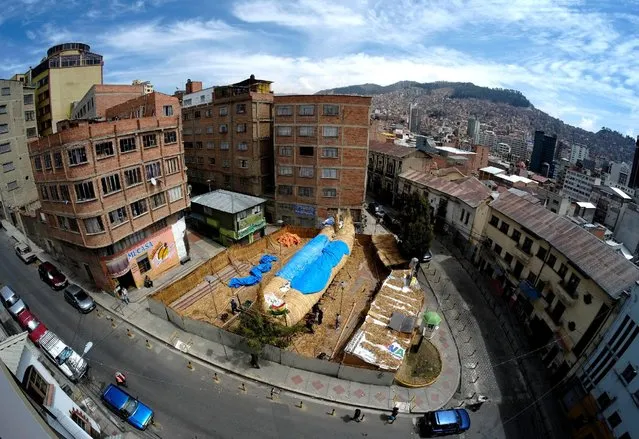
Aerial view of the “Viracocha III”, a boat made only from the totora reed, as it is being prepared to cross the Pacific from Chile to Australia on an expected six-month journey, La Paz, Bolivia, October 19, 2016. An expedition in a boat made only of reeds crafted by indigenous Bolivians is getting ready to cross the Pacific from South America to Australia, in a fresh attempt to prove that ancient mariners were capable of making the journey. Phil Buck, a 51-year-old explorer from the United States, already has led two similar expeditions and will captain the “Viracocha III” set to depart from northern Chile in February on an expected six-month journey. (Photo by David Mercado/Reuters)

Aerial view of the “Viracocha III”, a boat made only from the totora reed, as it is being prepared to cross the Pacific from Chile to Australia on an expected six-month journey, La Paz, Bolivia, October 19, 2016. An expedition in a boat made only of reeds crafted by indigenous Bolivians is getting ready to cross the Pacific from South America to Australia, in a fresh attempt to prove that ancient mariners were capable of making the journey. (Photo by David Mercado/Reuters)
Details
20 Oct 2016 10:53:00
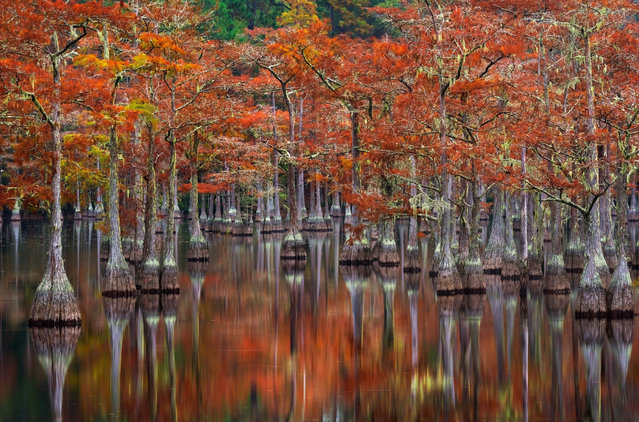
Trees are reflected on the surface of a lake in the Okefenokee swamp lands in Georgia, USA on October 21, 2017. (Photo by Chris Moore/Solent News & Photo Agency)

Trees are reflected on the surface of a lake in the Okefenokee swamp lands in Georgia, USA on October 21, 2017. (Photo by Chris Moore/Solent News & Photo Agency)
Details
02 Dec 2017 08:07:00
Church Altars By Cyril Porchet

Young Swiss photographer Cyril Porchet’s final year show included this awesome series of the most opulent Baroque church altars he could find in Spain, Austria and Germany. His intention was to explore the seductive power of display. What is extraordinary is how much you lose all sense of perspective and depth, such is the overabundance of detail. I like how the odd feature confuses all the more; like the red rope of the ornamental light in the image below for instance which neatly splices the image in half. I could pore over these for hours and hours.
Details
04 Jul 2014 12:46:00
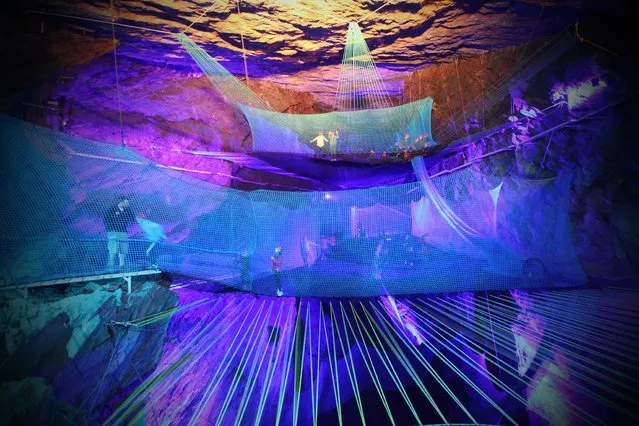
Bounce Below The World’s First Subterranean Playground

If you’re afraid of heights, caves, the dark, suffer from claustrophobia or vertigo, this might not be for you, but if not, a small Welsh town has the perfect subterranean adventure for you: the world’s largest underground trampoline. Just unveiled in Blaenau Ffestiniog, North Wales, Bounce Below is a network of trampolines and slides mounted to the walls of an abandoned slate mine at heights of 20 feet to 180 feet off the ground. Visitors are welcome to climb, bounce, slide, and jump in the netting amidst a technicolor light show.
Details
15 Jul 2014 11:19:00
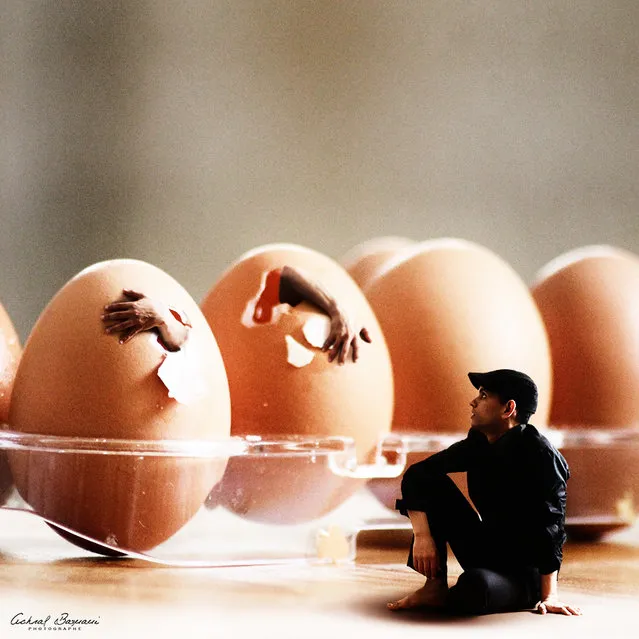
Inside My Dreams By Achraf Baznani

Moroccan photographer and filmmaker Achraf Baznani carries on the traditions of Surrealism with his wild, imaginative, and wholly impractical imagery. Among his inventive scenarios, small human figures—often the artist himself—appear trapped within glass jars or the size of a camera lens; in other works, Baznani more or less dissects his body, as for example, in one, he cleanly removes his brain from his cranium, or in another, twists off his hand, much as if it were a light bulb. Imparted throughout such works are strong senses of humor and wonder, and as such, Baznani’s art offers a Surrealistic take on life experience in the digital age.
Details
03 Aug 2014 12:04:00
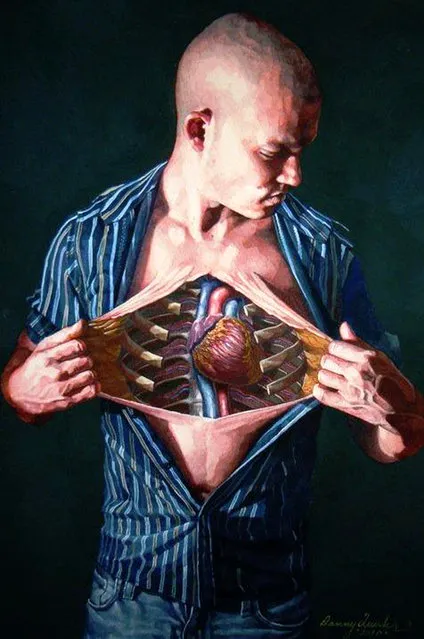
Anatomical Self Dissections By Danny Quirk

"I'm an artist, recent graduate, specializing in photo realistic watercolors, painting what the camera can't capture. My work is perceivably on the darker side, but the actually is, it's about exploration.
My anatomical works combine classic poses, in dramatic chiaroscuro lighting, with a very contemporary twist... illustrating what's underneath the skin, and the portrayed figure dissects a region of their body to show the structures that lay beneath."

Danny Quirk
Details
25 Jun 2013 10:56:00
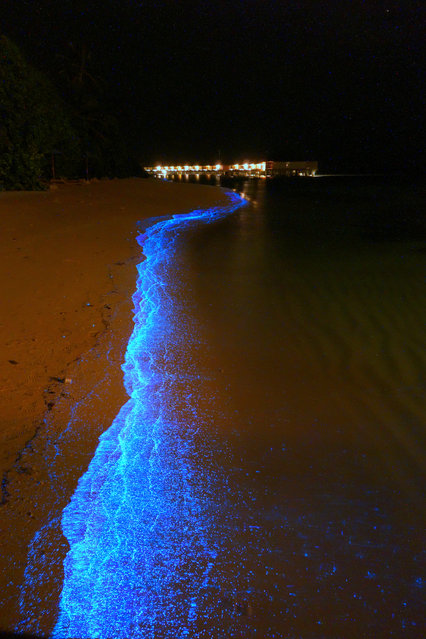
Bioluminescent phytoplankton washes up on Maldives beach. (Photo by Will Ho)

While vacationing on the Maldives Islands, Taiwanese amateur photographer Will Ho stumbled onto an incredible stretch of beach covered in millions of bioluminescent phytoplankton. These tiny organisms glow similarly to fireflies and tend to emit light when stressed, such as when waves crash or when they are otherwise agitated. While the phenomenon and its chemical mechanisms have been known for some time, biologists have only recently began to understand the reasons behind it. Photo: Bioluminescent phytoplankton washes up on Maldives beach. (Photo by Will Ho)
Details
07 Feb 2014 10:03:00