Loading...
Done
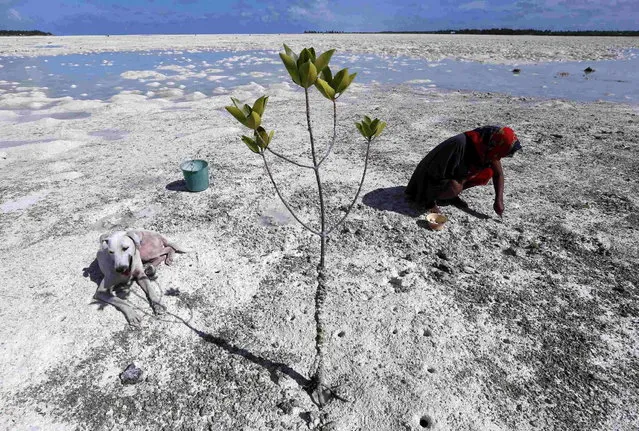
A dog sits in the shade of a mangrove tree as a woman uses a fork to dig for shellfish on the reef-mud flats of a lagoon located at South Tarawa in the central Pacific island nation of Kiribati May 23, 2013. (Photo by David Gray/Reuters)

A dog sits in the shade of a mangrove tree as a woman uses a fork to dig for shellfish on the reef-mud flats of a lagoon located at South Tarawa in the central Pacific island nation of Kiribati May 23, 2013. Kiribati consists of a chain of 33 atolls and islands that stand just metres above sea level, spread over a huge expanse of otherwise empty ocean. With surrounding sea levels rising, Kiribati President Anote Tong has predicted his country will likely become uninhabitable in 30-60 years because of inundation and contamination of its freshwater supplies. (Photo by David Gray/Reuters)
Details
13 Jun 2013 09:23:00
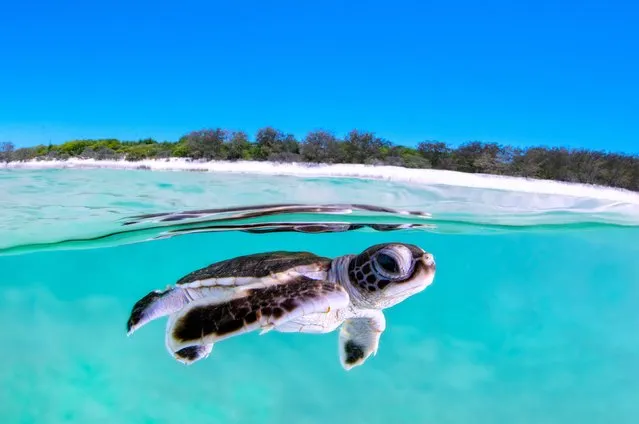
A baby turtle's perilous first moments are captured as it takes to the sea for the first time on Heron Island in Queensland, Australia in July 2022. Predators such as sharks, birds, and pollution mean that approximately only one out of every 1000 turtles that hatch make it to adulthood, with some not even reaching open ocean. Amateur photographer (Photo by Hannah Mitchell/Solent News & Photo Agency)

A baby turtle's perilous first moments are captured as it takes to the sea for the first time on Heron Island in Queensland, Australia in July 2022. Predators such as sharks, birds, and pollution mean that approximately only one out of every 1000 turtles that hatch make it to adulthood, with some not even reaching open ocean. Amateur photographer (Photo by Hannah Mitchell/Solent News & Photo Agency)
Details
06 Oct 2023 04:29:00
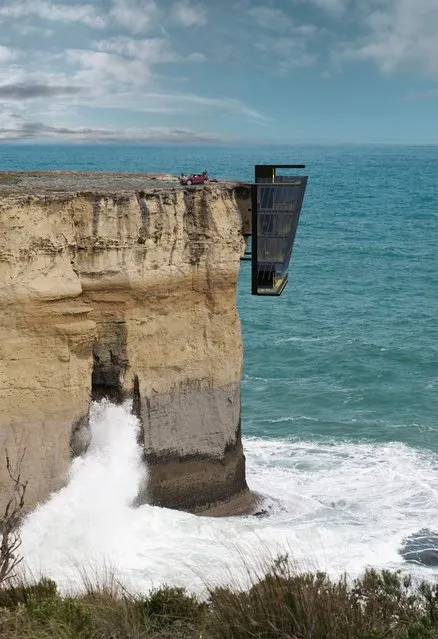
Cliff Yous By Modscape

Modscape creates beautifully simplistic prefabricated homes. The Cliff House by Modscape ($TBA) is their latest concept and it’s absolutely breathtaking. The home was created as a vacation getaway and as a complete extension of the natural environment.
Details
12 Sep 2014 09:38:00
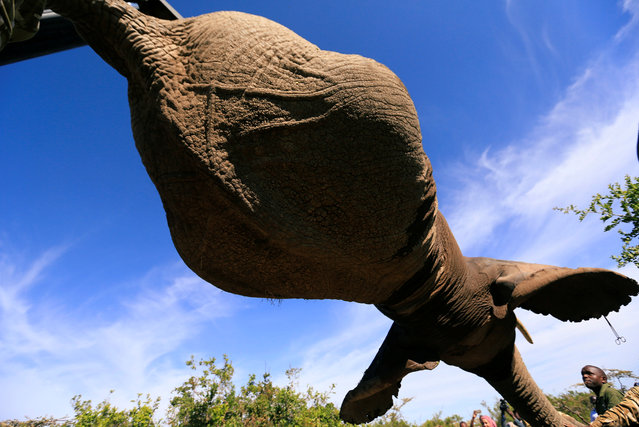
Kenya Wildlife Service (KWS) rangers load a tranquilized elephant onto a truck during a translocation exercise to Ithumba Camp in Tsavo East National Park, in Solio Ranch in Nyeri County, Kenya, February 21, 2018. Wildlife officials in Kenya kicked off a relocation operation for 30 elephants, fitting monitoring collars on the tranquilized animals before using cranes to swing them, inverted with bound feet and scything tusks, onto flatbed trucks. (Photo by Thomas Mukoya/Reuters)

Kenya Wildlife Service (KWS) rangers load a tranquilized elephant onto a truck during a translocation exercise to Ithumba Camp in Tsavo East National Park, in Solio Ranch in Nyeri County, Kenya, February 21, 2018. Wildlife officials in Kenya kicked off a relocation operation for 30 elephants, fitting monitoring collars on the tranquilized animals before using cranes to swing them, inverted with bound feet and scything tusks, onto flatbed trucks. (Photo by Thomas Mukoya/Reuters)
Details
23 Feb 2018 00:04:00
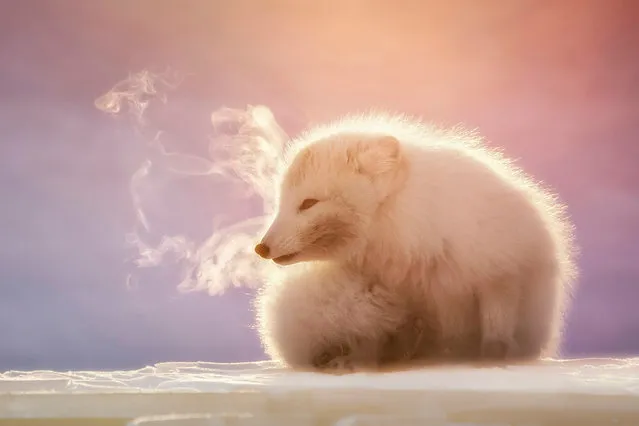
Breath of an Arctic fox by Marco Gaiotti, Italy. Marco was watching this little Arctic fox as it incessantly called another nearby. Gradually he noticed the fox’s wet breath was quickly freezing in the air after each call. It was late winter in Spitsbergen, Svalbard, and the air was -35C (-31F). Photographing Arctic foxes is often frustrating, as they are normally running around fast in search of food, but this one was very relaxed and let Marco get close enough to focus on it, with the light glowing perfectly in the background. (Photo by Marco Gaiotti/Wildlife Photographer of the Year 2021)

Breath of an Arctic fox by Marco Gaiotti, Italy. Marco was watching this little Arctic fox as it incessantly called another nearby. Gradually he noticed the fox’s wet breath was quickly freezing in the air after each call. It was late winter in Spitsbergen, Svalbard, and the air was -35C (-31F). Photographing Arctic foxes is often frustrating, as they are normally running around fast in search of food, but this one was very relaxed and let Marco get close enough to focus on it, with the light glowing perfectly in the background. (Photo by Marco Gaiotti/Wildlife Photographer of the Year 2021)
Details
05 Dec 2021 06:36:00
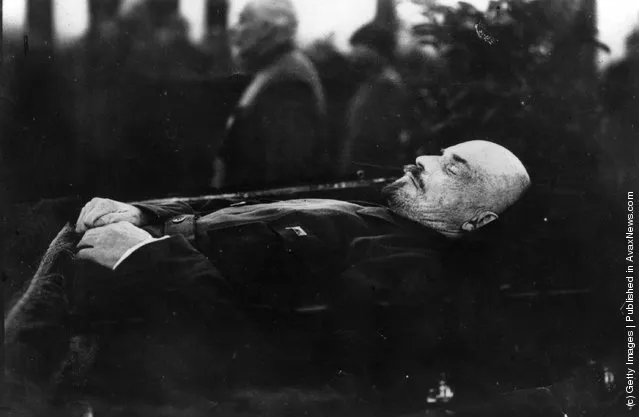
1924:  Vladimir Ilyich Lenin lying in state in the Kremlin

Photo: Vladimir Ilyich Lenin (1870 – 1924) lying in state in the Kremlin. (Photo by Hulton Archive/Getty Images). 1924

Important! For the same article in Russian language click here.

Something quite intriguing is happening within Russian-speaking internet during the last few – should you type a fully academic inquiry (at least, according to Russian academic requirements) in national search engines for "Lenin's mausoleum" – the first thing you get (even in top 10 searches) is website pages talking about black magic and occult. Website authors view this construction differently, but unconditionally agree on one thing: the mausoleum of the "leader of the world proletariat” – the essence of a magical artifact, a sort of “energy vampire”. It was built with a certain purpose: to drain the energy out of miserable Soviet citizens on one hand; and to poison the anthroposphere of one-sixth part of the earth with its vibes (the exact territory that was occupied by the former Soviet Union), depriving the Russian people of will to resist on the other hand. Complete nonsense? No doubt. Nevertheless, an intriguing one. Well, probably because some oddities do exist in mausoleum's history. These oddities are the thing we are going to discuss this time. First, let me refresh you memory on the subject.
Details
16 Oct 2011 11:27:00
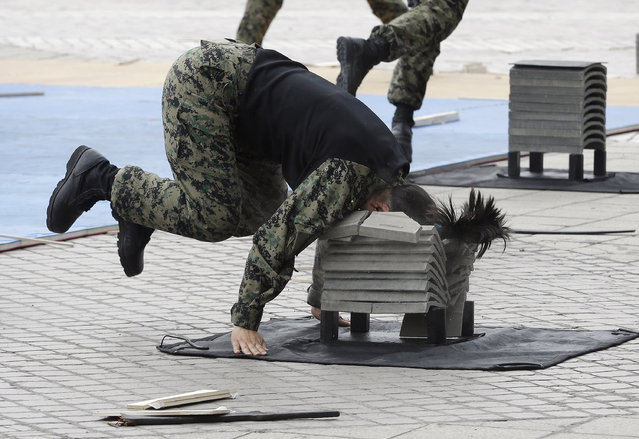
A soldier from the South Korean army special forces breaks stone plates with her head during a martial arts demonstration for Memorial Day at Korea War Memorial Museum in Seoul, South Korea, Monday, June 6, 2016.(Photo by Ahn Young-joon/AP Photo)

A soldier from the South Korean army special forces breaks stone plates with her head during a martial arts demonstration for Memorial Day at Korea War Memorial Museum in Seoul, South Korea, Monday, June 6, 2016.(Photo by Ahn Young-joon/AP Photo)
Details
07 Jun 2016 13:45:00
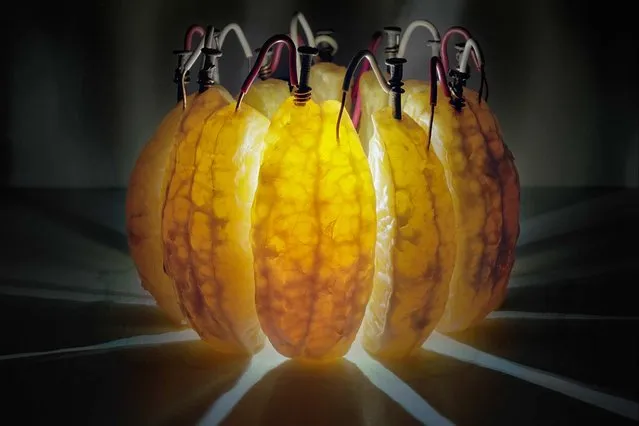
Wedges of an orange generate enough current and electrical juice – 3.5 volts – to power an LED. The fruit’s citric acid helps electrons flow from galvanized nails to copper wire in this 14-hour exposure. This image was published in September’s Visions of Earth, a trio of photos that appear in each issue of National Geographic. (Photo by Caleb Charland/National Geographic)

Wedges of an orange generate enough current and electrical juice – 3.5 volts – to power an LED. The fruit’s citric acid helps electrons flow from galvanized nails to copper wire in this 14-hour exposure. This image was published in September’s Visions of Earth, a trio of photos that appear in each issue of National Geographic. (Photo by Caleb Charland/National Geographic)
Details
06 Jan 2014 12:09:00