Loading...
Done


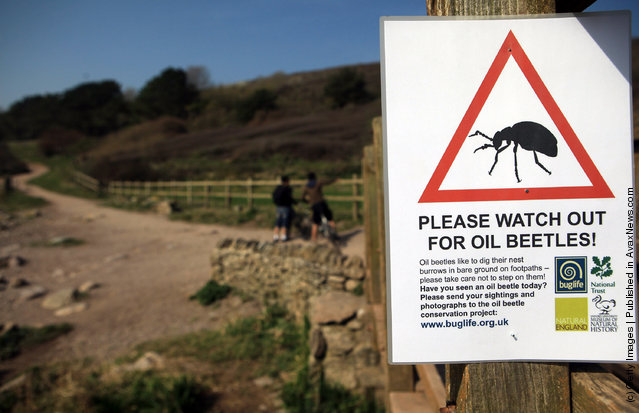
People enjoy the fine weather on the coast at Wembury during the first ever nationwide survey to map the location of the threatened and creatures on March 24, 2011 in near Plymouth, England. Often found on the coast, and particularly in the south west of England, the number of oil beetle species found in the UK has halved in the last 100 years and the survey will help establish the whereabouts of the remaining four species and boost efforts to secure their future. The survey is being launched today by Buglife: The Invertebrate Trust and the National Trust in partnership with Natural England and Oxford University Museum of Natural History. (Photo by Matt Cardy/Getty Images)
Details
25 Mar 2011 15:20:00
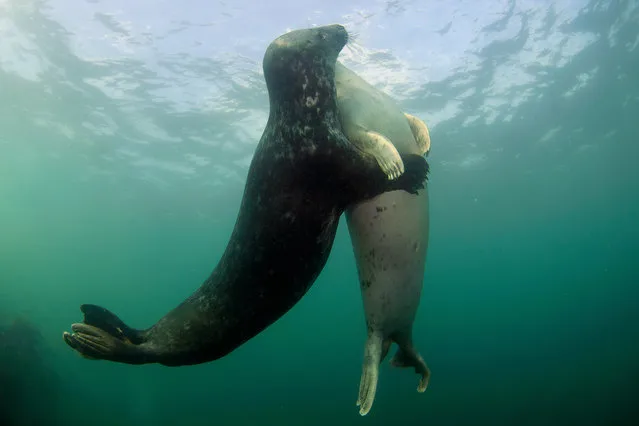
Playful seals. The pair of playful seals swim around each other. Two passionate seals were captured on camera in a tender embrace by underwater photographer Robert Bailey, 50, near the Farne Islands off the Northumberland coast, UK. (Photo by Robert Bailey/Medavia)

Playful seals. The pair of playful seals swim around each other. Two passionate seals were captured on camera in a tender embrace by underwater photographer Robert Bailey, 50, near the Farne Islands off the Northumberland coast, UK. (Photo by Robert Bailey/Medavia)
Details
30 Jul 2014 10:49:00
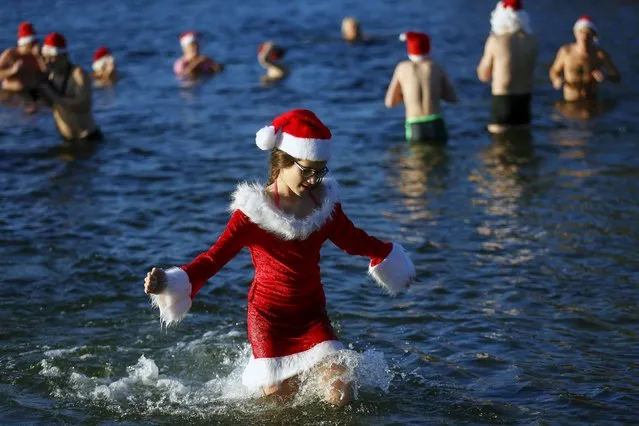
Members of the ice swimming club “Berliner Seehunde” (Berlin Seals) take a dip in the Orankesee lake as part of their traditional Christmas swimming session in Berlin, Germany, December 25, 2015. (Photo by Hannibal Hanschke/Reuters)

Members of the ice swimming club “Berliner Seehunde” (Berlin Seals) take a dip in the Orankesee lake as part of their traditional Christmas swimming session in Berlin, Germany, December 25, 2015. (Photo by Hannibal Hanschke/Reuters)
Details
27 Dec 2015 08:02:00
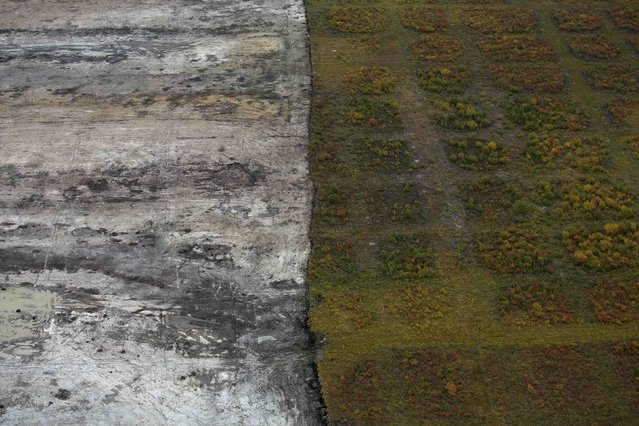
The top layer of muskeg and earth (L) is removed at the Syncrude tar sands operations near Fort McMurray, Alberta, September 17, 2014. Syncrude currently produces 350,000 barrels per day of high quality light, low sulphur crude oil according to company reports. (Photo by Todd Korol/Reuters)

The top layer of muskeg and earth (L) is removed at the Syncrude tar sands operations near Fort McMurray, Alberta, September 17, 2014. Syncrude currently produces 350,000 barrels per day of high quality light, low sulphur crude oil according to company reports. (Photo by Todd Korol/Reuters)
Details
21 Sep 2014 11:06:00
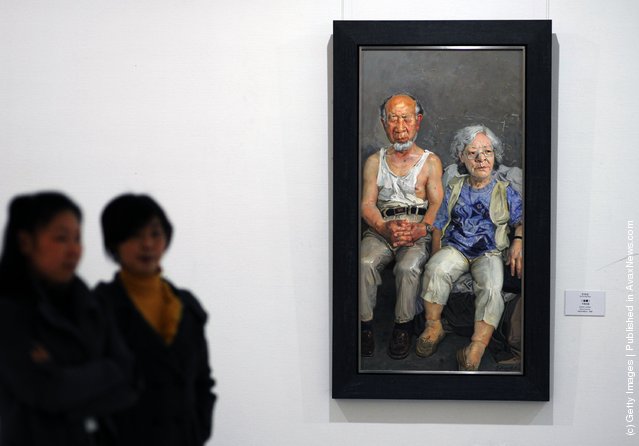
Visitors view the work entitled 'Golden Jubilee' by Chinese artist Xin Dongwang at the 'Extension and Integration: A Circuit Exhibition In Hubei Of Study on the Modern Chinese Oil Painting' at the Hubei Museum of Art

Visitors view the work entitled “Golden Jubilee” by Chinese artist Xin Dongwang at the “Extension and Integration: A Circuit Exhibition In Hubei Of Study on the Modern Chinese Oil Painting” at the Hubei Museum of Art on March 8, 2009 in Wuhan of Hubei Province, China. (Photo by China Photos/Getty Images)
Details
20 Feb 2012 13:24:00
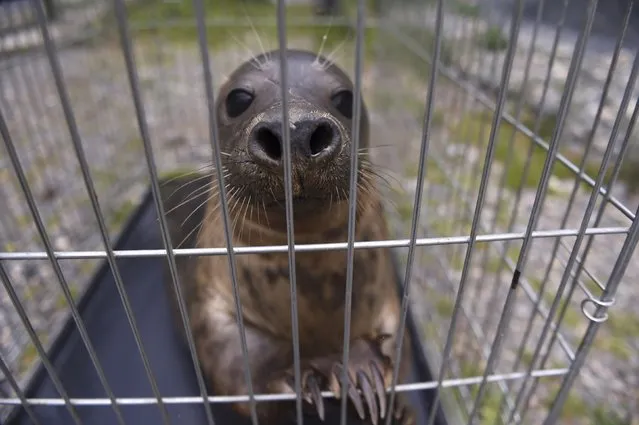
A Common seal named Groot is prepared for release in a transfer cage at Seal Rescue Ireland wildlife sanctuary where two rescued and rehabilitated seals are released back into the sea after months of care in Wexford, Ireland, June 12, 2016. (Photo by Clodagh Kilcoyne/Reuters)

A Common seal named Groot is prepared for release in a transfer cage at Seal Rescue Ireland wildlife sanctuary where two rescued and rehabilitated seals are released back into the sea after months of care in Wexford, Ireland, June 12, 2016. (Photo by Clodagh Kilcoyne/Reuters)
Details
13 Jun 2016 11:18:00


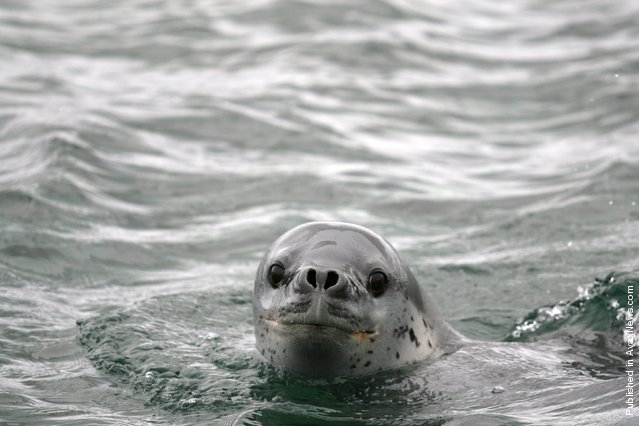
“The leopard seal (Hydrurga leptonyx), also referred to as the sea leopard, is the second largest species of seal in the Antarctic (after the southern elephant seal). It is most common in the southern hemisphere along the coast of Antarctica and on most sub-Antarctic islands, but can also be found on the coasts of southern Australia, Tasmania, South Africa, New Zealand, Lord Howe Island, Tierra del Fuego, the Cook Islands, and the Atlantic coast of South America. It can live twenty-six years, possibly more. Orcas and large sharks are the only natural predators of leopard seals”. – Wikipedia

Photo by: Gilad Rom; Source: Flickr
Details
13 Nov 2011 11:24:00
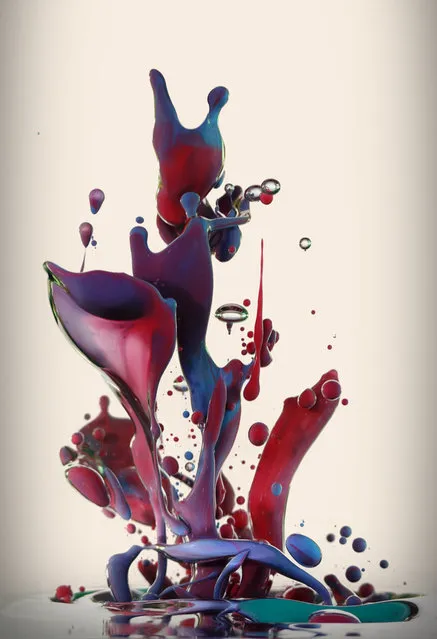
“Dropping” – Artist uses high-speed photography to capture the beauty of ink and oil. (Photo by Alberto Seveso)

“Dropping” is the work of Italian graphic artist Alberto Seveso. Seveso captured these amazing images or “fluid sculpture” with the use of high-speed photography while mixing ink with oil, as a tribute to the dripping technique of Jackson Pollock. Seveso works from his home town of Portoscuso, Italy creating cutting edge imagery for ad campaigns for companies such as Adobe, Sony, ESPN, Nikon and more. Sevese says of his work: “I don't consider myself as an artist, I'm just someone playing with software and creativity”... (Photo by Alberto Seveso)
Details
05 Jun 2015 08:17:00