Loading...
Done
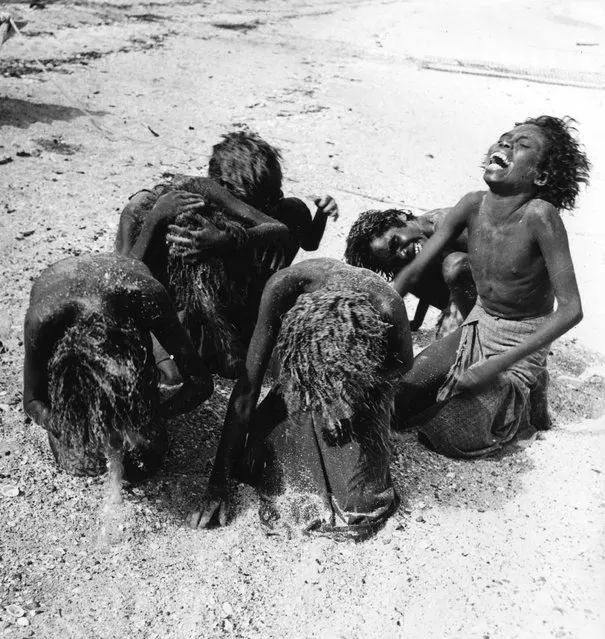
1st January 1950:  Aboriginal women washing their hair with sand at Arnhem land in the Northern Territory of Australia.  (Photo by Three Lions/Getty Images)

“Australian Aborigines are those people regarded as indigenous to the Australian continent. In the High Court of Australia, Australian Aborigines have been specifically identified as a group of people who share, in common, biological ancestry back to the original occupants of the continent”. – Wikipedia

Photo: Aboriginal women washing their hair with sand at Arnhem land in the Northern Territory of Australia. 1st January 1950. (Photo by Three Lions)
Details
02 Feb 2014 07:29:00


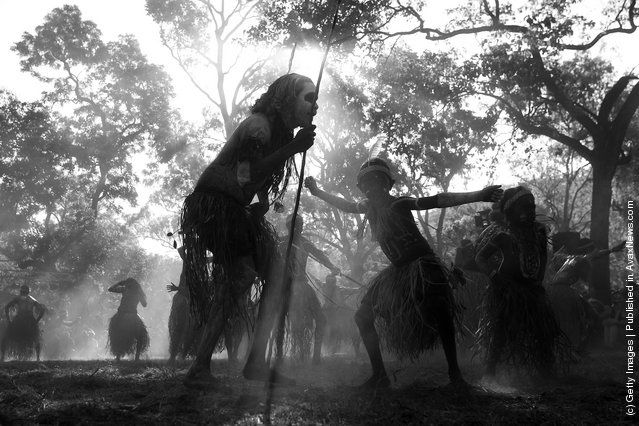
Dancers from the Yarrabah community perform during the Laura Aboriginal Dance Festival on June 18, 2011 in Laura, Australia. The Laura Aboriginal Dance Festival is a celebration of aboriginal dance and culture that takes place Biennially in Cape York Peninsula at the site of a traditional Bora ground that is sacred to the aboriginal community and surrounded by some of the oldest rock art in the world. Over 5000 visitors attend the festival, offering a unique insight into the community and providing an opportunity to spread cultural traditions to new generations. The festival takes place June 17-19. (Photo by Mark Kolbe/Getty Images for Tourism Queensland)
Details
22 Jun 2011 11:10:00
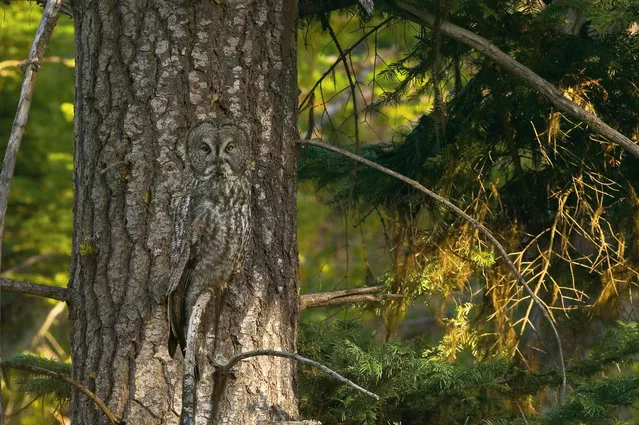
Vanishing Act By Art Wolfe

An amazing series by Art Wolfe that were taken as part of his “Vanishing Act” in which the Seattle-based photographer shows the talent of animals in disguising themselves from predators. “This collection has been a long time in the making. Finding and filming animals on location is an exhilarating and painstaking process. I’m still adding to the project even now”. Have fun spotting the hidden animals.
Details
22 Oct 2013 09:44:00
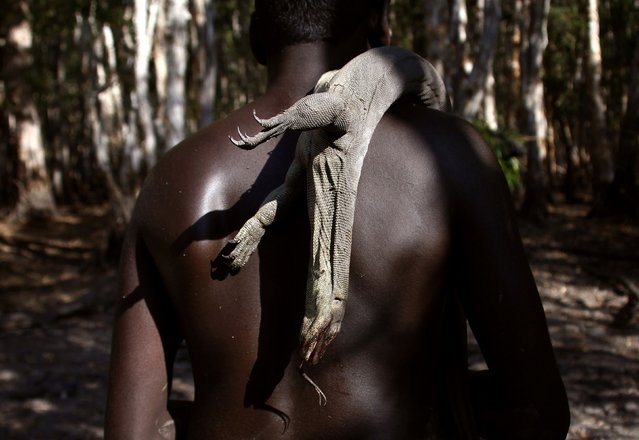
Australian Aboriginal hunter Marcus Gaykamangu of the Yolngu people, carries an Australian native lizard called a goanna over his shoulder as he walks away from a billabong near the “out station” of Yathalamarra, located on the outksirts of the community of Ramingining in East Arnhem Land November 22, 2014. (Photo by David Gray/Reuters)

Australian Aboriginal hunter Marcus Gaykamangu of the Yolngu people, carries an Australian native lizard called a goanna over his shoulder as he walks away from a billabong near the “out station” of Yathalamarra, located on the outksirts of the community of Ramingining in East Arnhem Land November 22, 2014. (Photo by David Gray/Reuters)
Details
11 Dec 2014 13:19:00
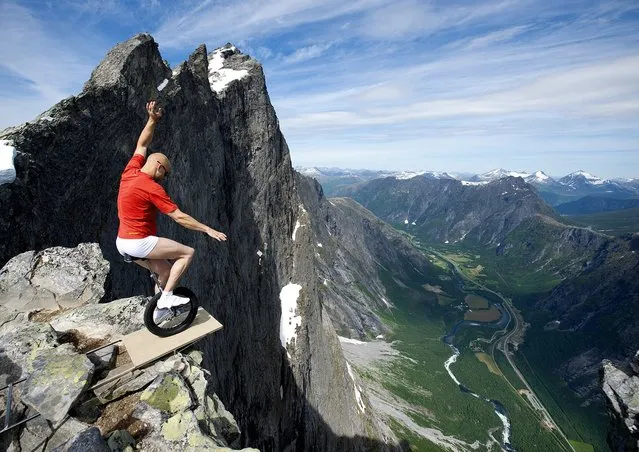
Eskil Ronningsbakken By Extreme Balancing Acts

29-year-old extreme balancing artist, Eskil Ronningsbakken has to be one of the world’s most amazing performers.
Details
27 May 2014 11:45:00


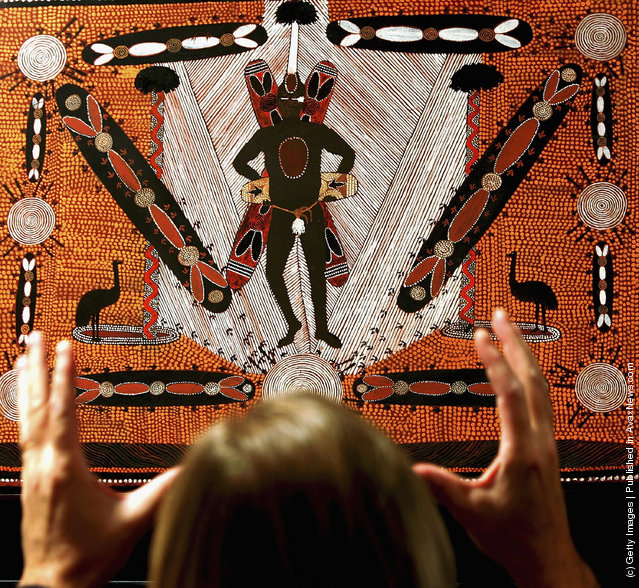
Tim Klingender, Director of Aboriginal Art at Sotheby's hangs the painting “Emu Corroboree Man” by Clifford Possum Tjapaltjarri before a record auction of Aboriginal Art July 14, 2005 in Sydney, Australia. The painting is expected to fetch AUD 150,000 – 250,000 (USD 120,000 – 200,000). Sotheby's unveiled a selection of Aboriginal art and artifacts after a tour of New York and London, which will go to auction in Melbourne July 25 2005. The total pre-sales estimate of the collection is AUD 6 million – 8.5 million (USD 5 million – 7 million). (Photo by Ian Waldie/Getty Images)
Details
01 Apr 2011 09:09:00


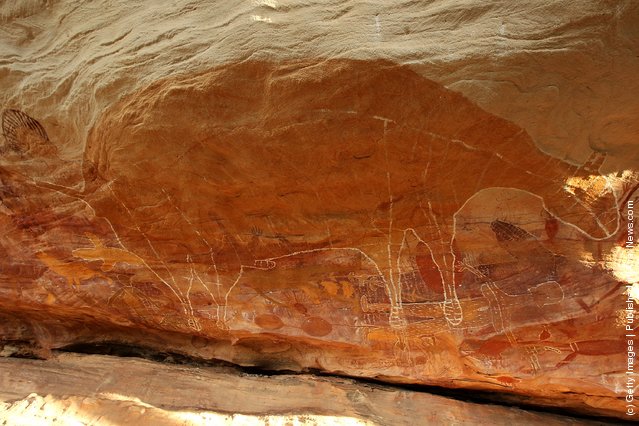
The artwork of Giant Horse Aboriginal rock art galleries in the Quinkan Country is seen on June 19, 2011 in Laura, Australia. The ancient aboriginal rock art in this region is some of the largest and oldest in the world, dating back over 15,000 years. Paintings, stencil art and engravings cover thelands traditionally home to the Kuku, Yalanji, Guugu Yimithirr and Kuku Thaypan people. As a UNESCO-identified top 10 rock art site in the world, international travelers visit the area to learn and understand the aboriginal culture through the artwork. (Photo by Mark Kolbe/Getty Images)
Details
23 Jun 2011 10:12:00
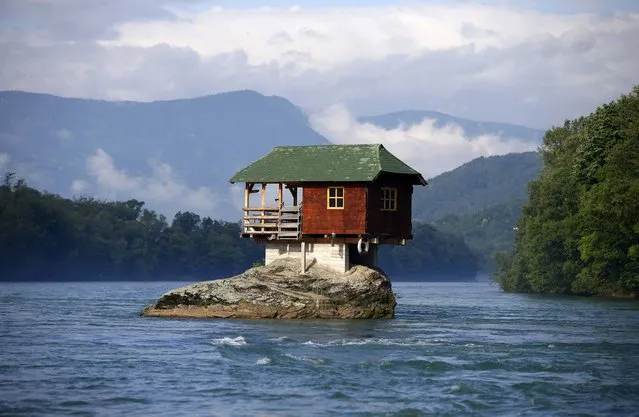
A house built on a rock on the river Drina is seen near the western Serbian town of Bajina Basta, about 160km (99 miles) from the capital Belgrade May 22, 2013. (Photo by Marko Djurica/Reuters)

A house built on a rock on the river Drina is seen near the western Serbian town of Bajina Basta, about 160km (99 miles) from the capital Belgrade May 22, 2013. The house was built in 1968 by a group of young men who decided that the rock on the river was an ideal place for a tiny shelter, according to the house's co-owner, who was among those involved in its construction. (Photo by Marko Djurica/Reuters)
Details
23 May 2013 11:53:00