Loading...
Done
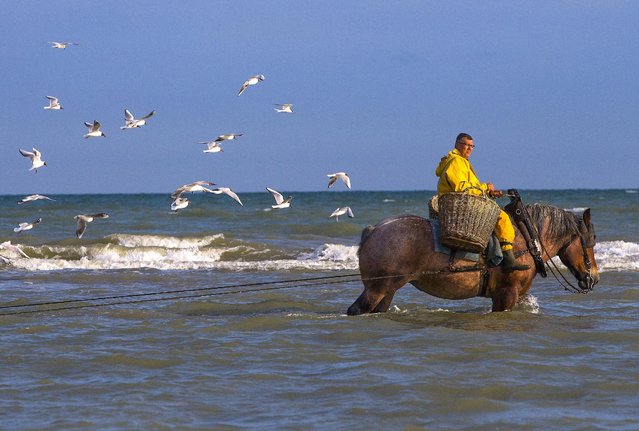
A Belgian shrimp fisherman rides a carthorse to haul a net out in the sea to catch shrimps during low tide at the coastal town of Oostduinkerke, Belgium July 3, 2015. (Photo by Yves Herman/Reuters)

A Belgian shrimp fisherman rides a carthorse to haul a net out in the sea to catch shrimps during low tide at the coastal town of Oostduinkerke, Belgium July 3, 2015. At the end of each fishing session, the fishermen and their mounts leave the water to empty the net's contents into two wicker baskets fixed on each side of the horse. This traditional method of catching shrimps along the North Sea coast, which dates back to some 500 years, attracts tourists every summer. In 2013, Unesco recognized shrimp fishing on horseback as an intangible cultural heritage. (Photo by Yves Herman/Reuters)
Details
04 Jul 2015 11:29:00
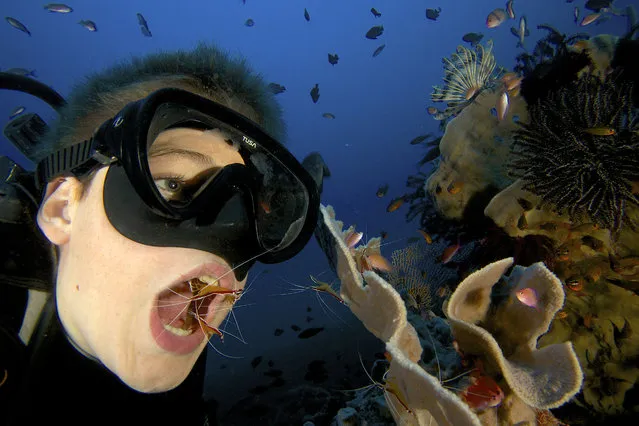
These unique photos capture the moment a boy has his teeth picked clean by amazing underwater shrimp. These fascinating creatures spend their lives diving inside the mouths of fish to remove the parasites that lurk there. Russell Laman imitated the behaviour of the surrounding fish swarm to entice the cleaner shrimp into his mouth whilst snorkelling with his father Tim Laman in Bali, Indonesia. The 13-year-old queued with the waiting fish and then opened his mouth when the shrimps came near. (Photo by Tim Laman/Caters News)

These unique photos capture the moment a boy has his teeth picked clean by amazing underwater shrimp. These fascinating creatures spend their lives diving inside the mouths of fish to remove the parasites that lurk there. Russell Laman imitated the behaviour of the surrounding fish swarm to entice the cleaner shrimp into his mouth whilst snorkelling with his father Tim Laman in Bali, Indonesia. The 13-year-old queued with the waiting fish and then opened his mouth when the shrimps came near. (Photo by Tim Laman/Caters News)
Details
17 Jul 2014 12:01:00
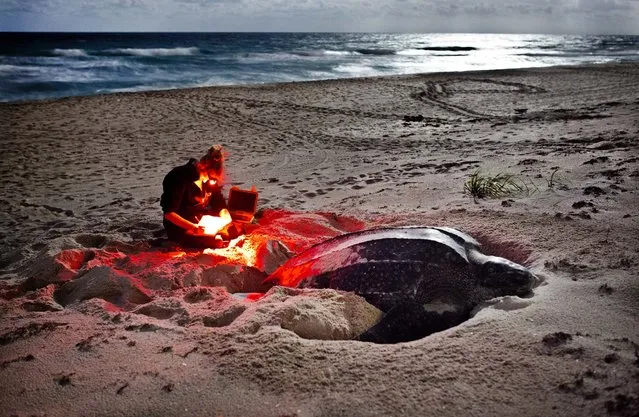
Biologist Kelly Martin records her measurements of Electra, a 5 1/2 foot leatherback turtle nesting on the beach behind the Seminole Golf Club course in Juno Beach. Martin uses a red light which is invisible to turtles. (Photo by Greg Lovett/The Palm Beach Post)

Biologist Kelly Martin records her measurements of Electra, a 5 1/2 foot leatherback turtle nesting on the beach behind the Seminole Golf Club course in Juno Beach. Martin uses a red light which is invisible to turtles. (Photo by Greg Lovett/The Palm Beach Post)
Details
04 Nov 2013 10:17:00
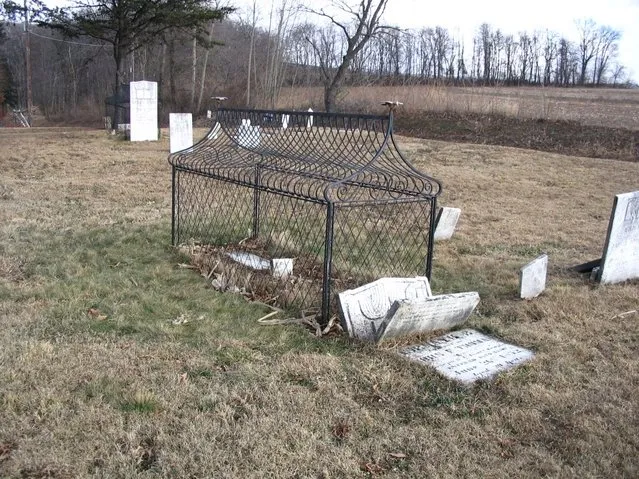
Mortsafe - Protection From The Dead

Mortsafes were contraptions designed to protect graves from disturbance. Resurrectionists had supplied the schools of anatomy in Scotland since the early 18th century. This was due to the necessity for medical students to learn anatomy by attending dissections of human subjects, which was frustrated by the very limited allowance of dead bodies – for example the corpses of executed criminals – granted by the government, which controlled the supply.
Details
29 Nov 2013 12:03:00
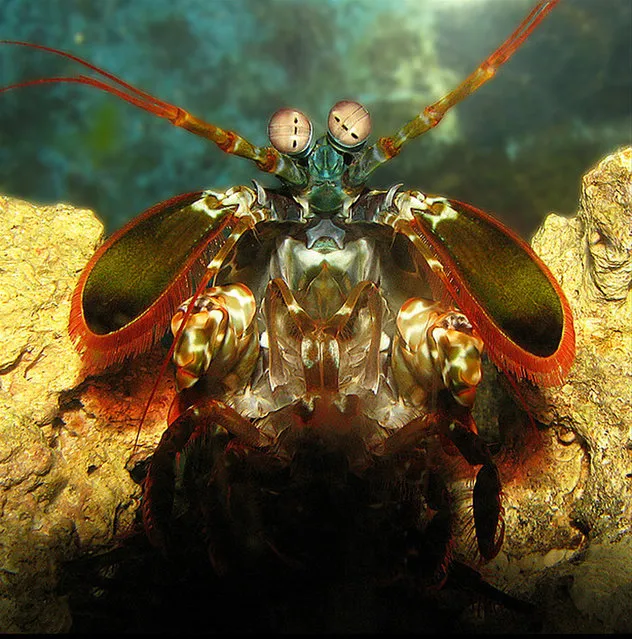
Peacock Mantis Shrimp

Odontodactylus scyllarus, known as the peacock mantis shrimp, harlequin mantis shrimp or painted mantis shrimp, is a large mantis shrimp native to the Indo-Pacific from Guam to East Africa.

Details
22 Jan 2013 12:29:00
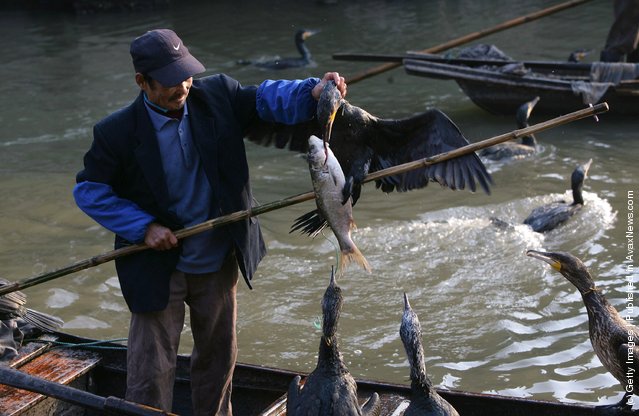
Cormorant Fishing

“Cormorant fishing is a traditional fishing method in which fishermen use trained cormorants to fish in rivers. Historically, cormorant fishing has taken place in Japan and China from around 960 AD. and recorded from other places throughout the world”. – Wikipedia

Photo: A cormorant raised by a fisherman catches a fish on a canal on November 27, 2007 in Xitang Town of Jiashan County, Zhejiang Province, China. (Photo by China Photos/Getty Images)
Details
07 Oct 2011 09:34:00
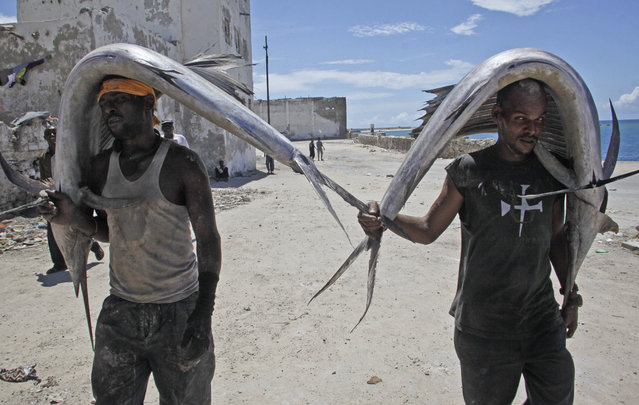
Somali men carry swordfish from the sea to a market in the capital Mogadishu, Somalia Thursday, April 23, 2015. (Photo by Farah Abdi Warsameh/AP Photo)

Somali men carry swordfish from the sea to a market in the capital Mogadishu, Somalia Thursday, April 23, 2015. (Photo by Farah Abdi Warsameh/AP Photo)
Details
24 Apr 2015 10:45:00
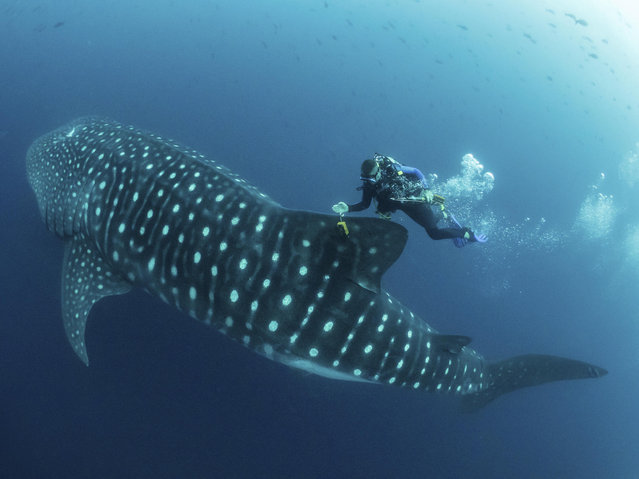
In this 2017 photo provided by Simon Pierce, Jonathan Green checks on a fin-mounted satellite tag on a whale shark in the Galapagos Islands area of Ecuador.  Despite typically being bigger than a double-decker bus, the elusive whale shark has only tiny, almost useless teeth. It's also one of the least understood animals in the ocean. (Photo by Simonjpierce.com via AP Photo)

In this 2017 photo provided by Simon Pierce, Jonathan Green checks on a fin-mounted satellite tag on a whale shark in the Galapagos Islands area of Ecuador. Despite typically being bigger than a double-decker bus, the elusive whale shark has only tiny, almost useless teeth. It's also one of the least understood animals in the ocean. (Photo by Simonjpierce.com via AP Photo)
Details
02 Mar 2018 00:03:00