Loading...
Done
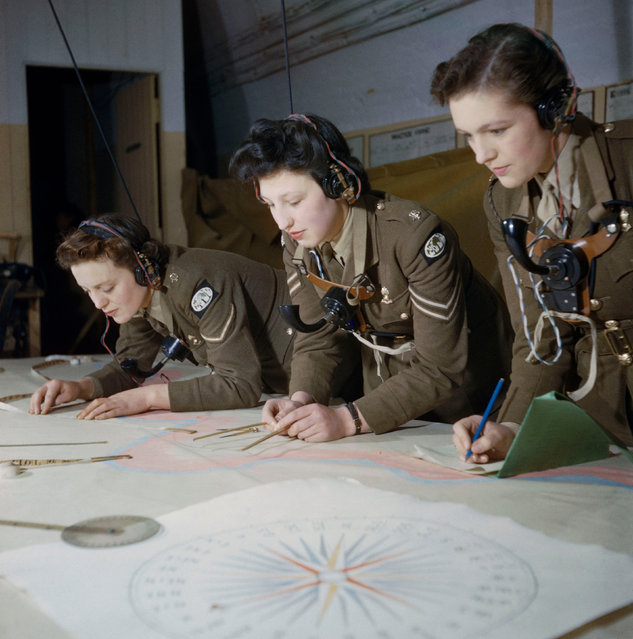
Auxiliary Territorial Service (ATS) plotters at work at Coastal Artillery Headquarters in Dover, December 1942. (Photo by Ted Dearberg/IWM/PA Wire)

Auxiliary Territorial Service (ATS) plotters at work at Coastal Artillery Headquarters in Dover, December 1942. The Auxiliary Territorial Service was the women's branch of the British Army during the Second World War. It was formed on 9 September 1938, initially as a women's voluntary service, and existed until 1 February 1949, when it was merged into the Women's Royal Army Corps. The ATS had its roots in the Women's Auxiliary Army Corps (WAAC), which was formed in 1917 as a voluntary service. During the First World War its members served in a number of jobs including clerks, cooks, telephonists and waitresses. The WAAC was disbanded after four years in 1921. (Photo by Ted Dearberg/IWM/PA Wire)
Details
13 Jul 2017 07:52:00
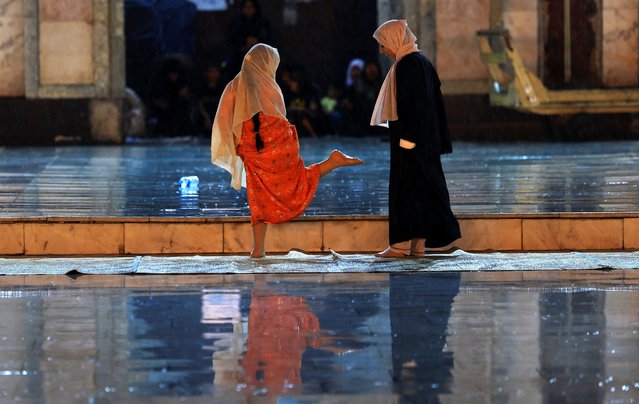
A Sunni Muslim child plays in the rain as she arrives for Eid al-Fitr prayers at the shrine of cleric Sheikh Abdul Qadir al-Gailani in Baghdad, Iraq on March 31, 2025. (Photo by Thaier Al-Sudani/Reuters)

A Sunni Muslim child plays in the rain as she arrives for Eid al-Fitr prayers at the shrine of cleric Sheikh Abdul Qadir al-Gailani in Baghdad, Iraq on March 31, 2025. (Photo by Thaier Al-Sudani/Reuters)
Details
25 Apr 2025 02:40:00
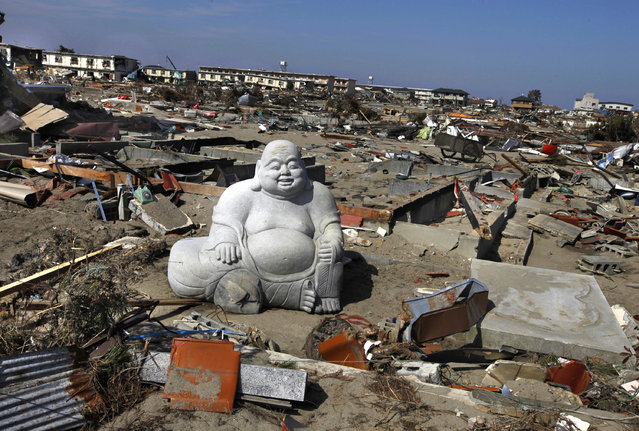
A statue of Hotei Buddha sits in the debris in the  tsunami-destroyed town of Sendai, Miyagi Prefecture, northern Japan Friday, April 1, 2011. (Photo by Vincent Yu/AP Photo)

Vincent Yu is a multiple award winner who won Honorable Mention in the 2013 Photographer of the Year category for Pictures of the Year International. Photo: A statue of Hotei Buddha sits in the debris in the tsunami-destroyed town of Sendai, Miyagi Prefecture, northern Japan Friday, April 1, 2011. (Photo by Vincent Yu/AP Photo)
Details
30 Mar 2014 11:26:00
Visitors photograph an animatronic Tyrannosaurus Rex at the National Museum of Scotland, July 29, 2011. (Photo by David Moir/Reuters)

Visitors photograph an animatronic Tyrannosaurus Rex at the National Museum of Scotland, July 29, 2011. (Photo by David Moir/Reuters)
Details
12 Apr 2015 08:02:00
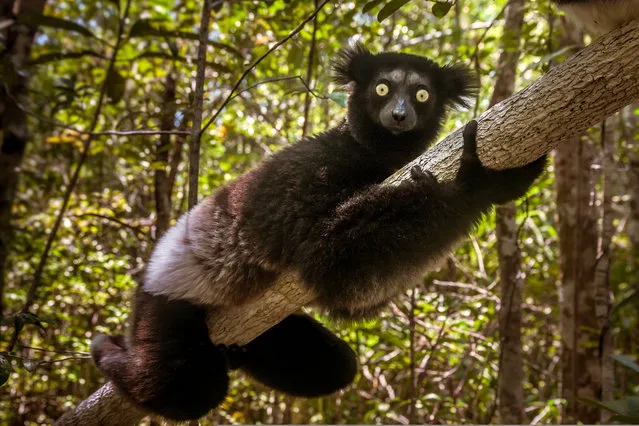
The secretive indri (Indri indri) of Madagascar, the largest living lemur. It is also critically endangered and highly evolutionarily distinct with no close relatives, which makes its branch one of most precarious on the mammal evolutionary tree. In the likely event that the indri goes extinct, we will lose 19m years of unique evolutionary history from the mammal tree of life. (Photo by Pierre-Yves Babelon/Aarhus University)

The secretive indri (Indri indri) of Madagascar, the largest living lemur. It is also critically endangered and highly evolutionarily distinct with no close relatives, which makes its branch one of most precarious on the mammal evolutionary tree. In the likely event that the indri goes extinct, we will lose 19m years of unique evolutionary history from the mammal tree of life. (Photo by Pierre-Yves Babelon/Aarhus University)
Details
18 Nov 2018 00:02:00
General view of festival goers at the main stage on Day 3 of Download festival at Donnington Park on June 12, 2022 in Donnington, England. (Photo by Chris Bethell/The Guardian)

General view of festival goers at the main stage on Day 3 of Download festival at Donnington Park on June 12, 2022 in Donnington, England. (Photo by Chris Bethell/The Guardian)
Details
29 Oct 2023 06:42:00
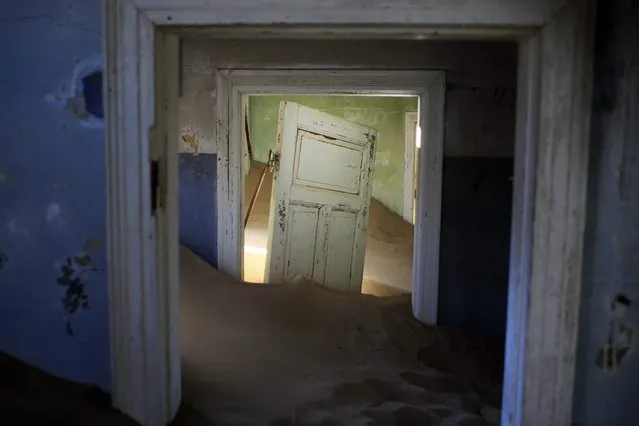
In this July 23, 2013 photo, sand fills an abandoned house in Kolmanskop, Namibia. Kolmanskop, was a diamond mining town south of Namibia, build in 1908 and deserted in 1956. SInce then, the desert slowly reclaims its territory, with sand invading the buildings where 350 German colonists and more than 800 local workers lived during its hay-days of the 1920s. (Photo by Jerome Delay/AP Photo)

In this July 23, 2013 photo, sand fills an abandoned house in Kolmanskop, Namibia. Kolmanskop, was a diamond mining town south of Namibia, build in 1908 and deserted in 1956. SInce then, the desert slowly reclaims its territory, with sand invading the buildings where 350 German colonists and more than 800 local workers lived during its hay-days of the 1920s. (Photo by Jerome Delay/AP Photo)
Details
14 Nov 2014 14:34:00
An injured supporter of Ivory Coast's Laurent Gbagbo reacts outside the premises of Hotel Golf, where Gbagbo is currently being held after his arrest, in Abidjan April 11, 2011. (Photo by Reuters/Stringer)

An injured supporter of Ivory Coast's Laurent Gbagbo reacts outside the premises of Hotel Golf, where Gbagbo is currently being held after his arrest, in Abidjan April 11, 2011. The trial of Laurent Gbagbo on charges of crimes against humanity during post-election violence, in which around 3,000 people were killed, will begin on January 28, 2016 at the International Criminal Court. (Photo by Reuters/Stringer)
Details
27 Jan 2016 13:45:00