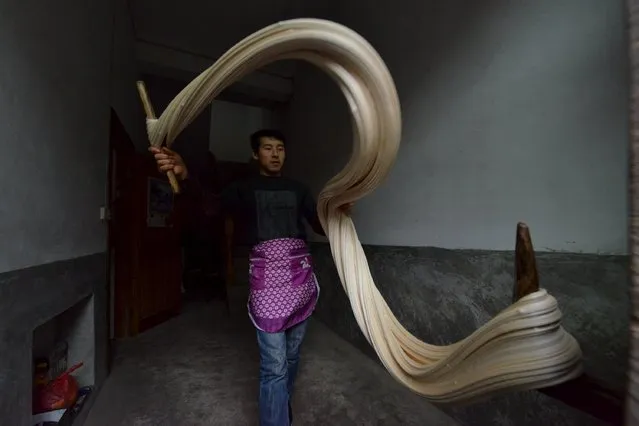
A man makes traditional candy “Matang” in preparation for the upcoming Chinese Lunar New Year in Yuqing County, Zunyi, Guizhou Province, China, January 18, 2016. (Photo by Reuters/China Daily)
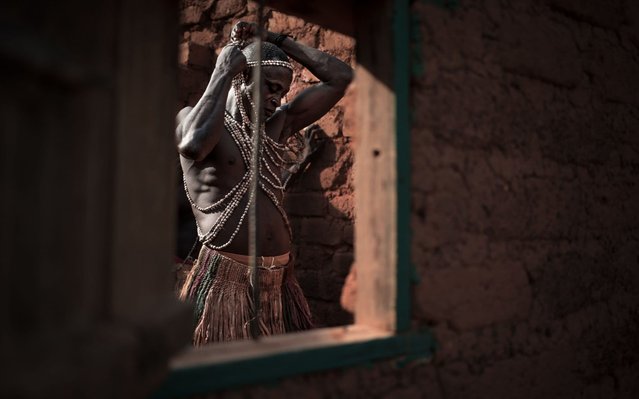
A Broto dancer prepares himself in a disused house of Bambari, in the centre of Central African Republic, before performing on March 14, 2019. The Broto, belonging to the Banda ethnic group, are known for their traditional dances accompanied by heavy horns made of tree roots. Today this tradition falls into disuse and its history is now forgotten by the new generations. (Photo by Florent Vergnes/AFP Photo)
A woman takes a selfie in front of a sculpture of a rooster that local media say bears resemblance to U.S. President-elect Donald Trump, outside a shopping mall in Taiyuan, Shanxi province, China December 30, 2016. (Photo by Jon Woo/Reuters)
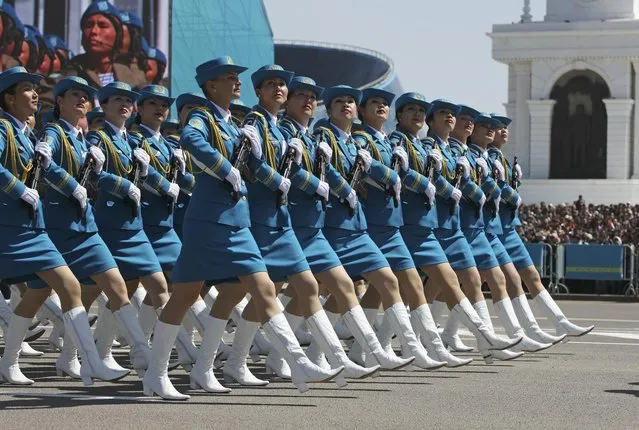
Kazakh troops march during a parade of the armed forces to mark the Defender of the Fatherland Day in Astana, May 7, 2014. (Photo by Mukhtar Kholdorbekov/Reuters)
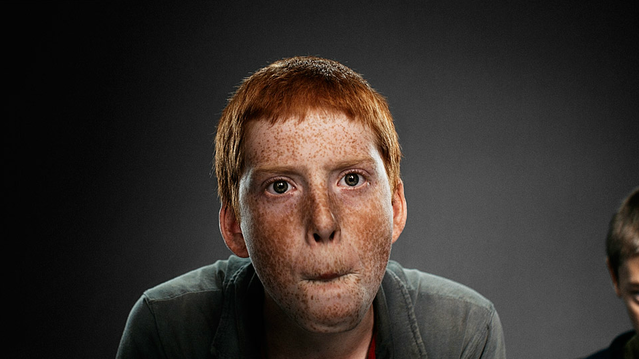
Robbie Cooper is a British artist working in photography, video and 3D. In 2008 he began his project ‘Immersion’ in which he filmed people’s faces as they watched TV, played video games and using the internet. His images have been of interest to me because they link to how playing video games affects your behaviour out of the game. I think that there is a definite link between gaming and behaviour. I think violent games such as Grand Theft Auto and Call of Duty do affect behaviour and can be linked to criminality.
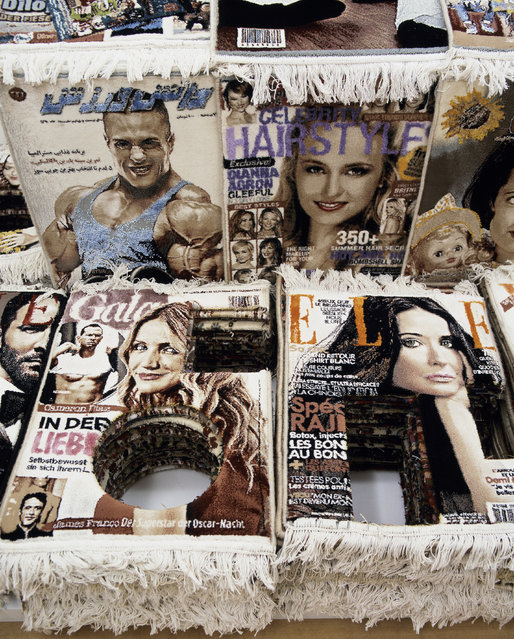
Farhad Moshiri, an Iranian artist working a lot with carpet media using it as a mean to joke about consumerism culture, was one of the participants of the group show Love Me Love Me Not of Yarat! pavilion curate by Dina Nasser-Khadivi (read on her curating Lalla Essaydi's Harem here) at Venice 2013 Art Biennial. The installation consists of more than 500 carpets depicting celebrities-covered magazines from all over the world.