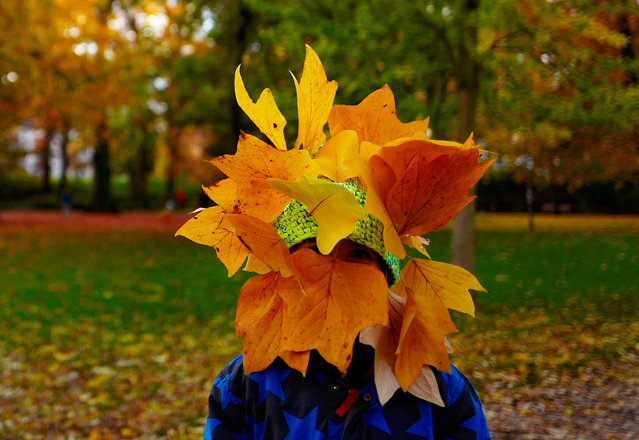
A boy covers his head with fallen leaves as he enjoys a stroll with his family in a park in downtown Frankfurt, Germany, November 6, 2016. (Photo by Kai Pfaffenbach/Reuters)
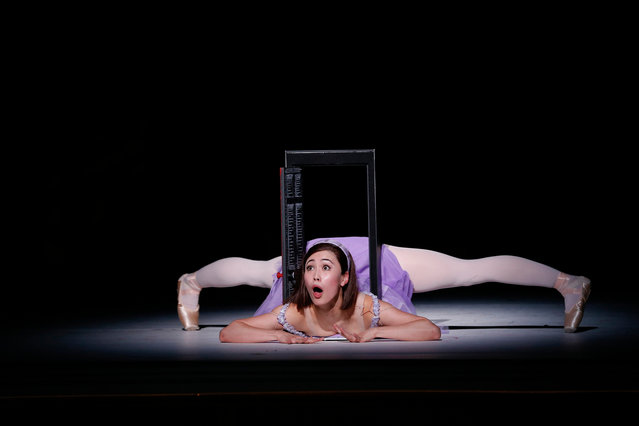
Christopher Wheeldon’s Alice’s Adventures in Wonderland is the biggest production the Australian Ballet has ever undertaken and it’s also one of the most spectacular. Created for the Royal Ballet and designed by Bob Crowley, it involves puppetry, optical illusions, major setpieces and immersive projections, as well as costumes that some dancers have to actually climb into. Here: Ako Kondo as Alice, on stage September 11, 2017 in Melbourne, Australia. (Photo by Jeff Busby/The Guardian)
A suspected Vietcong is kicked by a Vietnamese soldier holding a rifle as another soldier attempts to tie his hands on October 22, 1965. The prisoner was one of 15 captured October 21 near Xom Chua when government troops raided in the plain of reeds area. Troops killed 43 suspected Vietcong and seized some arms. (Photo by Richard Merron/AP Photo)
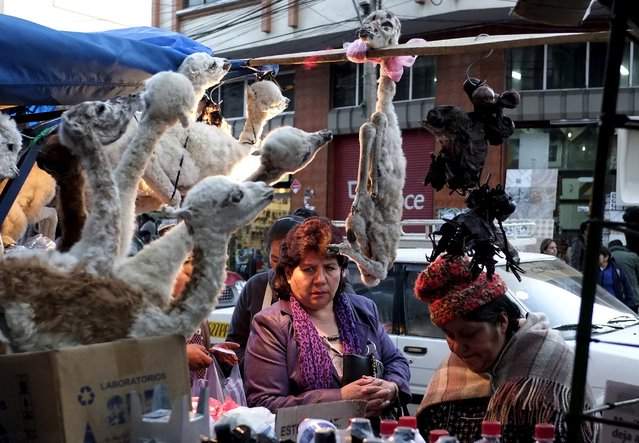
A woman (C) shops for an offering at the witch doctor's street in La Paz, July 31, 2015. According to Andean culture, the all the month of August is a time to give offerings to “Pachamama” to give thanks for their farms and health. The Aymaras use coca leaves, candies, animal fat, llama fetuses, some dried fruits, powdered minerals and alcohol during these rituals. (Photo by David Mercado/Reuters)
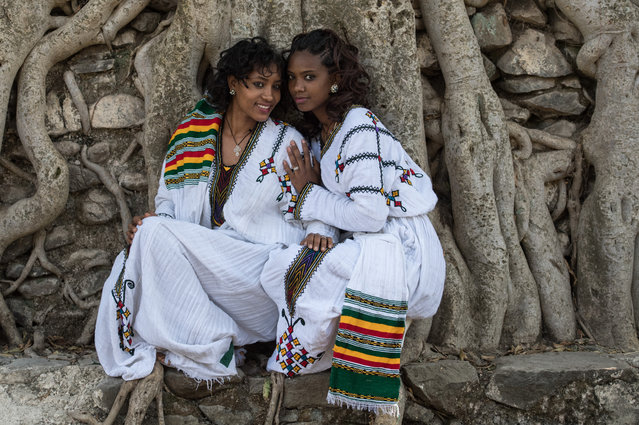
Women pose for a photograph in traditional Ethiopian dress during the annual Timkat Epiphany celebration on January 19, 2017 in Gondar, Ethiopia. Timkat is the Ethiopian Orthodox Christian festival which celebrates the baptism of Jesus in the Jordan river. During the festival, Tabots, or models of the Ark of the Covenant, are taken from churches around Gondar and paraded through the streets to Fasilides Bath. (Photo by Carl Court/Getty Images)
Two women wearing bejewelled bras kiss during the annual Sydney Gay and Lesbian Mardi Gras festival in Sydney, Australia March 4, 2017. (Photo by Jason Reed/Reuters)
“The fennec fox is a small nocturnal fox found in the Sahara of North Africa. Its most distinctive feature is unusually large ears. The name “fennec” comes from the Arabic word for fox, and the species name zerda has a Greek origin that refers to its habitat. The fennec is the smallest species of canid in the world; coat, ears and kidney functions have adapted to a high-temperature, low-water, desert environment. In addition, its hearing is sensitive enough to hear prey moving underground”. – Wikipedia
Photo: A Baby Fennec is seen at Sunshine International Aquarium on June 24, 2009 in Tokyo, Japan. The small nocturnal fox babies were born on May 17 2009. (Photo by Junko Kimura/Getty Images)