Loading...
Done
This photo taken on November 4, 2019 shows people taking part in a fish catching competition in a paddy field in Leishan county in China's southwestern Guizhou province, to celebrate the new year festival Miao people. (Photo by AFP Photo/China Stringer Network)

This photo taken on November 4, 2019 shows people taking part in a fish catching competition in a paddy field in Leishan county in China's southwestern Guizhou province, to celebrate the new year festival Miao people. (Photo by AFP Photo/China Stringer Network)
Details
07 Feb 2020 00:05:00


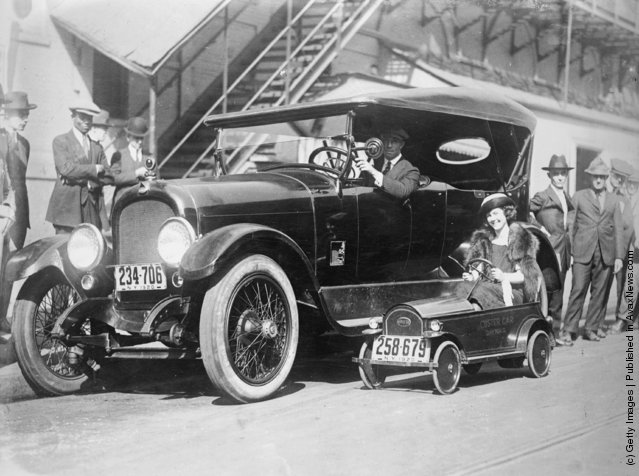
“Custer” the smallest car in the US. (Photo by Topical Press Agency/Getty Images). 1920
Details
28 Mar 2011 14:10:00


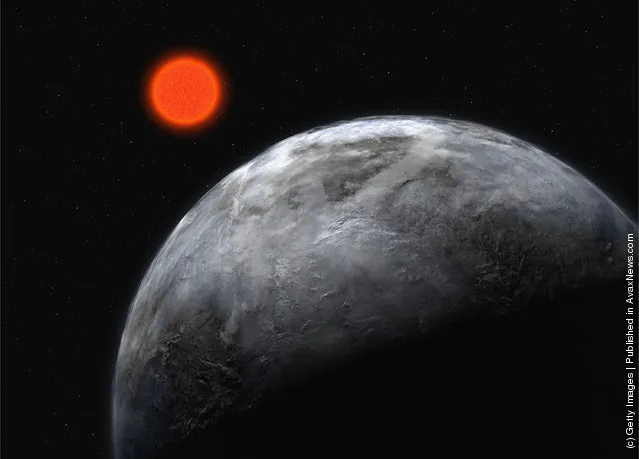
In this artist's impression supplied by the ESO (European Southern Observatory) on April 25, 2007, the planetary system around the red dwarf, Gliese 581, is pictured showing what astronomers believe is the most earth like planet found outside our solar system to date. Using the ESO 3.6-m telescope in Chile, astronomers have uncovered the planet which could have water running on its surface. The planet orbits the faint star Gliese 581, which is 20.5 light-years away in the constellation Libra. (Photo by ESO via Getty Images)
Details
12 Apr 2011 11:00:00
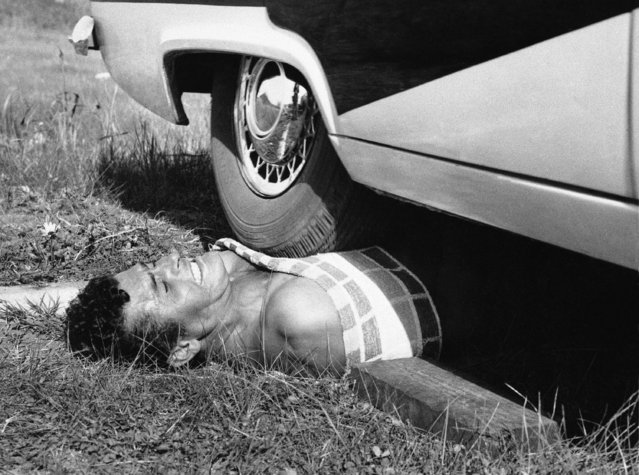
Leon Samson, 24-year-old showman, grimaces as an automobile is driven across his chest at Perth, Australia on October 9, 1960. Samson said the towel on his chest is to prevent the wheel from tearing his flesh. (Photo by AP Photo)

Leon Samson, 24-year-old showman, grimaces as an automobile is driven across his chest at Perth, Australia on October 9, 1960. Samson said the towel on his chest is to prevent the wheel from tearing his flesh. (Photo by AP Photo)
Details
11 Oct 2015 08:05:00
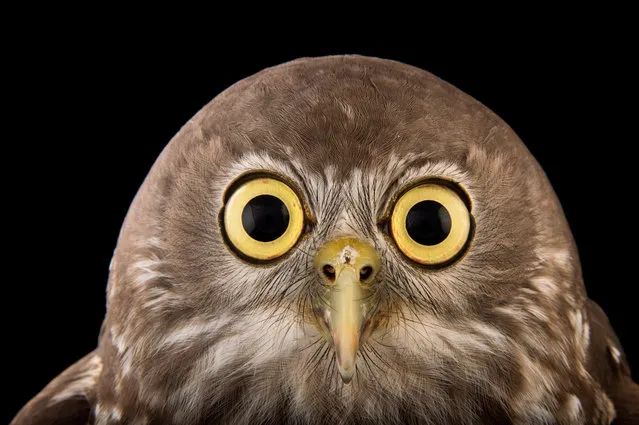
The National Geographic Photo Ark is a travelling exhibition of photographer Joel Sartore’s quest to create a photo archive of biodiversity around the world. So far, Sartore has captured studio portraits of more than 6,000 species – a number that he hopes to double. On 1 July, the ark will open at Melbourne zoo – the first time it has been exhibited in the southern hemisphere. More than 50 portraits will be on display, including many of Australian endangered animals being protected by programs at the zoo itself. These captions have been edited from text supplied by Melbourne zoo. Here: Barking owl. So-named because its call sounds like a barking dog, these birds are native to Australia, Indonesia and Papua New Guinea. In Victoria they are listed as an endangered species, and in 2003 there were estimated to be fewer than 50 breeding pairs. The main threat to the species in Victoria is loss of habitat, especially large trees with hollows in which they can nest and on which many of their prey depend. Apart from a bark, they may utter a chilling scream when they feel threatened. (Photo by Joel Sartore/National Geographic Photo Ark/The Guardian)

The National Geographic Photo Ark is a travelling exhibition of photographer Joel Sartore’s quest to create a photo archive of biodiversity around the world. So far, Sartore has captured studio portraits of more than 6,000 species – a number that he hopes to double. On 1 July, the ark will open at Melbourne zoo – the first time it has been exhibited in the southern hemisphere. More than 50 portraits will be on display, including many of Australian endangered animals being protected by programs at the zoo itself. These captions have been edited from text supplied by Melbourne zoo. Here: Barking owl. (Photo by Joel Sartore/National Geographic Photo Ark/The Guardian)
Details
01 Jul 2017 07:45:00
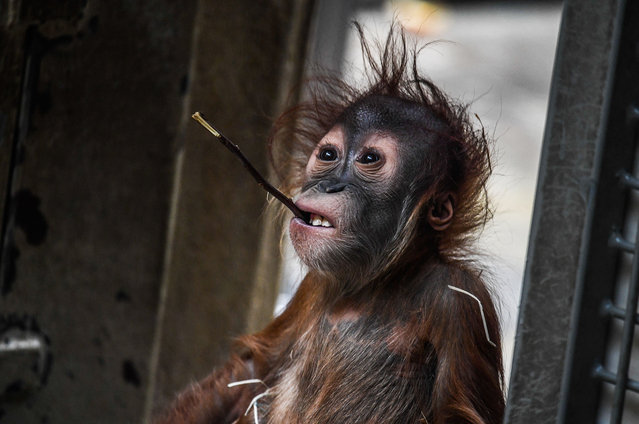
Almost two years old male baby orang-utan Dalai looks on in the zoo in Dresden, Germany, 30 March 2017. Dalai was born to mother Daisy in June 2016. (Photo by Filip Singer/EPA)

Almost two years old male baby orang-utan Dalai looks on in the zoo in Dresden, Germany, 30 March 2017. Dalai was born to mother Daisy in June 2016. (Photo by Filip Singer/EPA)
Details
01 Apr 2017 10:23:00
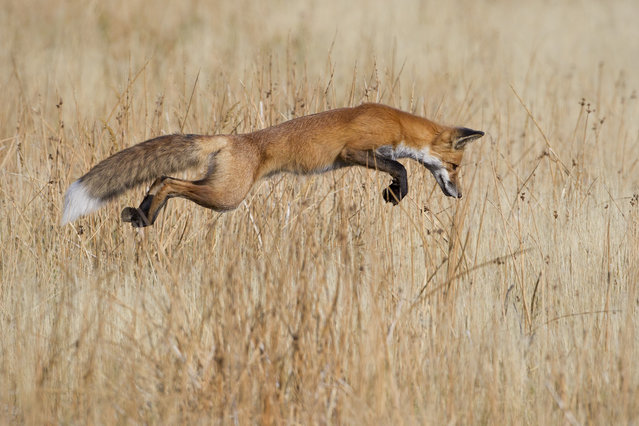
Canada: “Lucky pounce”. (Photo by Connor Stefanison/Wildlife Photographer of the Year 2013)

The winners of The London’s Natural History Museum's prestigious Wildlife Photographer of the Year for 2013 have finally been unveiled. Selected from almost 43,000 entries from 96 countries, the winners offer a glimpse of the stunning array of natural beauty on our planet. Photo: Canada: “Lucky pounce”. “Anticipating the pounce – that was the hardest part”, says Connor, who had come to Yellowstone National Park, Wyoming, USA, in search of wildlife as much as the spectacular landscape. He had found this fox, his first ever, on his last day in the park. It was so absorbed in hunting that Connor had plenty of time to get out of the car and settle behind a rock. It quartered the grassland, back and forth, and then started staring intently at a patch of ground, giving Connor just enough warning of the action to come. When it sprung up, Connor got his shot. And when it landed, the fox got his mouse. (Photo by Connor Stefanison/Wildlife Photographer of the Year 2013)

Details
17 Oct 2013 08:12:00
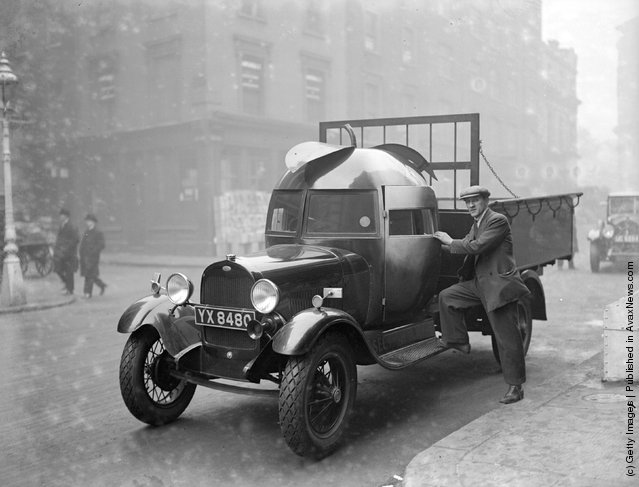
1928: A fruit importer's lorry at Covent Garden, London, with its driver's cabin in the shape of an apple

A fruit importer's lorry at Covent Garden, London, with its driver's cabin in the shape of an apple. (Photo by Harold Clements/London Express/Getty Images). October 1928
Details
21 Oct 2011 10:24:00