Loading...
Done
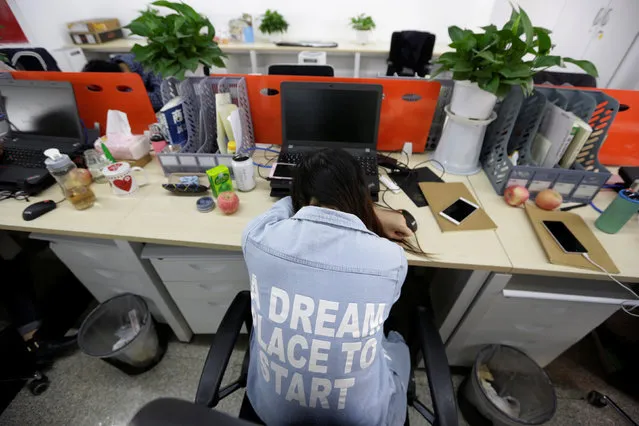
Yang Juan, an employee at Goopal Group, takes a nap in her seat after lunch, in Beijing, China, April 21, 2016. (Photo by Jason Lee/Reuters)

Yang Juan, an employee at Goopal Group, takes a nap in her seat after lunch, in Beijing, China, April 21, 2016. Office workers sleeping on the job is a common sight in China, where a surplus of cheap labour can lead to downtime at work. But in China's technology sector, where business is growing faster than many start-up firms can hire new staff, workers burn the midnight oil to meet deadlines and compete with their rivals. Some companies provide sleeping areas and beds for workers to rest during late nights. (Photo by Jason Lee/Reuters)
Details
12 May 2016 14:53:00
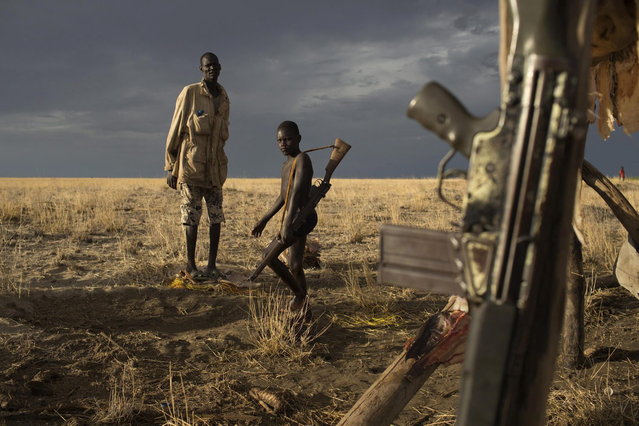
A Turkana man and a boy carrying a gun look on as a G3 battle rifle hangs from a structure used to dry fish at a fishing camp on the shores of Lake Turkana, some kilometres from Todonyang near the Kenya-Ethiopia border in northwestern Kenya October 12, 2013. (Photo by Siegfried Modola/Reuters)

A Turkana man and a boy carrying a gun look on as a G3 battle rifle hangs from a structure used to dry fish at a fishing camp on the shores of Lake Turkana, some kilometres from Todonyang near the Kenya-Ethiopia border in northwestern Kenya October 12, 2013The Turkana are traditionally nomadic pastoralists, but they have seen the pasture that they need to feed their herds suffer from recurring droughts and many have turned to fishing. However, Lake Turkana is overfished, and scarcity of food and pastureland is fuelling long-standing conflict with Ethiopian indigenous Dhaasanac, who have seen grazing grounds squeezed by large-scale government agricultural schemes in southern Ethiopia. The Dhaasanac now venture ever deeper into Kenyan territory in search of fish and grass, clashing with neighbours. Fighting between the communities has a long history, but the conflict has become ever more fatal as automatic weapons from other regional conflicts seep into the area. While the Turkana region is short of basics like grass and ground-water, it contains other resources including oil reserves and massive, newly discovered underground aquifers. (Photo by Siegfried Modola/Reuters)

Details
05 Dec 2013 12:08:00
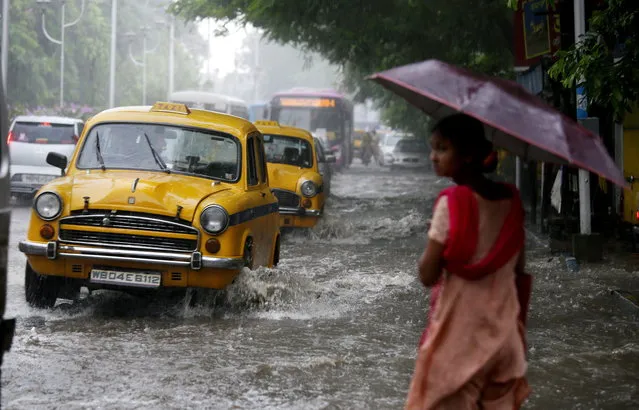
Indian commuters wade through floodwaters during the continuous rain shower in Calcutta, India, July 10, 2015. A monsoon shower hit the city and disrupted daily life. The Indian monsoon, takes place between May and September. (Photo by Piyal Adhikary/EPA)

Indian commuters wade through floodwaters during the continuous rain shower in Calcutta, India, July 10, 2015. A monsoon shower hit the city and disrupted daily life. The Indian monsoon, takes place between May and September. (Photo by Piyal Adhikary/EPA)
Details
11 Jul 2015 14:18:00
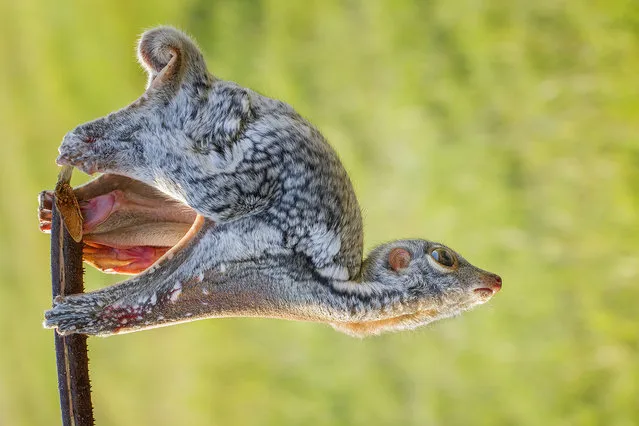
“Warming up”. This photo I capture in the early afternoon, the animal species of lemurs fly. Photo location: Sambas, West Kalimantan, Indonesia. (Photo and caption by Hendy Mp/National Geographic Photo Contest)

“Warming up”. This photo I capture in the early afternoon, the animal species of lemurs fly. Photo location: Sambas, West Kalimantan, Indonesia. (Photo and caption by Hendy Mp/National Geographic Photo Contest)
Details
03 Oct 2014 11:52:00
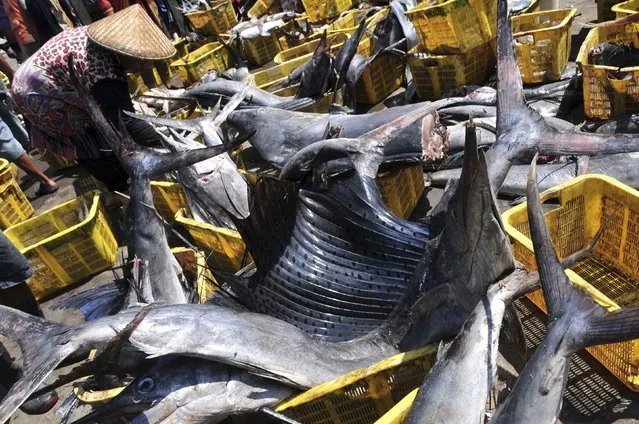
Fishermen prepare marlin and sailfish, destined for Jakarta, for auction at a fish market in Tegal, Central Java November 26, 2014 in this photo taken by Antara Foto. (Photo by Oky Lukmansyah/Reuters/Antara Foto)

Fishermen prepare marlin and sailfish, destined for Jakarta, for auction at a fish market in Tegal, Central Java November 26, 2014 in this photo taken by Antara Foto. (Photo by Oky Lukmansyah/Reuters/Antara Foto)
Details
29 Nov 2014 12:40:00
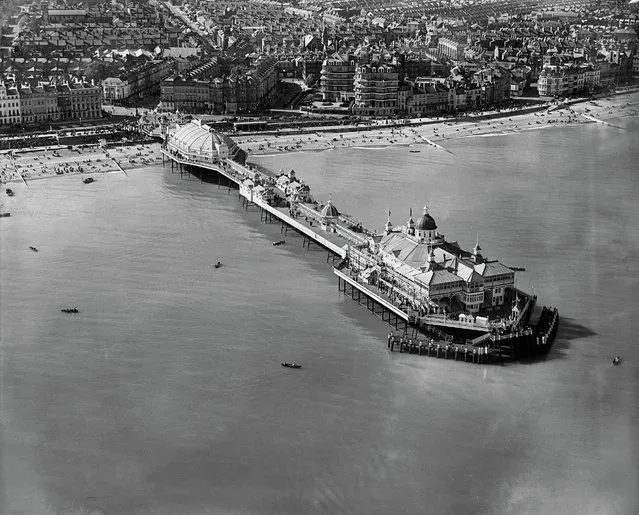
While the lido was described as bringing “modernism to the masses” on the British coast it was just the latest example of a trend that had been developing since Victorian times – transforming seaside towns into resorts for leisure and entertainment. In the latter half of the nineteenth century, the fashion was for local authorities to build great piers stretching from the promenade out into the sea

While the lido was described as bringing “modernism to the masses” on the British coast it was just the latest example of a trend that had been developing since Victorian times – transforming seaside towns into resorts for leisure and entertainment. In the latter half of the nineteenth century, the fashion was for local authorities to build great piers stretching from the promenade out into the sea. The Eastbourne Pier, pictured here in May 1931, was erected between 1866 and 1870 to an ingenious design by Eugenius Birch, which saw the structure sitting on special cups allowing the supporting struts to “move” in bad weather. Arranged on the pier's 1,000-foot length were kiosks, a theatre, a ballroom and a camera obscura. 1931. (Photo by Aerofilms Collection via “A History of Britain From Above”)
Details
25 Feb 2014 12:59:00
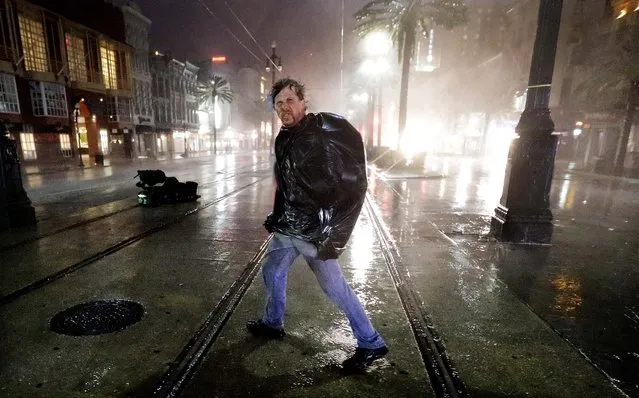
A man crosses Canal Street in the wind and rain from Hurricane Isaac August 29, 2012. (Photo by David J. Phillip/Associated Press)

A man crosses Canal Street in the wind and rain from Hurricane Isaac August 29, 2012. (Photo by David J. Phillip/Associated Press)
Details
01 Sep 2012 08:17:00
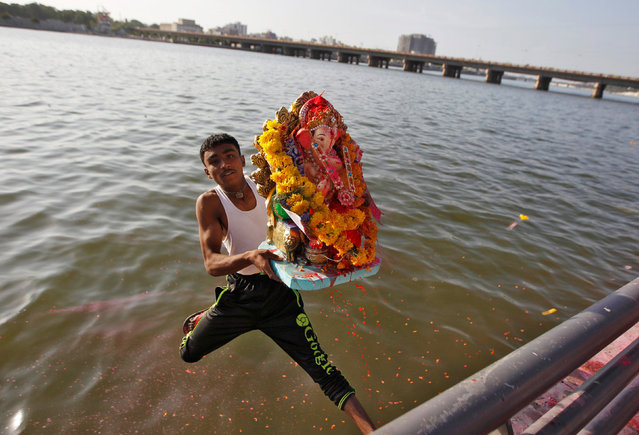
A devotee carrying an idol of the Hindu god Ganesh, the deity of prosperity, jumps into the Sabarmati river to immerse the idol during the 10-day-long Ganesh Chaturthi festival in Ahmedabad, India, September 11, 2016. (Photo by Amit Dave/Reuters)

A devotee carrying an idol of the Hindu god Ganesh, the deity of prosperity, jumps into the Sabarmati river to immerse the idol during the 10-day-long Ganesh Chaturthi festival in Ahmedabad, India, September 11, 2016. (Photo by Amit Dave/Reuters)
Details
16 Sep 2016 10:37:00