Loading...
Done
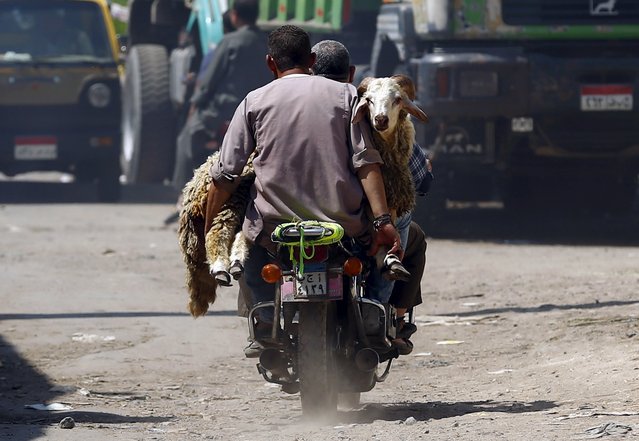
Men transport a sheep on their motorcycle after buying it at an old cattle market named “Al Emam Market” ahead of the Muslim festival Eid al-Adha in Cairo, Egypt, September 19, 2015. Muslims across the world are preparing to celebrate the annual festival of Eid al-Adha or the Festival of Sacrifice, which marks the end of the annual hajj pilgrimage, by slaughtering goats, sheep. (Photo by Amr Abdallah Dalsh/Reuters)

Men transport a sheep on their motorcycle after buying it at an old cattle market named “Al Emam Market” ahead of the Muslim festival Eid al-Adha in Cairo, Egypt, September 19, 2015. Muslims across the world are preparing to celebrate the annual festival of Eid al-Adha or the Festival of Sacrifice, which marks the end of the annual hajj pilgrimage, by slaughtering goats, sheep, cows and camels in commemoration of the Prophet Abraham's readiness to sacrifice his son to show obedience to Allah. (Photo by Amr Abdallah Dalsh/Reuters)
Details
22 Sep 2015 08:05:00
Syrian Tulin Hashemi waits for a job interview at a hotel in Vidigal slum in Rio de Janeiro, Brazil, September 22, 2015. Tulin, whose mother arrived two days ago, has been living in Brazil for two months. As she does not speak Portuguese, Tulin says it is difficult for her to find a job and therefore she is staying at the slum as it is one of the cheaper neighbourhoods to live in. (Photo by Pilar Olivares/Reuters)

Syrian Tulin Hashemi waits for a job interview at a hotel in Vidigal slum in Rio de Janeiro, Brazil, September 22, 2015. Tulin, whose mother arrived two days ago, has been living in Brazil for two months. As she does not speak Portuguese, Tulin says it is difficult for her to find a job and therefore she is staying at the slum as it is one of the cheaper neighbourhoods to live in. According to the National Committee for Refugees (CONARE), 2,077 people fleeing the Syrian civil war have settled in Brazil, whilst a quarter of the 8,400 refugees in the Latin American country come from Syria. (Photo by Pilar Olivares/Reuters)
Details
25 Sep 2015 08:05:00
A woman applies lipstick in a car that is parked at a beach facing a volcanic rock called Devil's Finger outside Yuzhno-Kurilsk, the main settlement on the Southern Kurile island of Kunashir September 15, 2015. (Photo by Thomas Peter/Reuters)

A woman applies lipstick in a car that is parked at a beach facing a volcanic rock called Devil's Finger outside Yuzhno-Kurilsk, the main settlement on the Southern Kurile island of Kunashir September 15, 2015. Russian residents of the island chain at the centre of a dispute between Japan and Russia that has held up a treaty to formally end World War Two hope a diplomatic solution will lure tourists and investment to help refurbish rickety infrastructure. The Southern Kuriles are referred to in Japan as the Northern Territories. (Photo by Thomas Peter/Reuters)
Details
28 Sep 2015 08:03:00
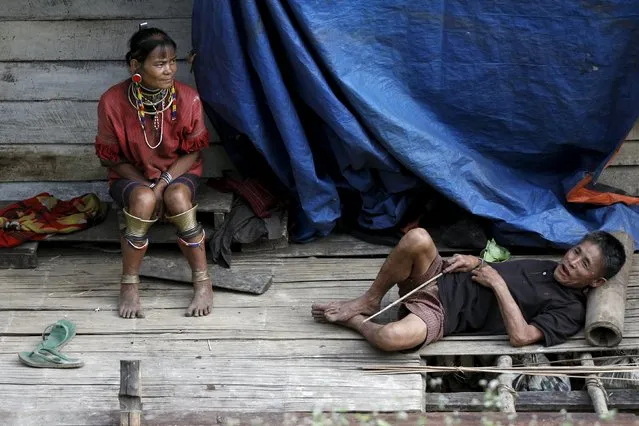
An ethnic Kayaw couple Mu Htoo and her husband Htaw Eili rest at their home at Htaykho village in the Kayah state, Myanmar September 12, 2015. (Photo by Soe Zeya Tun/Reuters)

An ethnic Kayaw couple Mu Htoo and her husband Htaw Eili rest at their home at Htaykho village in the Kayah state, Myanmar September 12, 2015. With about 30,000 members, the Kayaw are one of the smallest ethnic minorities among Myanmar's 135 groups. Their village has for decades been off-limits, as armed rebels fought the military before a recent ceasefire stopped the bloody conflict here. The rebels in the area have put down their guns and taken to the hills to grow rice and corn, but slash-and-burn cultivation methods mean they struggle to find new places to farm. (Photo by Soe Zeya Tun/Reuters)
Details
21 Oct 2015 08:03:00
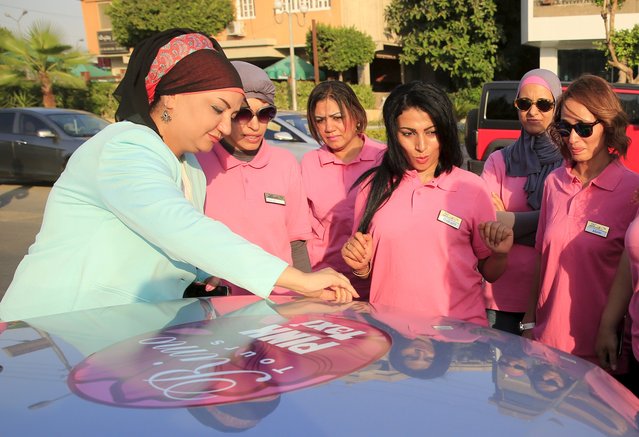
Reem Fawzy (L), the director of the Pink Taxi company, stands with her drivers in a parking lot in Cairo, Egypt, September 6, 2015. (Photo by Amr Abdallah Dalsh/Reuters)

Reem Fawzy (L), the director of the Pink Taxi company, stands with her drivers in a parking lot in Cairo, Egypt, September 6, 2015. Pink uniforms, a pink logo on the cars, and even pink nail polish – it's all part of the look of women-drivers working for Egypt's first women-only taxi service. The Pink Taxi company hires only women drivers and gives rides to only female passengers. The company was started in an effort to provide a safe taxi service for women in a country with high rates of sexual harassment, said Reem Fawzy, the director of the company. (Photo by Amr Abdallah Dalsh/Reuters)
Details
09 Sep 2015 12:28:00
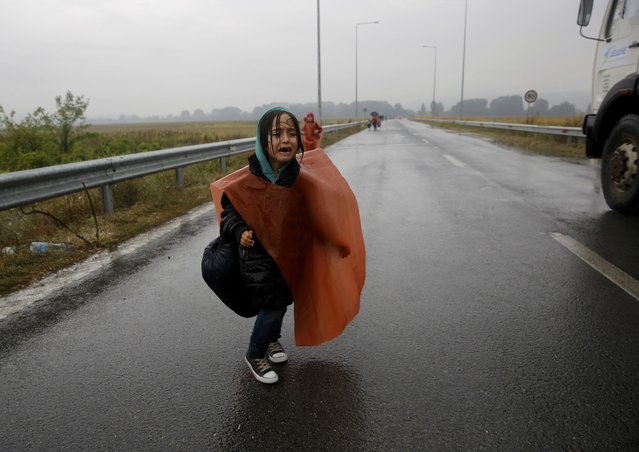
A Syrian refugee girl cries as she walks through a rainstorm towards Greece's border with Macedonia, near the Greek village of Idomeni, September 10, 2015. Most of the people flooding into Europe are refes fleeing violence and persecution in their home countries who have a legal right to seek asylum, the United Nations said on Tuesday. (Photo by Yannis Behrakis/Reuters)

A Syrian refugee girl cries as she walks through a rainstorm towards Greece's border with Macedonia, near the Greek village of Idomeni, September 10, 2015. Most of the people flooding into Europe are refes fleeing violence and persecution in their home countries who have a legal right to seek asylum, the United Nations said on Tuesday. (Photo by Yannis Behrakis/Reuters)
Details
11 Sep 2015 12:57:00
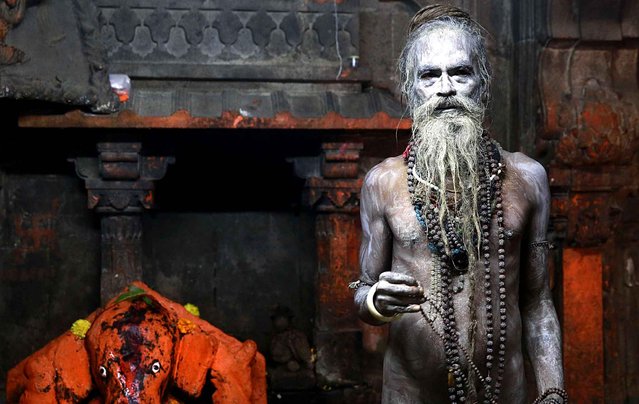
A Naga sadhu, or naked Hindu holy man, poses for a picture after taking a holy dip in the Godavari River during Kumbh Mela, or Pitcher Festival, at Trimbakeshwar in Nasik, India, Sunday, September 13, 2015. Hindus believe taking a dip in the waters of a holy river during the festival, will cleanse them of their sins. (Photo by Rafiq Maqbool/AP Photo)

A Naga sadhu, or naked Hindu holy man, poses for a picture after taking a holy dip in the Godavari River during Kumbh Mela, or Pitcher Festival, at Trimbakeshwar in Nasik, India, Sunday, September 13, 2015. Hindus believe taking a dip in the waters of a holy river during the festival, will cleanse them of their sins. According to Hindu mythology, the Kumbh Mela celebrates the victory of gods over demons in a furious battle over a nectar that would give them immortality. (Photo by Rafiq Maqbool/AP Photo)
Details
14 Sep 2015 13:31:00
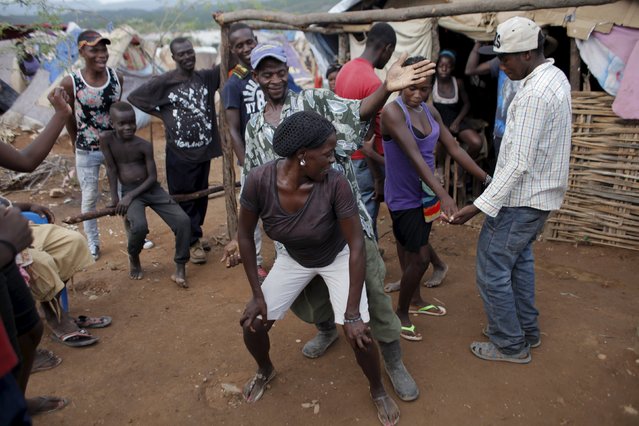
People enjoy themselves as they dance to Dominican music at a refugee camp for Haitians returning from the Dominican Republic on the outskirts of Anse-a-Pitres, Haiti, September 6, 2015. (Photo by Andres Martinez Casares/Reuters)

People enjoy themselves as they dance to Dominican music at a refugee camp for Haitians returning from the Dominican Republic on the outskirts of Anse-a-Pitres, Haiti, September 6, 2015. Dominican officials last month began implementing a controversial immigration program targeting Haitian migrants and Dominican-born people of Haitian descent. The program centers on round-ups and deportations that have triggered concerns about a slow-growing border migration crisis in the poorest country in the Americas. So far about 1,500 people have been deported at a pace of 50 to 100 per day, according to relief officials with access to records supplied by the Dominican government. (Photo by Andres Martinez Casares/Reuters)
Details
21 Sep 2015 11:29:00