Loading...
Done
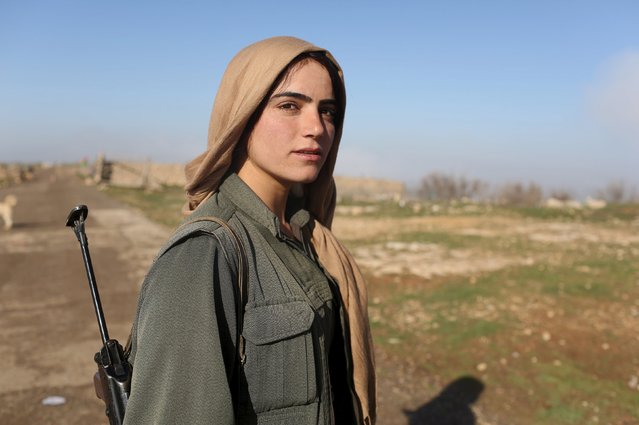
A female Kurdistan Workers Party (PKK) fighter stands near a security position in Sinjar, March 13, 2015. (Photo by Asmaa Waguih /Reuters)

A female Kurdistan Workers Party (PKK) fighter stands near a security position in Sinjar, March 13, 2015. Women fighters at a Kurdistan Workers Party (PKK) base on Mount Sinjar in northwest Iraq, just like their male counterparts, have to be ready for action at any time. Smoke from the front line, marking their battle against Islamic State, which launched an assault on northern Iraq last summer, is visible from the base. Many of the women have cut links with their families back home; the fighters come from all corners of the Kurdish region. (Photo by Asmaa Waguih /Reuters)
Details
02 May 2015 14:44:00
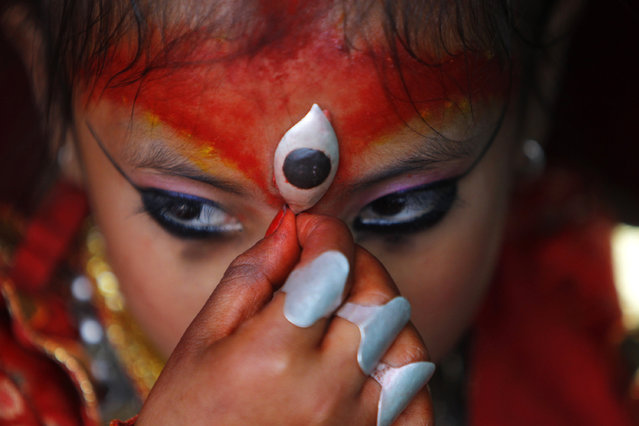
Nepal's Kumari, or living goddess, adjusts her ornament as she watches the Rato Machindranath chariot Festival in Lalitpur, Nepal, Friday, April 24, 2015. Nepal's living goddesses are young pre-pubescent girls considered by devotees to be incarnations of a Hindu goddess. Selected as toddlers, living goddesses usually keep their positions until they reach puberty. (Photo by Niranjan Shrestha/AP Photo)

Nepal's Kumari, or living goddess, adjusts her ornament as she watches the Rato Machindranath chariot Festival in Lalitpur, Nepal, Friday, April 24, 2015. Nepal's living goddesses are young pre-pubescent girls considered by devotees to be incarnations of a Hindu goddess. Selected as toddlers, living goddesses usually keep their positions until they reach puberty. (Photo by Niranjan Shrestha/AP Photo)
Details
25 Apr 2015 10:05:00
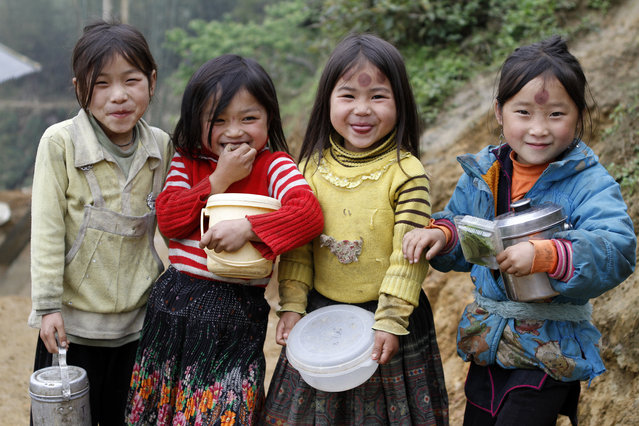
“Kids of Sapa”. Four little beautiful Hmong girls from Lao Chai Village, near Sapa, Vietnam. (Photo and caption by Felipe Hanower/National Geographic Traveler Photo Contest)

“Kids of Sapa”. Four little beautiful Hmong girls from Lao Chai Village, near Sapa, Vietnam. (Photo and caption by Felipe Hanower/National Geographic Traveler Photo Contest)
Details
15 Jul 2013 09:14:00
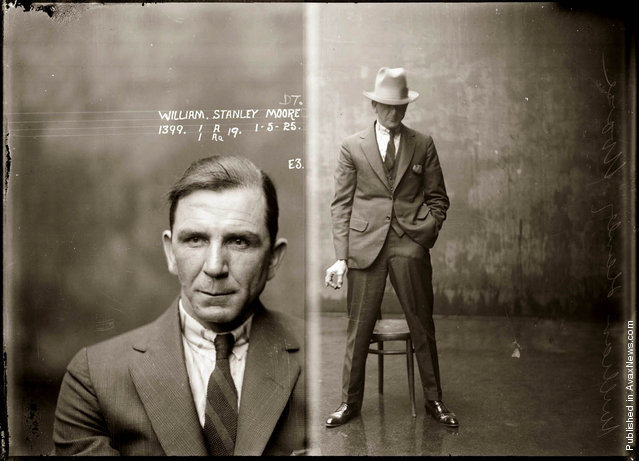
Mug shot of William Stanley Moore, 1 May 1925, Central Police Station, Sydney

Mug shot of William Stanley Moore, 1 May 1925, Central Police Station, Sydney. This picture appears in the Photo Supplement to the NSW Police Gazette, 28 July, 1926 captioned: “Opium dealer. Operates with large quantities of faked opium and cocaine. A wharf labourer; associates with water front thieves and drug traders”. (Photo by NSW Police Forensic Photography Archive, Justice & Police Museum, Histiric Houses Trust of NSW)
Details
24 Apr 2012 11:46:00
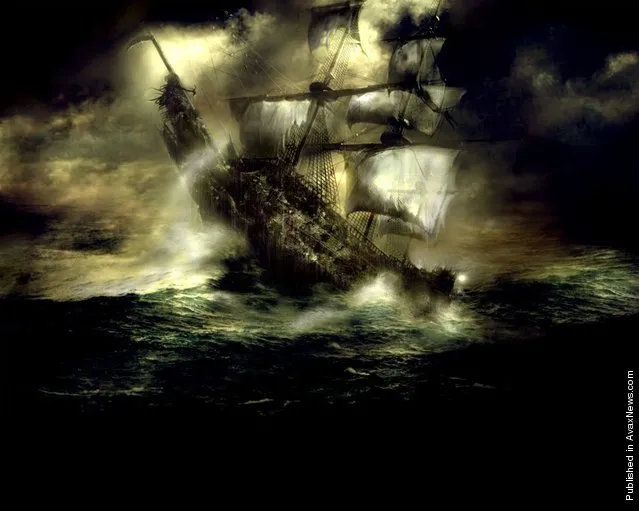
Ocean voyage

Do you think that history is a science? Well, not exactly. First, and foremost, history is the state's “legend of wars”, it’s official regalia. Of course, public historians are not interested in scientific truth – quite the opposite. In this respect, any attempt to present a state’s history as altruistic and benevolent as possible is welcomed and encouraged – as opposed to any revisionism attempts that may be more accurate. In this matter, Chinese have surpassed us all – they revised in highly creative manner (but rather shamelessly) the technology already invented by Europeans, a process that resulted in oldest state on the planet. Here is an interesting paradox: ask any sinologist about the Middle Kingdom during second century B.C., and he will describe it to you in such a vivid manner as if he has been living there all his life – but as soon as you will ask him to describe Chinese history in the 19-20th centuries… let's say, his eagerness will be greatly diminished. However, we will discuss China in a different article, and in the meantime we will try to understand how exactly historic “legend of wars” is formed and functions – based on a specific and well-known example. A great example is Ferdinand Magellan's first voyage around the world.

Details
14 Nov 2011 09:11:00
Takeoka Chisaka, Hiroshima, Japan. “One morning in August 1945, I was walking home from the night shift at a factory in Hiroshima. As I reached my door, there was a huge explosion. When I came to, my head was bleeding and I had been blasted 30m away”. (Photo and caption by Sasha Maslov)

Takeoka Chisaka, Hiroshima, Japan. “One morning in August 1945, I was walking home from the night shift at a factory in Hiroshima. As I reached my door, there was a huge explosion. When I came to, my head was bleeding and I had been blasted 30m away. The atomic bomb had detonated. When I found my mother, her eyes were badly burned. A doctor said they had to come out, but he didn’t have the proper tools so used a knife instead. It was hellish. I became a peace-worker after the war. In the 1960s, at a meeting at the UN, I met one of the people who created the atomic bomb. He apologised”. (Photo and caption by Sasha Maslov)
Details
11 May 2015 11:56:00
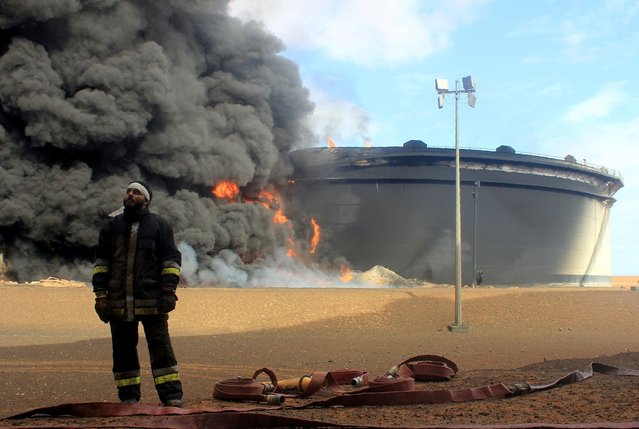
A Libyan fireman stands in front of smoke and flames rising from an oil storage tank at an oil facility in northern Libya's Ras Lanouf region on January 23, 2016, after it was set ablaze earlier in the week following attacks launched by Islamic State (IS) group jihadists to seize key port terminals. (Photo by AFP Photo/Stringer)

A Libyan fireman stands in front of smoke and flames rising from an oil storage tank at an oil facility in northern Libya's Ras Lanouf region on January 23, 2016, after it was set ablaze earlier in the week following attacks launched by Islamic State (IS) group jihadists to seize key port terminals. (Photo by AFP Photo/Stringer)
Details
25 Jan 2016 12:19:00
Revelers throw colored corn starch into the air as they celebrate the 2015 Holi (Festival of Colors) at the Krishna Temple in Spanish Fork, Utah on Saturday, March 28, 2015. (Photo by Rick Bowmer/AP Photo)

Revelers throw colored corn starch into the air as they celebrate the 2015 Holi (Festival of Colors) at the Krishna Temple in Spanish Fork, Utah on Saturday, March 28, 2015. (Photo by Rick Bowmer/AP Photo)
Details
04 Apr 2015 11:13:00