Loading...
Done
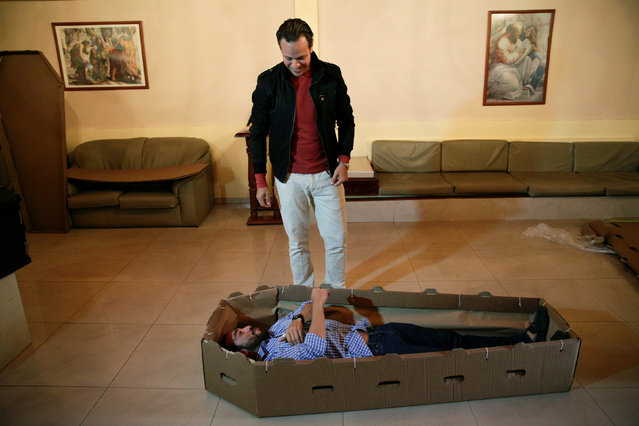
Elio Angulo (bottom C) lies inside a cardboard coffin next to Alejandro Blanchard as they introduce their product to potential customers at a mortuary in Valencia, in the state of Carabobo, Venezuela August 25, 2016. (Photo by Marco Bello/Reuters)

Elio Angulo (bottom C) lies inside a cardboard coffin next to Alejandro Blanchard as they introduce their product to potential customers at a mortuary in Valencia, in the state of Carabobo, Venezuela August 25, 2016. When Venezuelan entrepreneurs Alejandro Blanchard and Elio Angulo decided to create cardboard coffins, they were looking for an ecological selling point to compete against classic wood and brass caskets. Three years on, with the oil-rich country mired in deep economic crisis, their “bio-coffins” are becoming a viable option because of high prices for wooden coffins and shortages of brass ones. (Photo by Marco Bello/Reuters)
Details
27 Aug 2016 11:18:00
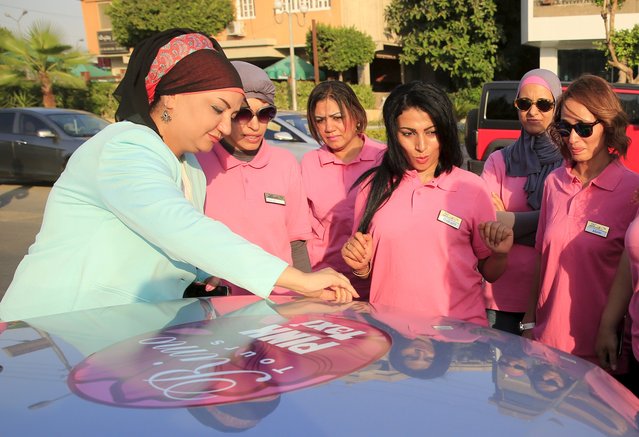
Reem Fawzy (L), the director of the Pink Taxi company, stands with her drivers in a parking lot in Cairo, Egypt, September 6, 2015. (Photo by Amr Abdallah Dalsh/Reuters)

Reem Fawzy (L), the director of the Pink Taxi company, stands with her drivers in a parking lot in Cairo, Egypt, September 6, 2015. Pink uniforms, a pink logo on the cars, and even pink nail polish – it's all part of the look of women-drivers working for Egypt's first women-only taxi service. The Pink Taxi company hires only women drivers and gives rides to only female passengers. The company was started in an effort to provide a safe taxi service for women in a country with high rates of sexual harassment, said Reem Fawzy, the director of the company. (Photo by Amr Abdallah Dalsh/Reuters)
Details
09 Sep 2015 12:28:00
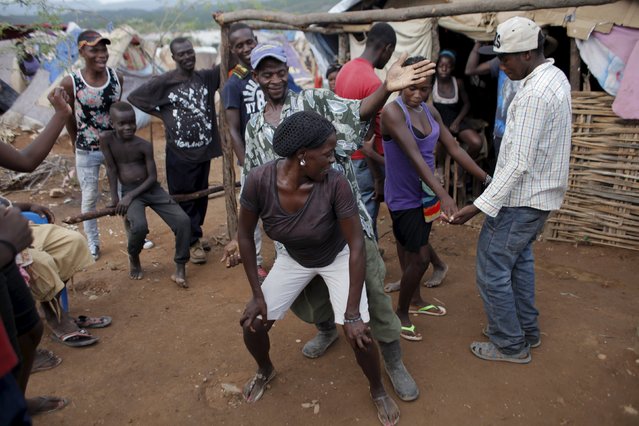
People enjoy themselves as they dance to Dominican music at a refugee camp for Haitians returning from the Dominican Republic on the outskirts of Anse-a-Pitres, Haiti, September 6, 2015. (Photo by Andres Martinez Casares/Reuters)

People enjoy themselves as they dance to Dominican music at a refugee camp for Haitians returning from the Dominican Republic on the outskirts of Anse-a-Pitres, Haiti, September 6, 2015. Dominican officials last month began implementing a controversial immigration program targeting Haitian migrants and Dominican-born people of Haitian descent. The program centers on round-ups and deportations that have triggered concerns about a slow-growing border migration crisis in the poorest country in the Americas. So far about 1,500 people have been deported at a pace of 50 to 100 per day, according to relief officials with access to records supplied by the Dominican government. (Photo by Andres Martinez Casares/Reuters)
Details
21 Sep 2015 11:29:00
A man walks along an empty street near the central financial district in Hong Kong September 30, 2014. Tens of thousands of pro-democracy protesters extended a blockade of Hong Kong streets on Tuesday, stockpiling supplies and erecting makeshift barricades ahead of what some fear may be a push by police to clear the roads before Chinese National Day. (Photo by Carlos Barria/Reuters)

Reuters photographer Bobby Yip took a series of portraits of people taking part in the “Occupy Central” protests in Hong Kong, and asked them why they had joined the demonstrations. China rules Hong Kong under a “one country, two systems” formula that accords the territory limited democracy. Tens of thousands of mostly student protesters are demanding Beijing give them full democracy, with the freedom to nominate election candidates. The unrest is the worst in Hong Kong since China resumed its rule over the former British colony in 1997. (Photo by Carlos Barria/Reuters)
Details
30 Sep 2014 09:10:00
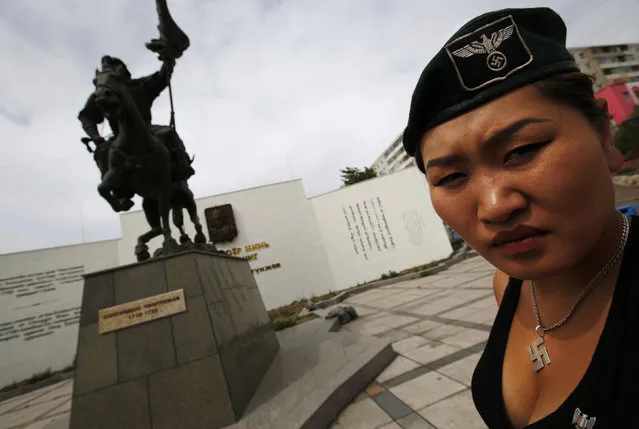
Uranjargal, a leader of the Mongolian neo-Nazi group Tsagaan Khass, stands next to a statue of Chingunjav, a Mongolian national hero, in Ulan Bator June 22, 2013. (Photo by Carlos Barria/Reuters)

Uranjargal, a leader of the Mongolian neo-Nazi group Tsagaan Khass, stands next to a statue of Chingunjav, a Mongolian national hero, in Ulan Bator June 22, 2013. The group has rebranded itself as an environmentalist organisation fighting pollution by foreign-owned mines, seeking legitimacy as it sends Swastika-wearing members to check mining permits. Over the past years, ultra-nationalist groups have expanded in the country and among those garnering attention is Tsagaan Khass, which has recently shifted its focus from activities such as attacks on women it accuses of consorting with foreign men to environmental issues, with the stated goal of protecting Mongolia from foreign mining interests. This ultra-nationalist group was founded in the 1990s and currently has 100-plus members. (Photo by Carlos Barria/Reuters)
Details
09 Jul 2013 07:23:00
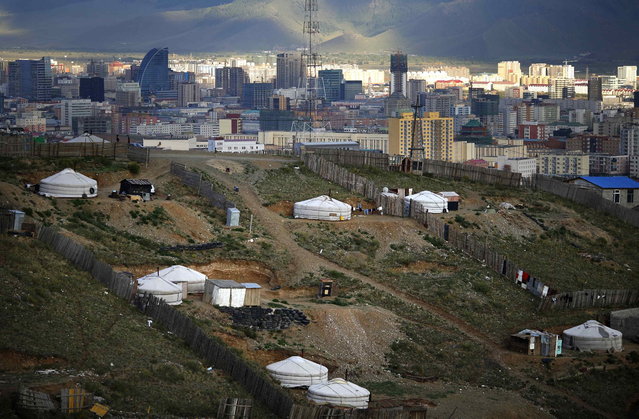
Gers, traditional Mongolian tents, are seen on a hill in an area known as a ger district in Ulan Bator June 26, 2013. (Photo by Carlos Barria/Reuters)

Gers, traditional Mongolian tents, are seen on a hill in an area known as a ger district in Ulan Bator June 26, 2013. Approximately 60 percent of the population of Ulan Bator live in settlements known as ger districts and in many cases residents have limited access to basic services such as water and sanitation. According to a 2010 National Population Center census, every year between thirty and forty thousand people migrate from the countryside to the capital Ulan Bator. Ger districts in the city have been expanding rapidly in recent years. Mongolia is the world's least densely populated country, with 2.8 million people spread across an area around three times the size of France. (Photo by Carlos Barria/Reuters)
Details
11 Aug 2013 11:45:00
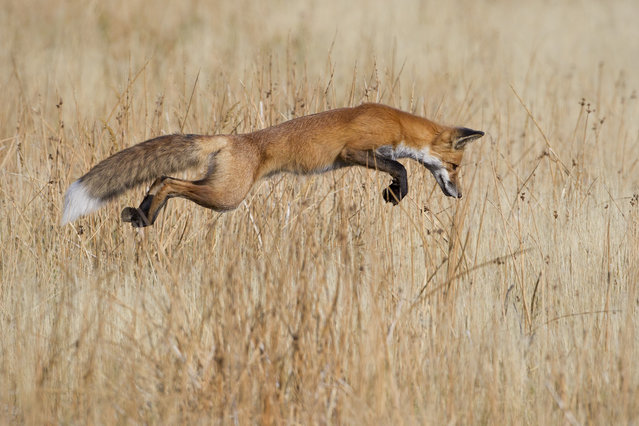
Canada: “Lucky pounce”. (Photo by Connor Stefanison/Wildlife Photographer of the Year 2013)

The winners of The London’s Natural History Museum's prestigious Wildlife Photographer of the Year for 2013 have finally been unveiled. Selected from almost 43,000 entries from 96 countries, the winners offer a glimpse of the stunning array of natural beauty on our planet. Photo: Canada: “Lucky pounce”. “Anticipating the pounce – that was the hardest part”, says Connor, who had come to Yellowstone National Park, Wyoming, USA, in search of wildlife as much as the spectacular landscape. He had found this fox, his first ever, on his last day in the park. It was so absorbed in hunting that Connor had plenty of time to get out of the car and settle behind a rock. It quartered the grassland, back and forth, and then started staring intently at a patch of ground, giving Connor just enough warning of the action to come. When it sprung up, Connor got his shot. And when it landed, the fox got his mouse. (Photo by Connor Stefanison/Wildlife Photographer of the Year 2013)
Details
17 Oct 2013 08:12:00
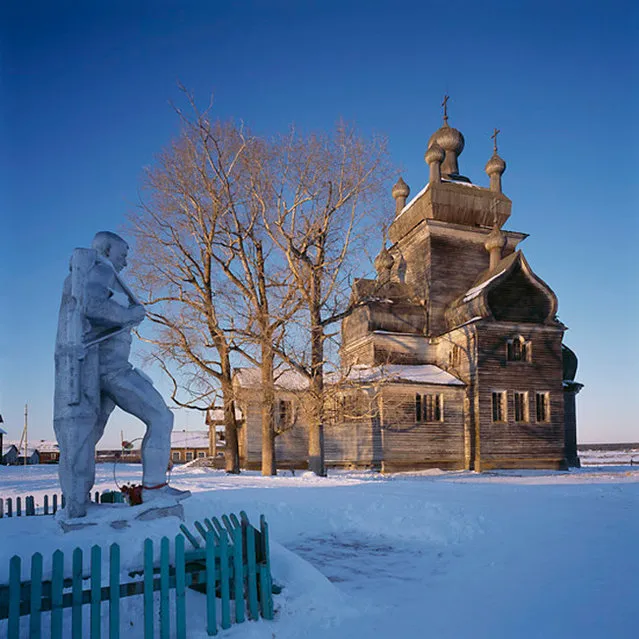
Wooden Churches - Travelling In The Russian North By Richard Davies Part 2

While communism, collectivism, worms, dry rot and casual looting failed to destroy the majestic wooden churches of Russia, it may be ordinary neglect that finally does them in. Dwindled now to several hundred remaining examples, these glories of vernacular architecture lie scattered amid the vastness of the world’s largest country. Just over a decade ago, Richard Davies, a British architectural photographer, struck out on a mission to record the fragile and poetic structures. Austerely beautiful and haunting, “Wooden Churches: Traveling in the Russian North” (White Sea Publishing; $132) is the result. Covering thousands of miles, Mr. Davies described how he and the writer Matilda Moreton tracked down the survivors from among the thousands of onion-domed structures built after Prince Vladimir converted to Christianity in 988.

See also: Wooden Churches Part1
Details
28 Nov 2013 12:13:00