Loading...
Done
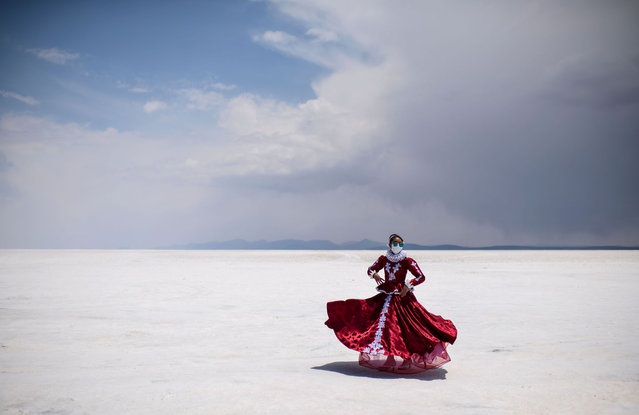
A dancer of Potosi's government departament, poses with traditional costumes at the Salar de Uyuni, the world's largest salt flat, in Uyuni, Bolivia, on November 7, 2020. (Photo by Ronaldo Schemidt/AFP Photo)

A dancer of Potosi's government departament, poses with traditional costumes at the Salar de Uyuni, the world's largest salt flat, in Uyuni, Bolivia, on November 7, 2020. (Photo by Ronaldo Schemidt/AFP Photo)
Details
24 Nov 2020 00:05:00
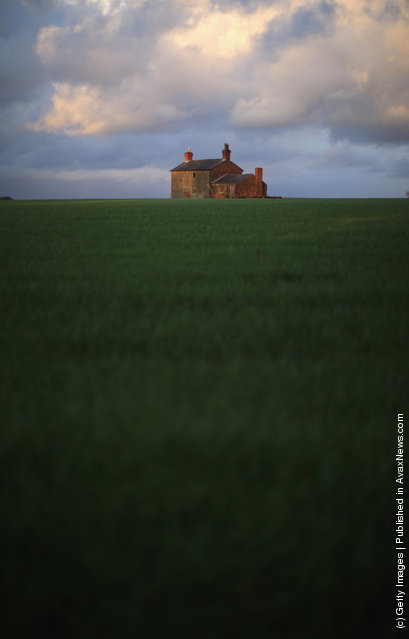
A derelict farm house adorns the horizon as it sits in a field in the Lancashire Countryside

A derelict farm house adorns the horizon as it sits in a field in the Lancashire Countryside on January 26, 2012 in Burscough, England. (Photo by Christopher Furlong/Getty Images)
Details
27 Jan 2012 11:55:00
France's paralympic triple jumper Arnaud Assoumani poses in front of The Louvre Pyramide, designed by Ieoh Ming Pei, in Paris on April 20, 2024, ahead of the Paris 2024 Olympic and Paralympic games. The Louvre was originally built as a fortress in the late 12th century, became one of the main residences of the kings of France later and actually is one of the largest museum in the world. (Photo by Franck Fife/AFP Photo)

France's paralympic triple jumper Arnaud Assoumani poses in front of The Louvre Pyramide, designed by Ieoh Ming Pei, in Paris on April 20, 2024, ahead of the Paris 2024 Olympic and Paralympic games. The Louvre was originally built as a fortress in the late 12th century, became one of the main residences of the kings of France later and actually is one of the largest museum in the world. (Photo by Franck Fife/AFP Photo)
Details
03 Aug 2024 04:29:00
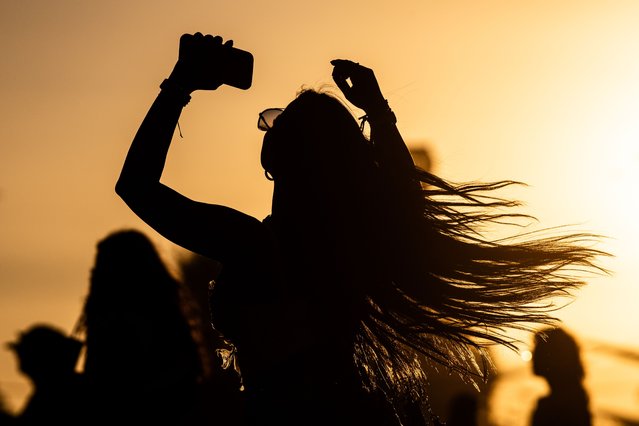
People attend the second day of the Lollapalooza Chile Music festival, in the commune of Cerrillos, Santiago, Chile, 22 March 2025. (Photo by Ailen Diaz/EPA)

People attend the second day of the Lollapalooza Chile Music festival, in the commune of Cerrillos, Santiago, Chile, 22 March 2025. (Photo by Ailen Diaz/EPA)
Details
23 Apr 2025 03:45:00
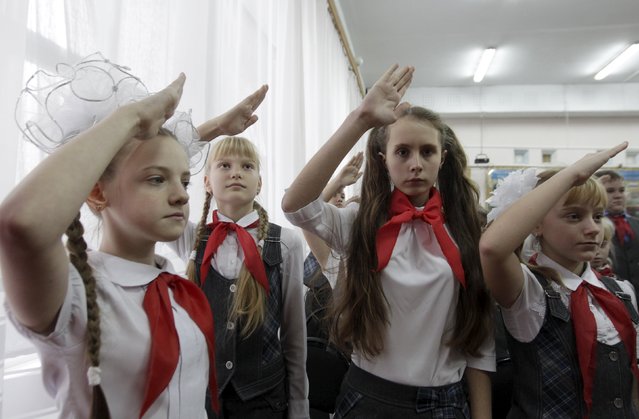
Children, wearing red neckerchiefs, a symbol of the Pioneer Organization, salute during a ceremony for the inauguration of 18 new members at a local school in the southern settlement of Kazminskoye in Stavropol region, Russia, November 19, 2015. Early pro-communist youth movements, which appeared in Russia after the 1917 Bolshevik revolution, were reformed into the Pioneer Organization of the Soviet Union. (Photo by Eduard Korniyenko/Reuters)

Children, wearing red neckerchiefs, a symbol of the Pioneer Organization, salute during a ceremony for the inauguration of 18 new members at a local school in the southern settlement of Kazminskoye in Stavropol region, Russia, November 19, 2015. Early pro-communist youth movements, which appeared in Russia after the 1917 Bolshevik revolution, were reformed into the Pioneer Organization of the Soviet Union. While the organization lost its dominance among students in post-Soviet Russia, some educational institutions and families still carry on this tradition. (Photo by Eduard Korniyenko/Reuters)

Details
22 Nov 2015 08:01:00
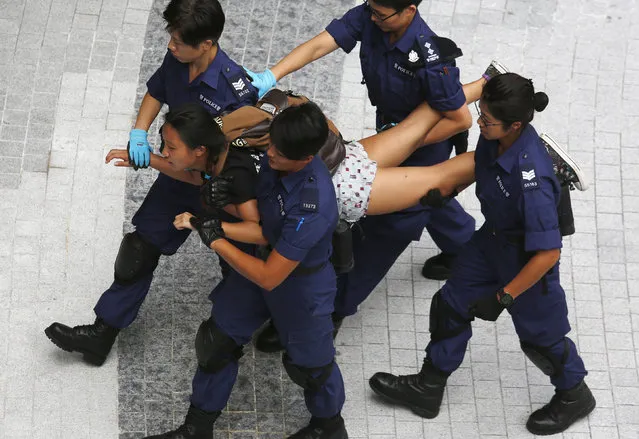
A protester is taken away by policewomen after storming into the government headquarters in Hong Kong September 27, 2014. (Photo by Bobby Yip/Reuters)

A protester is taken away by policewomen after storming into the government headquarters in Hong Kong September 27, 2014. (Photo by Bobby Yip/Reuters)
Details
29 Sep 2014 10:44:00
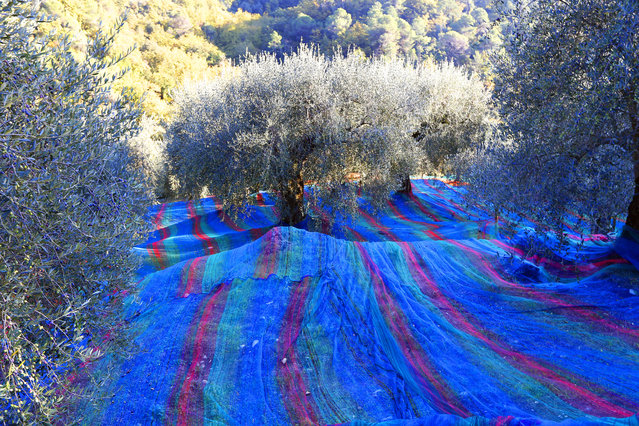
Multicolored nets are set under olive trees to collect the olives on November 27, 2013 in Castagniers, southeastern France. (Photo by Valery Hache/AFP Photo)

Multicolored nets are set under olive trees to collect the olives on November 27, 2013 in Castagniers, southeastern France. (Photo by Valery Hache/AFP Photo)
Details
02 Dec 2013 11:47:00
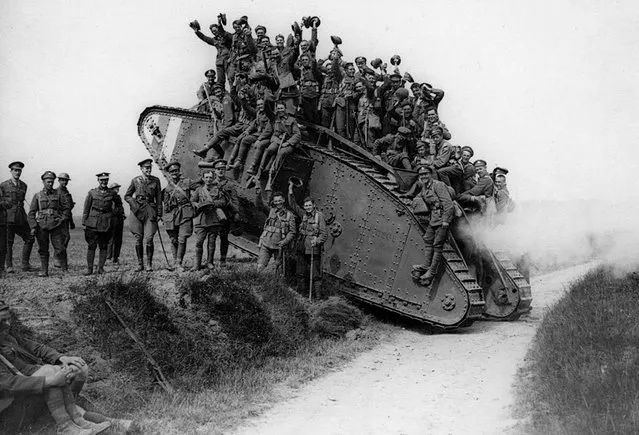
These black-and-white photos are taken from the new book “Armoured Warfare in the First World War 1916 – 1918” by Anthony Tucker-Jones and published by Pen & Sword Military. “Interestingly the British, French and Germans took completely different approaches with varying results”. The British military produced “Little Willie” in Autumn 1915 weighing 18 tonnes, which had a crew of two plus four gunners. “Inspired by a tracked artillery tractor “Little Willie” was referred to as a water tank – hence the name tank – to ensure secrecy”, said Anthony. “This led to the strange looking Mark I with its peculiar rhomboid shape, designed to cross trenches with guns in sponsons on either side. The Germans saw the tank as unchivalrous and were slow to grasp its utility. They favoured the Stormtrooper (specialist soldiers used to infiltrate enemy trenches) and artillery, not the tank”, said Anthony. “However, they didn’t hesitate to make use of captured British tanks. Although the tank helped secure victory and German soldiers dubbed it “Germany’s Downfall” the country was ultimately brought to its knees by the Allies blockade”. Here: British troops hitch a ride on a Mark IV after the massed tank fleet spearheading attack at Cambrai on November 20, 1917. (Photo by Anthony Tucker-Jones/Mediadrumworld.com)

These black-and-white photos are taken from the new book “Armoured Warfare in the First World War 1916 – 1918” by Anthony Tucker-Jones and published by Pen & Sword Military. Here: British troops hitch a ride on a Mark IV after the massed tank fleet spearheading attack at Cambrai on November 20, 1917. (Photo by Anthony Tucker-Jones/Mediadrumworld.com)
Details
23 Feb 2017 00:02:00