Loading...
Done
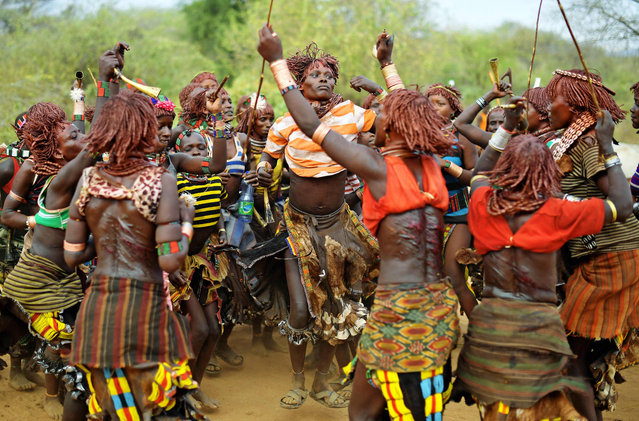
Hamar women dance before a bull jumping ceremony in Ethiopia's southern Omo Valley region near Turmi on September 19, 2016. The Hamar are a Nilotic ethnic group in Ethiopia. The construction of the Gibe III dam, the third largest hydroelectric plant in Africa, and large areas of very “thirsty” cotton and sugar plantations and factories along the Omo river are impacting heavily on the lives of tribes living in the Omo Valley who depend on the river for their survival and way of life. Human rights groups fear for the future of the tribes if they are forced to scatter, give up traditional ways through loss of land or ability to keep cattle as globalisation and development increases. (Photo by Carl De Souza/AFP Photo)

Hamar women dance before a bull jumping ceremony in Ethiopia's southern Omo Valley region near Turmi on September 19, 2016. The Hamar are a Nilotic ethnic group in Ethiopia. The construction of the Gibe III dam, the third largest hydroelectric plant in Africa, and large areas of very “thirsty” cotton and sugar plantations and factories along the Omo river are impacting heavily on the lives of tribes living in the Omo Valley who depend on the river for their survival and way of life. (Photo by Carl De Souza/AFP Photo)
Details
02 Oct 2016 08:45:00
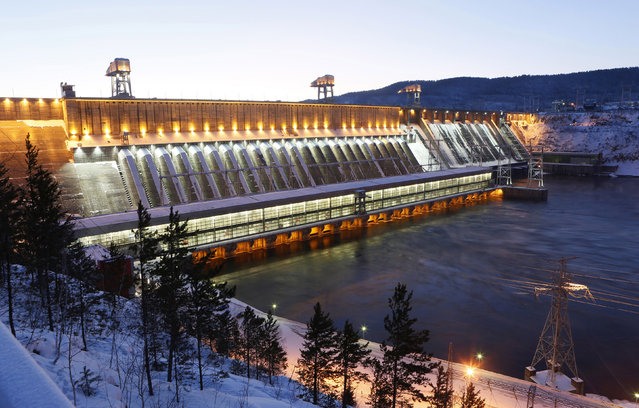
A general view shows the Krasnoyarsk hydro-electric power station on the Yenisei River near the Siberian city of Krasnoyarsk, Russia, January 13, 2016. The power plant, owned by EuroSibEnergo company, part of En+ Group, with a generating capacity of 6,000 megawatt (MW), has a ferro-concrete dam 124-metres high and 1065-metres long and is the second largest Russian hydroelectric power station. About 85% of the energy generated is intended for the Rusal Krasnoyarsk aluminium smelter, according to representatives of the power station. (Photo by Ilya Naymushin/Reuters)

A general view shows the Krasnoyarsk hydro-electric power station on the Yenisei River near the Siberian city of Krasnoyarsk, Russia, January 13, 2016. The power plant, owned by EuroSibEnergo company, part of En+ Group, with a generating capacity of 6,000 megawatt (MW), has a ferro-concrete dam 124-metres high and 1065-metres long and is the second largest Russian hydroelectric power station. About 85% of the energy generated is intended for the Rusal Krasnoyarsk aluminium smelter, according to representatives of the power station. (Photo by Ilya Naymushin/Reuters)
Details
16 Jan 2016 08:03:00
A man poses with a hyena along a street in Lagos, Nigeria November 4, 2008. (Photo by Akintunde Akinleye/Reuters)

A man poses with a hyena along a street in Lagos, Nigeria November 4, 2008. (Photo by Akintunde Akinleye/Reuters)
Details
23 Apr 2015 11:47:00
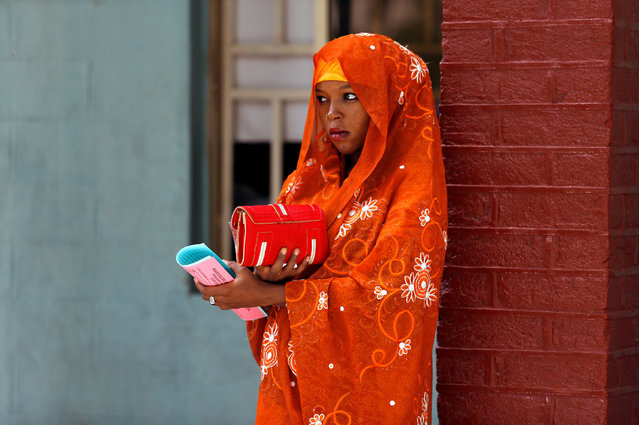
A woman waits at a polio immunisation health centre, in Maiduguri, Borno State, Nigeria, August 29, 2016. Nigeria's military has liberated large swathes of land from Boko Haram but a ride with an army convoy, all guns firing for fear of ambush, shows how far the northeast is from normality after a brutal Islamist insurgency that has displaced millions. The moment military convoys leave the relative safety of Bama, Borno state's second town, soldiers in the lead vehicle open fire with a heavy cannon into the scrub along the road to pre-empt attacks by remaining fighters from the Islamist group. (Photo by Afolabi Sotunde/Reuters)

A woman waits at a polio immunisation health centre, in Maiduguri, Borno State, Nigeria, August 29, 2016. Nigeria's military has liberated large swathes of land from Boko Haram but a ride with an army convoy, all guns firing for fear of ambush, shows how far the northeast is from normality after a brutal Islamist insurgency that has displaced millions. (Photo by Afolabi Sotunde/Reuters)
Details
08 Sep 2016 09:45:00
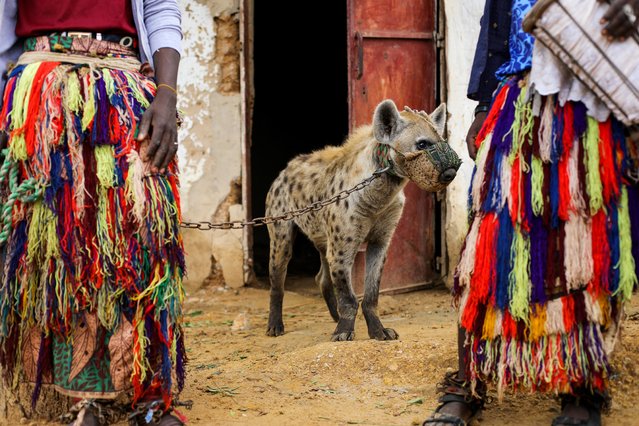
A hyena stands chained to its handler at a circus in Gabasawa, Kano State, Nigeria, July 27, 2021. Hyenas are often viewed as repulsive and sinister, partly due to their scavenging habits in the wild, but in northern Nigeria some men keep the creatures in their homes, display them at festivals and even use their dung to make remedies. (Photo by Afolabi Sotunde/Reuters)

A hyena stands chained to its handler at a circus in Gabasawa, Kano State, Nigeria, July 27, 2021. Hyenas are often viewed as repulsive and sinister, partly due to their scavenging habits in the wild, but in northern Nigeria some men keep the creatures in their homes, display them at festivals and even use their dung to make remedies. (Photo by Afolabi Sotunde/Reuters)
Details
28 Aug 2021 07:54:00
Meghan Markle gestures as she and Prince Harry visit children at the Lights Academy in Abuja, Nigeria, Friday, May 10, 2024. Prince Harry and his wife Meghan have arrived in Nigeria to champion the Invictus Games, which he founded to aid the rehabilitation of wounded and sick servicemembers and veterans. (Photo by Sunday Alamba/AP Photo)

Meghan Markle gestures as she and Prince Harry visit children at the Lights Academy in Abuja, Nigeria, Friday, May 10, 2024. Prince Harry and his wife Meghan have arrived in Nigeria to champion the Invictus Games, which he founded to aid the rehabilitation of wounded and sick servicemembers and veterans. (Photo by Sunday Alamba/AP Photo)
Details
09 Sep 2025 03:10:00
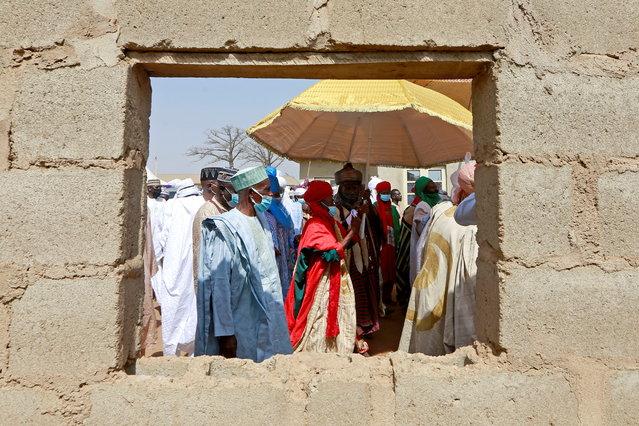
People are seen through a window as they attend the traditional wedding ceremony of Emir's 7 children in Abuja, Nigeria, December 26, 2020. (Photo by Afolabi Sotunde/Reuters)

People are seen through a window as they attend the traditional wedding ceremony of Emir's 7 children in Abuja, Nigeria, December 26, 2020. (Photo by Afolabi Sotunde/Reuters)
Details
20 Jan 2021 12:26:00


“Kumbh Mela is a mass Hindu pilgrimage in which Hindus gather at the Ganges river. The normal Kumbh Mela is celebrated every 3 years, the Ardh (half) Kumbh Mela is celebrated every six years at Haridwar and Prayag, the Purna (complete) Kumbh takes place every twelve years, at four places (Prayag (Allahabad), Haridwar, Ujjain, and Nashik). The Maha (great) Kumbh Mela which comes after 12 “Purna Kumbh Melas”, or 144 years, is held at Allahabad.

The last Ardh Kumbh Mela was held over a period of 45 days beginning in January 2007, more than 70 million Hindu pilgrims took part in the Ardh Kumbh Mela at Prayag, and on January 15, the most auspicious day of the festival of Makar Sankranti, more than 5 million participated. The previous Maha Kumbh Mela, held in 2001, was attended by around 60 million people, making it at the time the largest gathering anywhere in the world in recorded history”. – Wikipedia

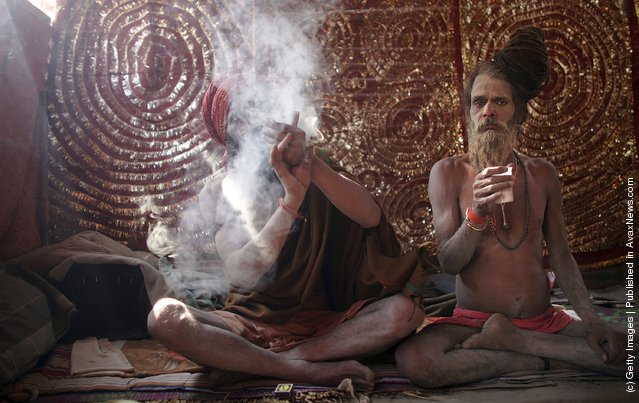
Photo: Sadhus (holy men) smoke at their camp near the ritual site at Sangam, the confluence of the Ganges, Yamuna and mythical Saraswati rivers during the Ardh Kumbh Mela festival (Half Pitcher festival) January 18, 2007 in Allahabad, India. Millions of Hindu pilgrims have flocked to the largest religious gathering in the world which lasts for 45 days in northern India. The festival commemorates the mythical conflict between gods and demons over a pitcher filled with the “nectar of immortality”. Devotees believe that taking a holy dip in the Ganges at this time washes away their sins and paves the path to salvation. (Photo by Mario Tama/Getty Images)

Details
30 Jun 2011 10:27:00