Loading...
Done
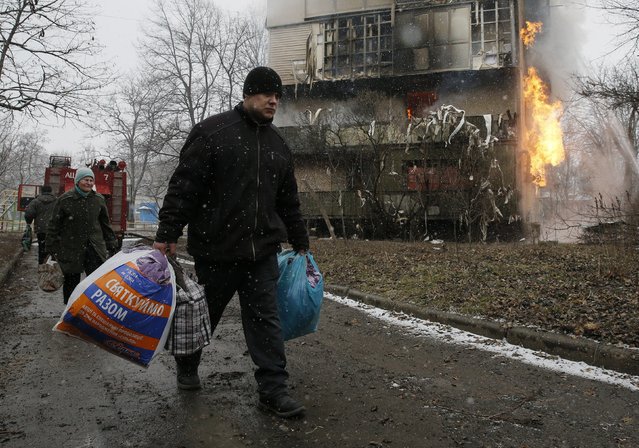
People carry bags containing their belongings past a burning residential block, caused by a recent shelling according to locals, on the outskirts of Donetsk, eastern Ukraine February 9, 2015. (Photo by Maxim Shemetov/Reuters)

People carry bags containing their belongings past a burning residential block, caused by a recent shelling according to locals, on the outskirts of Donetsk, eastern Ukraine February 9, 2015. (Photo by Maxim Shemetov/Reuters)
Details
11 Feb 2015 12:24:00
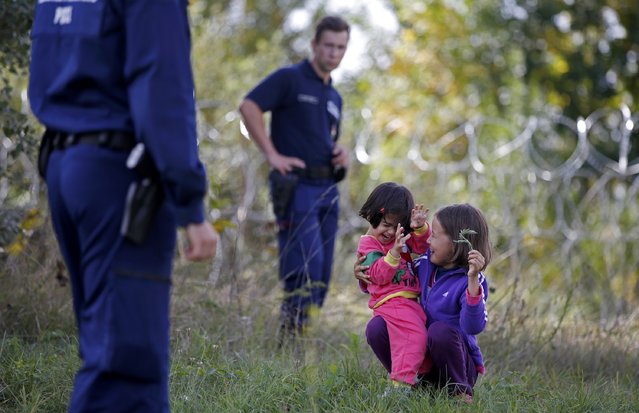
Children guarded by Hungarian police play on the ground after being detained along with other migrants who illegally crossed from Serbia to Hungary near the village of Asotthalom, Hungary, September 16, 2015. (Photo by Dado Ruvic/Reuters)

Children guarded by Hungarian police play on the ground after being detained along with other migrants who illegally crossed from Serbia to Hungary near the village of Asotthalom, Hungary, September 16, 2015. (Photo by Dado Ruvic/Reuters)
Details
17 Sep 2015 11:01:00
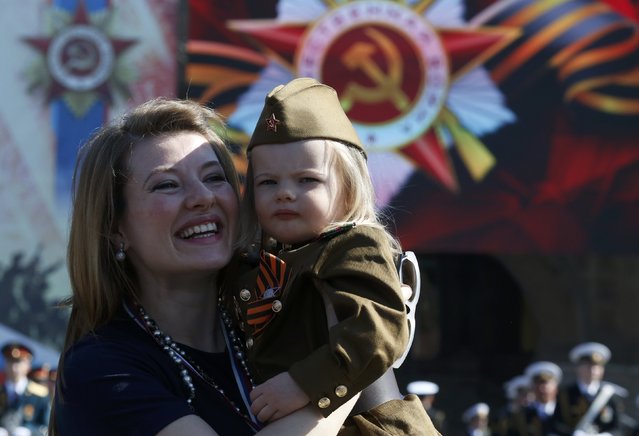
A woman and a girl dressed in historical Red Army uniform, wait before watching the Victory Day parade, marking the 71st anniversary of the victory over Nazi Germany in World War Two, at Red Square in Moscow, Russia, May 9, 2016. (Photo by Grigory Dukor/Reuters)

A woman and a girl dressed in historical Red Army uniform, wait before watching the Victory Day parade, marking the 71st anniversary of the victory over Nazi Germany in World War Two, at Red Square in Moscow, Russia, May 9, 2016. (Photo by Grigory Dukor/Reuters)
Details
10 May 2016 13:19:00
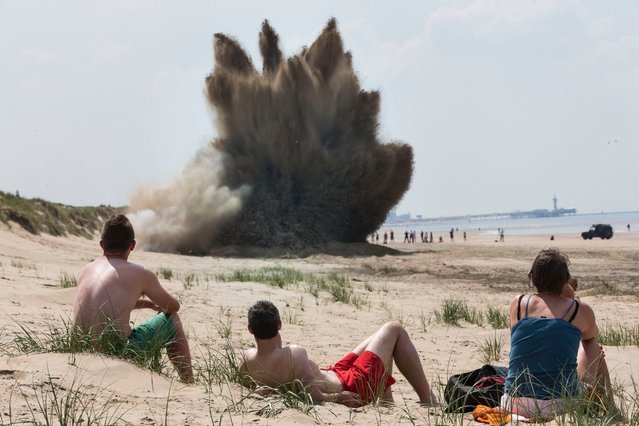
Beachgoers watch the detonation of a 500 pound British bomb on the beach on May 19, 2014 in Wassenaar, Netherlands. The bomb was dropped by the British allied forces during the second world war over nearby Leiden where it was found on a building site. (Photo by Michel Porro/Getty Images)

Beachgoers watch the detonation of a 500 pound British bomb on the beach on May 19, 2014 in Wassenaar, Netherlands. The bomb was dropped by the British allied forces during the second world war over nearby Leiden where it was found on a building site. (Photo by Michel Porro/Getty Images)
Details
24 May 2014 12:51:00
While the lido was described as bringing “modernism to the masses” on the British coast it was just the latest example of a trend that had been developing since Victorian times – transforming seaside towns into resorts for leisure and entertainment. In the latter half of the nineteenth century, the fashion was for local authorities to build great piers stretching from the promenade out into the sea

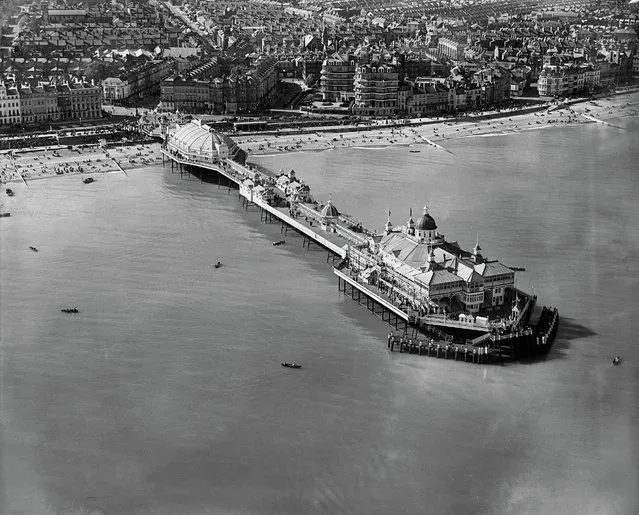
While the lido was described as bringing “modernism to the masses” on the British coast it was just the latest example of a trend that had been developing since Victorian times – transforming seaside towns into resorts for leisure and entertainment. In the latter half of the nineteenth century, the fashion was for local authorities to build great piers stretching from the promenade out into the sea. The Eastbourne Pier, pictured here in May 1931, was erected between 1866 and 1870 to an ingenious design by Eugenius Birch, which saw the structure sitting on special cups allowing the supporting struts to “move” in bad weather. Arranged on the pier's 1,000-foot length were kiosks, a theatre, a ballroom and a camera obscura. 1931. (Photo by Aerofilms Collection via “A History of Britain From Above”)

Details
25 Feb 2014 12:59:00
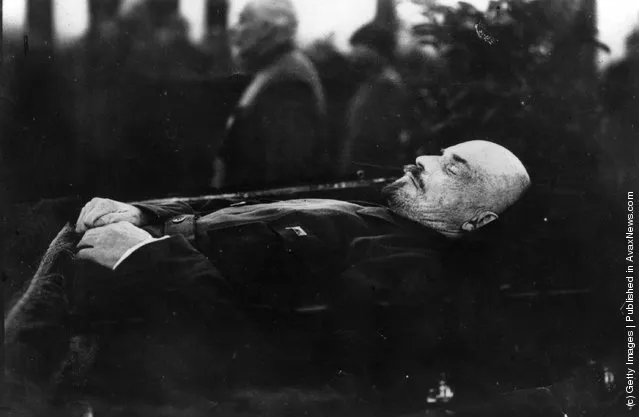
1924:  Vladimir Ilyich Lenin lying in state in the Kremlin

Photo: Vladimir Ilyich Lenin (1870 – 1924) lying in state in the Kremlin. (Photo by Hulton Archive/Getty Images). 1924

Important! For the same article in Russian language click here.

Something quite intriguing is happening within Russian-speaking internet during the last few – should you type a fully academic inquiry (at least, according to Russian academic requirements) in national search engines for "Lenin's mausoleum" – the first thing you get (even in top 10 searches) is website pages talking about black magic and occult. Website authors view this construction differently, but unconditionally agree on one thing: the mausoleum of the "leader of the world proletariat” – the essence of a magical artifact, a sort of “energy vampire”. It was built with a certain purpose: to drain the energy out of miserable Soviet citizens on one hand; and to poison the anthroposphere of one-sixth part of the earth with its vibes (the exact territory that was occupied by the former Soviet Union), depriving the Russian people of will to resist on the other hand. Complete nonsense? No doubt. Nevertheless, an intriguing one. Well, probably because some oddities do exist in mausoleum's history. These oddities are the thing we are going to discuss this time. First, let me refresh you memory on the subject.
Details
16 Oct 2011 11:27:00
Young migrants gesture during a day of solidarity organised by local organizations and resdients for asylum seekers at a makeshift camp outside the foreign office in Brussels, Belgium September 6, 2015. (Photo by Yves Herman/Reuters)

Young migrants gesture during a day of solidarity organised by local organizations and resdients for asylum seekers at a makeshift camp outside the foreign office in Brussels, Belgium September 6, 2015. Over 150,000 people seeking to enter Europe have reached Hungary this year, most coming through the southern border with Serbia, and many apply for asylum but quickly try to leave for wealthier EU countries. (Photo by Yves Herman/Reuters)
Details
07 Sep 2015 13:34:00
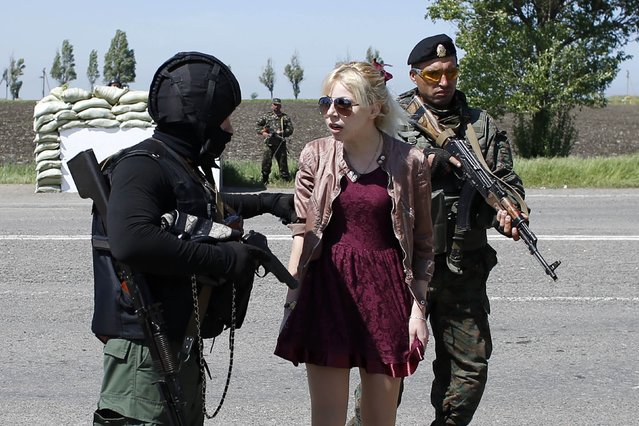
A woman is led aside as her partner is detained by Ukrainian security forces for being aggressive at an army checkpoint in the southeastern port city of Mariupol, on May 11, 2014. Residents’ attitudes appear to have hardened considerably with the deaths of dozens of pro-Russian activists in the city of Odessa this month and with reports that troops fired at a crowd in Mariupol last week. (Photo by Marko Djurica/Reuters)

A woman is led aside as her partner is detained by Ukrainian security forces for being aggressive at an army checkpoint in the southeastern port city of Mariupol, on May 11, 2014. Residents’ attitudes appear to have hardened considerably with the deaths of dozens of pro-Russian activists in the city of Odessa this month and with reports that troops fired at a crowd in Mariupol last week. (Photo by Marko Djurica/Reuters)
Details
12 May 2014 09:53:00