Loading...
Done
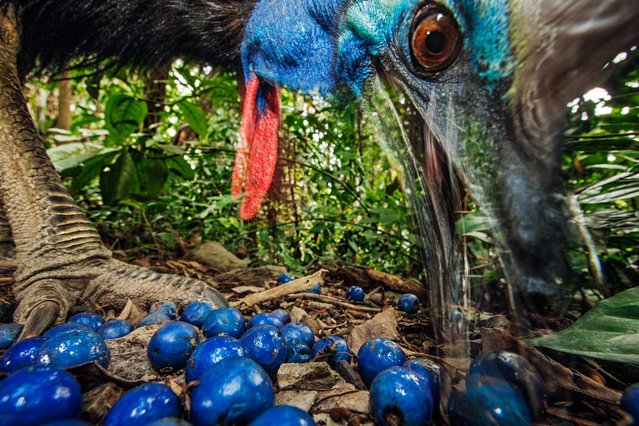
“Cassowaries are large, flightless birds related to emus and (more distantly) to ostriches, rheas, and kiwis”, writes Olivia Judson in the September issue of National Geographic magazine. (Photo by Christian Ziegler/National Geographic)

“Cassowaries are large, flightless birds related to emus and (more distantly) to ostriches, rheas, and kiwis”, writes Olivia Judson in the September issue of National Geographic magazine. How large? People-size: Adult males stand well over five foot five and top 110 pounds. Females are even taller, and can weigh more than 160 pounds. Dangerous when roused, they’re shy and peaceable when left alone. But even birds this big and tough are prey to habitat loss. The dense New Guinea and Australia rain forests where they live have dwindled. Today cassowaries might number 1,500 to 2,000. And because they help shape those same forests – by moving seeds from one place to another – “if they vanish”, Judson writes, “the structure of the forest would gradually change” too. (Photo by Christian Ziegler/National Geographic)
Details
06 Jan 2014 12:21:00
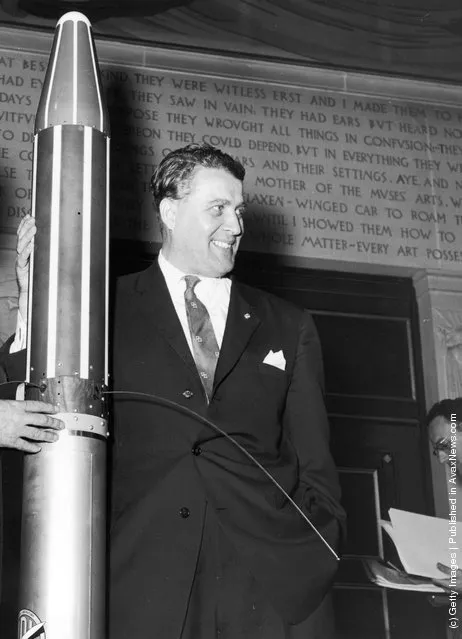
German-born American engineer Dr Wernher von Braun (1912 - 1977) with a model of the Explorer orbiting space satellite which he designed, 1958

“Wernher Magnus Maximilian Freiherr von Braun (March 23, 1912 – June 16, 1977) was a German-born rocket scientist, aerospace engineer, space architect, and one of the leading figures in the development of rocket technology in Nazi Germany during World War II and, subsequently, the United States”. – Wikipedia

Photo: German-born American engineer Dr. Wernher von Braun with a model of the Explorer orbiting space satellite which he designed. (Photo by Keystone/Getty Images). 1958
Details
22 Mar 2012 11:18:00


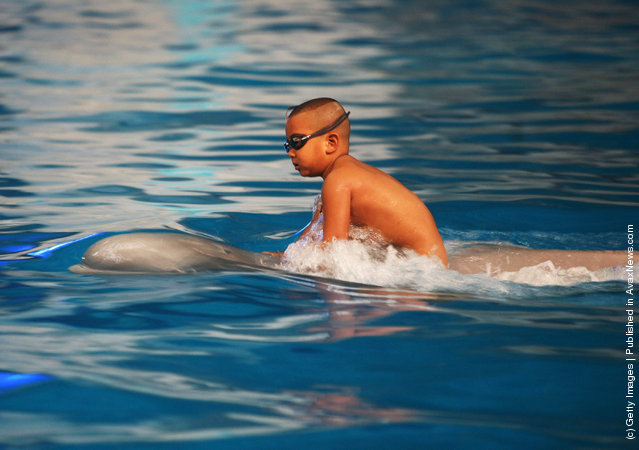
Four-year-old Chinese boy Huang Yang plays with five-year-old beluga whale Xiao Xin at the Qingdao Ocean World on November 3, 2007 in Qingdao of Shandong Province, China. Huang Yang began swimming as a baby and fell in love with the whale after watching its performance. On the International Children's Day, June 1 this year, the Qingdao Ocean World has made the boy's dream come true when they allowed Huang Yang to swim with the beluga whale. (Photo by China Photos/Getty Images)
Details
09 May 2011 11:37:00
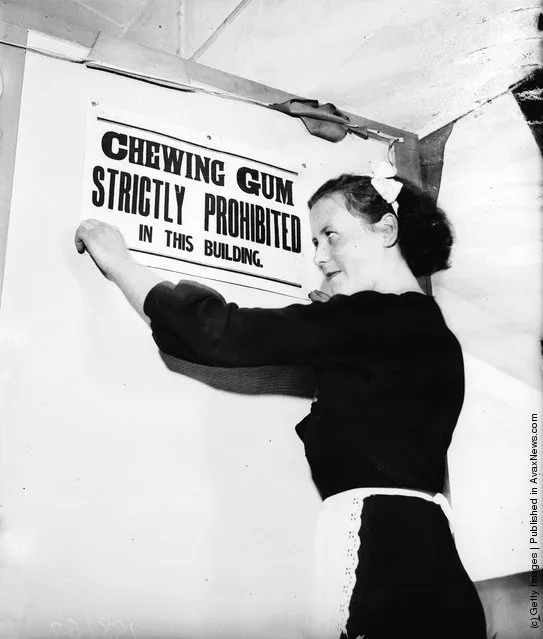
1936: A Penarth dance hall has banned chewing gum on the premises because dancers have complained that their feet keep sticking to the floor

A Penarth dance hall has banned chewing gum on the premises because dancers have complained that their feet keep sticking to the floor. (Photo by Richards/Fox Photos/Getty Images). 16th July 1936
Details
30 Sep 2011 11:15:00
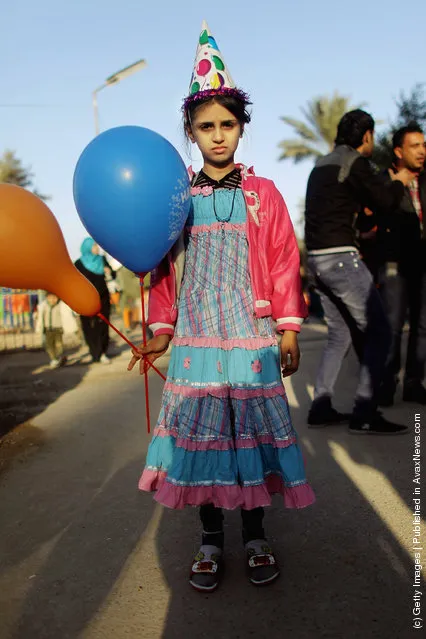
Nora Muaid stands in Zawraa Park

Nora Muaid stands in Zawraa Park on December 2, 2011 in Baghdad, Iraq. The park's 180-foot tall Ferris wheel opened earlier this year and is the second largest in the Middle East. (Photo by Mario Tama/Getty Images)
Details
04 Dec 2011 11:49:00
U.S. Forces Withdraw From Iraq Into Kuwait, After 8-Year Presence

U.S. Army soldiers from the 2-82 Field Artillery, 3rd Brigade, 1st Cavalry Division, wait to load onto their armored vehicles as they prepare to convoy to Kuwait from Camp Adder in Iraq on December 7, 2011 at Camp Adder, near Nasiriyah, Iraq. (Photo by Joe Raedle/Getty Images)
Details
08 Dec 2011 14:11:00
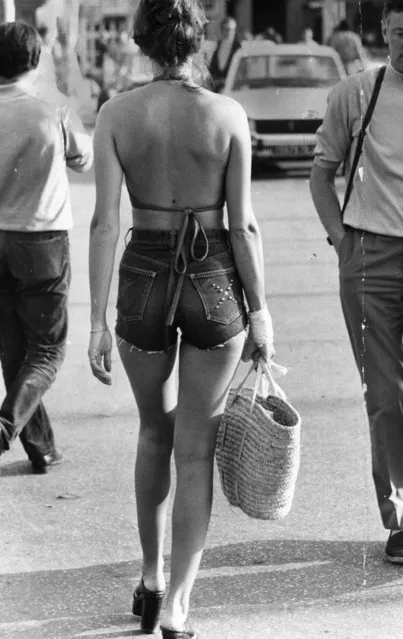
A woman wearing cut-off jeans and a halter-neck sun top in St Tropez, 1972. (Photo by Roy Jones/Getty Images)

A woman wearing cut-off jeans and a halter-neck sun top in St Tropez, 1972. (Photo by Roy Jones)
Details
20 May 2013 12:32:00
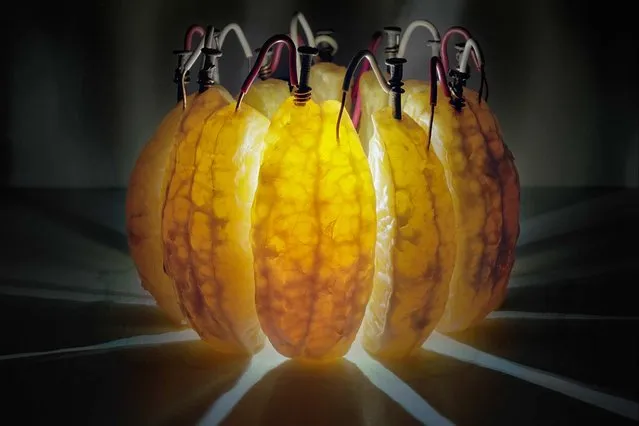
Wedges of an orange generate enough current and electrical juice – 3.5 volts – to power an LED. The fruit’s citric acid helps electrons flow from galvanized nails to copper wire in this 14-hour exposure. This image was published in September’s Visions of Earth, a trio of photos that appear in each issue of National Geographic. (Photo by Caleb Charland/National Geographic)

Wedges of an orange generate enough current and electrical juice – 3.5 volts – to power an LED. The fruit’s citric acid helps electrons flow from galvanized nails to copper wire in this 14-hour exposure. This image was published in September’s Visions of Earth, a trio of photos that appear in each issue of National Geographic. (Photo by Caleb Charland/National Geographic)
Details
06 Jan 2014 12:09:00