Loading...
Done


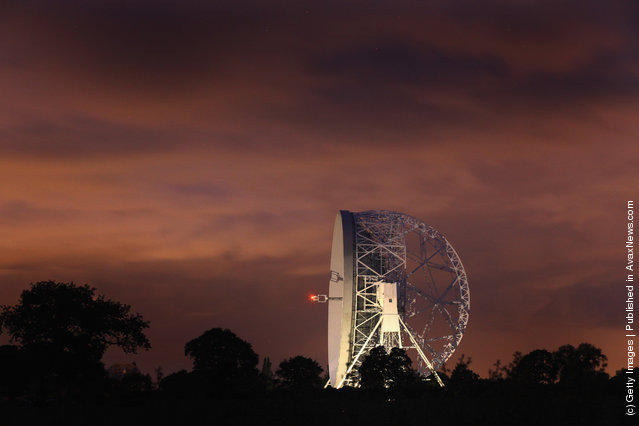
“The Lovell Telescope is a radio telescope at Jodrell Bank Observatory, near Goostrey, Cheshire in the north-west of England. When it was constructed in 1955, the telescope was the largest steerable dish radio telescope in the world at 76.2 m (250 ft) in diameter; it is now the third largest, after the Green Bank telescope in West Virginia, USA, and the Effelsberg telescope in Germany. It was originally known as the 250 ft (76 m) telescope or the Radio Telescope at Jodrell Bank, before becoming the Mark I telescope around 1961 when future telescopes (the Mark II, III, and IV) were being discussed. It was renamed to the Lovell Telescope in 1987 after Bernard Lovell, and became a Grade I listed building in 1988. The telescope forms part of the MERLIN and European VLBI Network arrays of radio telescopes”. – Wikipedia

Photo: The Lovell Telescope listens to the night sky for radio signals from space at Jodrell Bank on June 22, 2011 in Holmes Chapel, England. Jodrell Bank Centre for Astrophysics and it's world famous Lovell Telescope is on the shortlist of Britain's submission for Unesco World Heritage Site status. (Photo by Christopher Furlong/Getty Images)
Details
24 Jun 2011 09:34:00


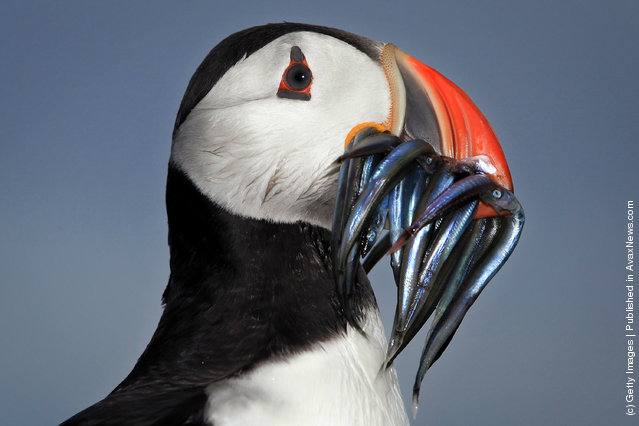
A Puffin returns to it's nest with a beak full of sand eels on June 25, 2011 on Inner Farne, England. The Farne Islands, which are run by the National Trust, are situated two to three miles off the Northumberland coastline. The archipeligo of 16-28 separate islands (depending on the tide) make the summer home to approximately 100,000 pairs of breeding seabirds including around 36,000 Puffins, 32,000 Guillemots and 2,000 pairs of Arctic Terns. The species of birds which nest in internationally important numbers include Shag, Sandwich Tern and Arctic Tern. The coastline around The Farnes are also the breeding ground to one of Europe's largest Grey Seal colonies with around 4,000 adults giving birth to 1500 pups every year. (Photo by Dan Kitwood/Getty Images)
Details
27 Jun 2011 12:58:00
Dream Chaser

“The Dream Chaser is a planned crewed suborbital and orbital vertical-takeoff, horizontal-landing (VTHL) lifting-body spaceplane being developed by SpaceDev, a wholly owned subsidiary of Sierra Nevada Corporation (SNC). The Dream Chaser design is planned to carry seven people to and from low earth orbit. The vehicle would launch vertically on an Atlas V and land horizontally on conventional runways”. – Wikipedia

Photo: NASA Deputy Administrator Lori Garver talks during a press conference with Sierra Nevada's Dream Chaser spacecraft in the background at the University of Colorado at Boulder on February 5, 2011 in Boulder, Colorado. Sierra Nevada's Dream Chaser spacecraft is under development with support from NASA's Commercial Crew Development Program to provide crew transportation to and from low Earth orbit. NASA is helping private companies develop innovative technologies to ensure that the U.S. remains competitive in future space endeavors. (Photo by Bill Ingalls/NASA via Getty Images)
Details
12 Aug 2011 14:16:00
An employee places goods of Pokemon video game characters on display at a Pokemon store in Tokyo on February 26, 2021. Twenty-five years after Pokemon first began delighting children and adults alike, the phenomenon is still capturing hearts, with smartphone craze Pokemon Go enjoying record success in virus-hit 2020. (Photo by Behrouz Mehri/AFP Photo)

An employee places goods of Pokemon video game characters on display at a Pokemon store in Tokyo on February 26, 2021. Twenty-five years after Pokemon first began delighting children and adults alike, the phenomenon is still capturing hearts, with smartphone craze Pokemon Go enjoying record success in virus-hit 2020. (Photo by Behrouz Mehri/AFP Photo)
Details
13 Mar 2021 10:04:00
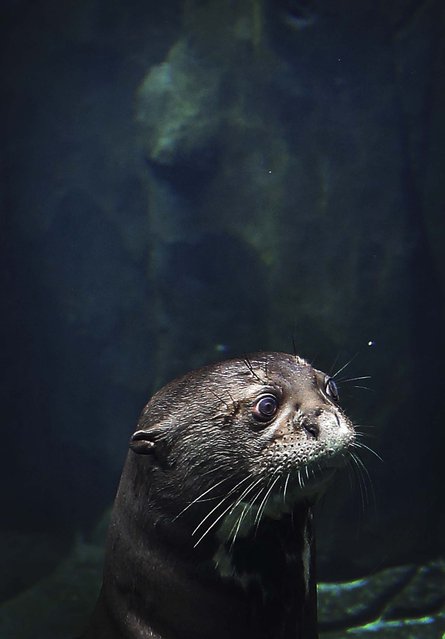
A giant river otter, the world's largest otter species, looks out of its enclosure at the newly completed River Safari in Singapore, on March 25, 2013. (Photo by Wong Maye-E/Associated Press)

A giant river otter, the world's largest otter species, looks out of its enclosure at the newly completed River Safari in Singapore, on March 25, 2013. (Photo by Wong Maye-E/Associated Press)
Details
30 Mar 2013 12:22:00


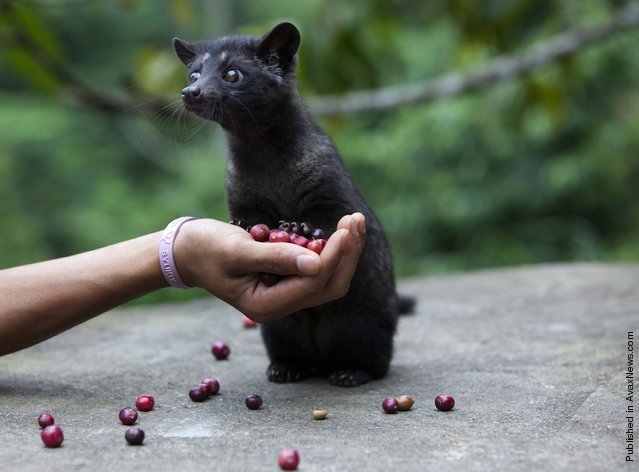
“Kopi luwak (Malay pronunciation), or civet coffee, is one of the world's most expensive and low-production coffee. It is made from the beans of coffee berries which have been eaten by the Asian Palm Civet (Paradoxurus hermaphroditus) and other related civets, then passed through its digestive tract. ...
Details
19 Mar 2011 18:41:00
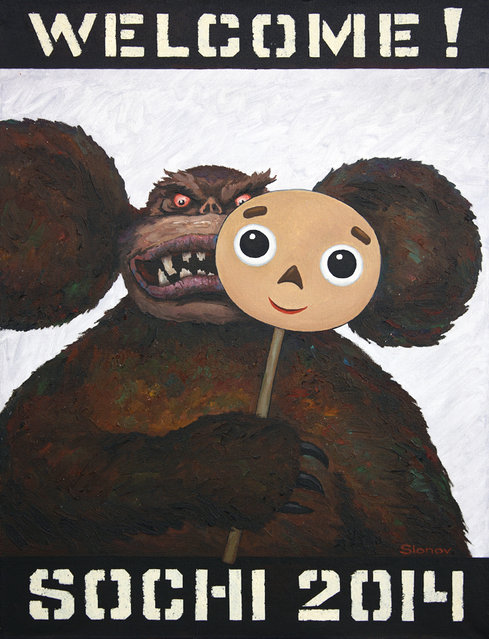
The Dark Side of Sochi Olympics by Vasily Slonov

“Exactly one year before the long awaited Sochi Olympics, Vladimir Putin went to Sochi personally to see how the construction is going. After receiving a report saying the ski jumps that were supposed to be ready in 2011, are not completed still, while their price has sky-rocketed from 1.2 billion to 8 billion roubles, he commented, “Good for you. Good job”, and then fired the vice president of the Olympic committee. Russian artist Vasily Slonov painted his view of the upcoming games, giving a new interpretation to the adored Russian mascot Cheburashka, and combining officially endorsed stereotypes of Russia with grimmer and less accepted ones”. – Ruskie.info. (Photo by Vasily Slonov)
Details
07 Jun 2013 10:24:00
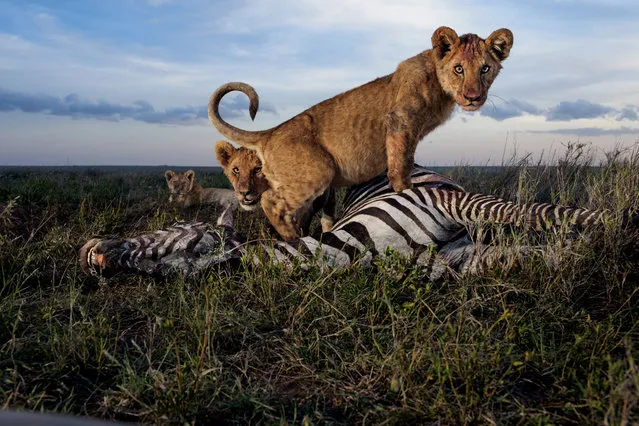
Cubs of the Simba East pride: too young to kill but old enough to crave meat. Adult females, and sometimes males, do the hunting. Zebras and wildebeests rank high as chosen prey in the rainy season. (Photo by Michael Nichols/National Geographic via The Atlantic)

“Serengeti National Park encompasses 5,700 square miles of grassy plains and woodlands near the northern border of Tanzania, and is home to more than 3,500 lions grouped into a couple dozen prides. Photographer Nick Nichols and videographer Nathan Williamson made several extended trips to the Serengeti between July 2011 and January 2013, determined to break new visual ground in their coverage of the Serengeti Lions”. Photo: Cubs of the Simba East pride: too young to kill but old enough to crave meat. Adult females, and sometimes males, do the hunting. Zebras and wildebeests rank high as chosen prey in the rainy season. (Photo by Michael Nichols/National Geographic via The Atlantic)
Details
09 Aug 2013 08:15:00