David LaChapelle, Land Scape Anaheim, 2013, chromogenic print, 70 3/4 x 95 inches, 179.7 x 241.3 cm, edition of 3. Image courtesy of the artist and Paul Kasmin Gallery. (Photo by David LaChapelle Studio)
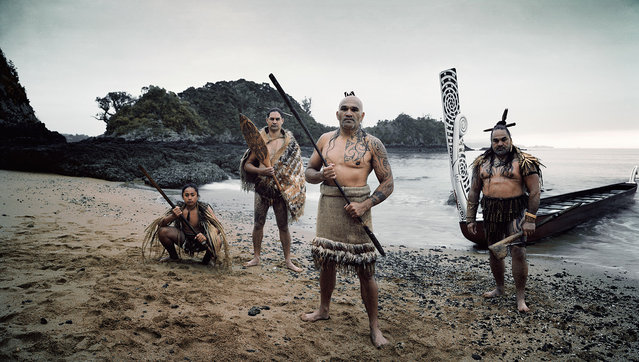
The long and intriguing story of the origine of the indigenous Maori people can be traced back to the 13th century, the mythical homeland Hawaiki, Eastern Polynesia. Due to centuries of isolation, the Maori established a distinct society with characteristic art, a separate language and unique mythology. Defining aspects of Maori traditional culture include art, dance, legends, tattoos and community. While the arrival of European colonists in the 18th centure had a profound impact on the Maori way of life, many aspects of traditional society have survived into the 21th century.
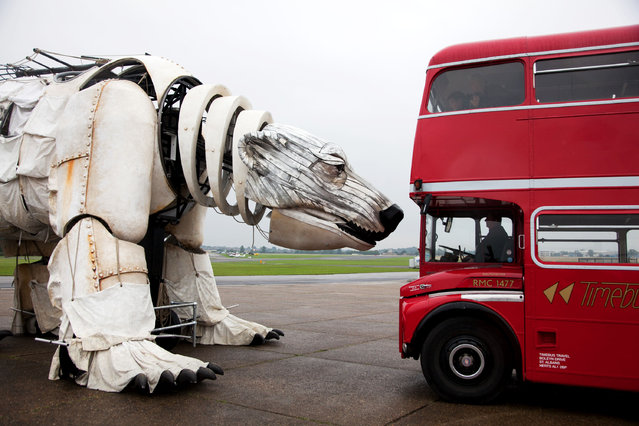
Her name is Aurora, and she is the star of “Aurora's Parade”, the London chapter of ceride – Greenpeace’s global day of action to protest against Arctic destruction. According to DesignBoom, this giant people-powered super-puppet weighs about 3 tons and needs 15 puppeteers and 30 volunteers to operate. Aurora, described as “part protest, part performance”, has fur that includes the names of each supporter in the movement. Greenpeace hopes she will bring the voice and spirit of the Arctic to the public.
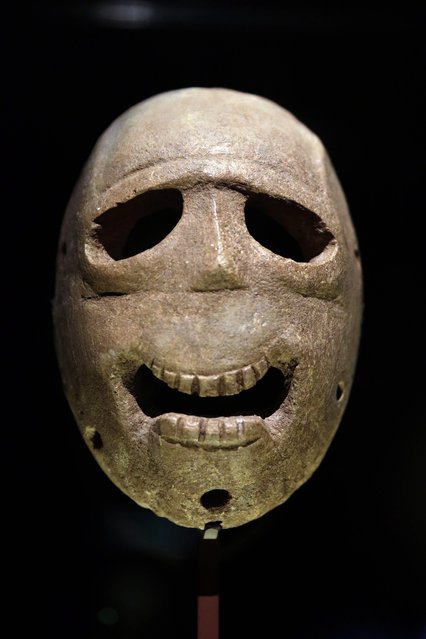
In this Monday, March 10, 2014 photo, a 9,000 year-old mask is on display at the Israel Museum in Jerusalem. The exhibition called “Face To Face” shows eleven stone masks, said to have been discovered in the Judean desert and hills near Jerusalem, which date back 9,000 years and offer a rare glimpse at some of civilization's first communal rituals. (Photo by Tsafrir Abayov/AP Photo)
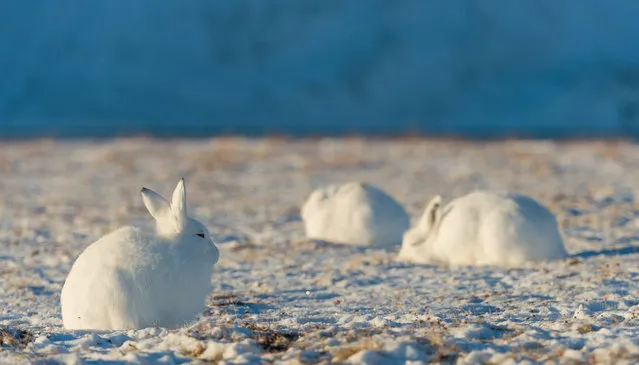
The arctic hare, or polar rabbit, is a species of hare which is adapted largely to polar and mountainous habitats. The arctic hare survives with a thick coat of fur and usually digs holes in the ground or under snow to keep warm and sleep. Arctic hares look like rabbits but have shorter ears, are taller when standing, and, unlike rabbits, can thrive in cold climates. They can travel together with many other hares, sometimes huddling with dozens or more, but are usually found alone, taking, in some cases, more than one partner. The arctic hare can run up to 60 kilometres per hour (40 mph). Its predators include the arctic wolf, arctic fox, and ermine.
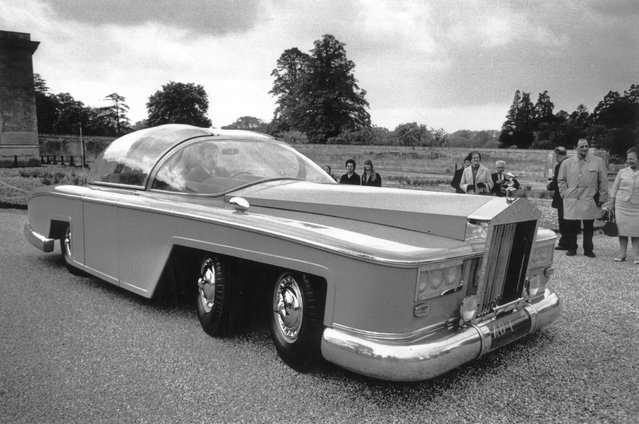
A full size working replica of the pink limousine used by Parker to chauffeur Lady Penelope in Gerry Anderson's television series “Thunderbirds”, unveiled at Woburn Abbey. United Kingdom, 27th May 1968. (Photo by Jim Gray/Keystone/Getty Images)
Claire McGuire (C) smiles after winning the women's snowboard division of the Bikini & Board Shorts Downhill at Crystal Mountain, a ski resort near Enumclaw, Washington April 19, 2014. Skiers and snowboarders competed for a chance to win one of four season's passes. (Photo by David Ryder/Reuters)
Cars sit abandoned in a former shopping centre in the United Nations buffer zone in central Nicosia March 12, 2014. The cars were imported from Japan to be sold at a Toyota dealership. They were stored here during the 1974 conflict and have not been moved since. (Photo by Neil Hall/Reuters)