Loading...
Done
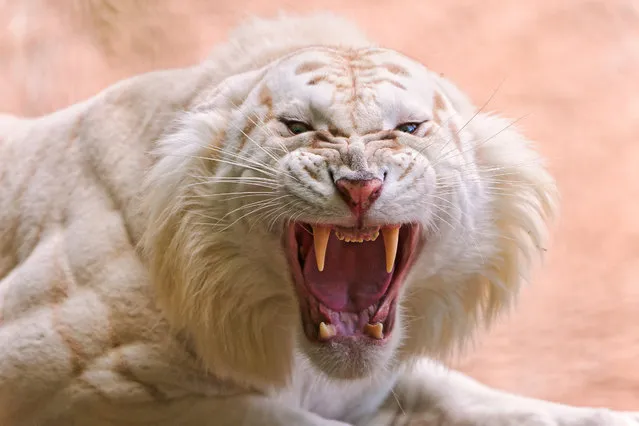
Angry White Tiger

“The white tiger is a recessive mutant of the Bengal tiger, which was reported in the wild from time to time in Assam, Bengal, Bihar and especially from the former State of Rewa”. – Wikipedia. (Photo by Tambako The Jaguar)
Details
27 Jun 2012 11:51:00
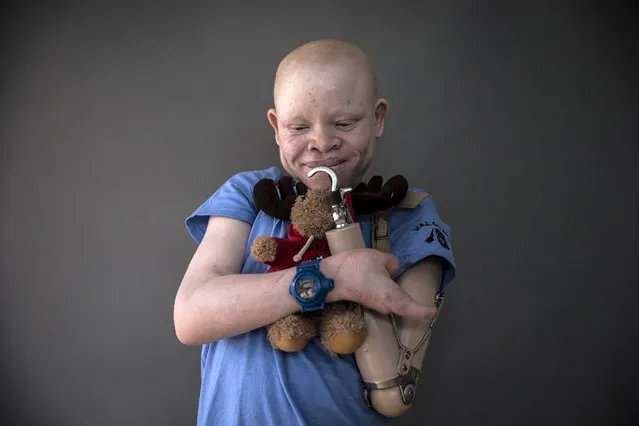
13-year-old Emmanuel Festo from Tanzania poses for a portrait with a plush toy that he says makes him feel safe at night and that he sleeps with, in New York's Staten Island, September 21, 2015. Albino body parts are highly valued in witchcraft and can fetch a high price. Superstition leads many to believe albino children are ghosts who bring bad luck. (Photo by Carlo Allegri/Reuters)

13-year-old Emmanuel Festo from Tanzania poses for a portrait with a plush toy that he says makes him feel safe at night and that he sleeps with, in New York's Staten Island, September 21, 2015. Albino body parts are highly valued in witchcraft and can fetch a high price. Superstition leads many to believe albino children are ghosts who bring bad luck. Some believe the limbs are more potent if the victims scream during amputation, according to a 2013 United Nations report. (Photo by Carlo Allegri/Reuters)
Details
03 Oct 2015 08:04:00
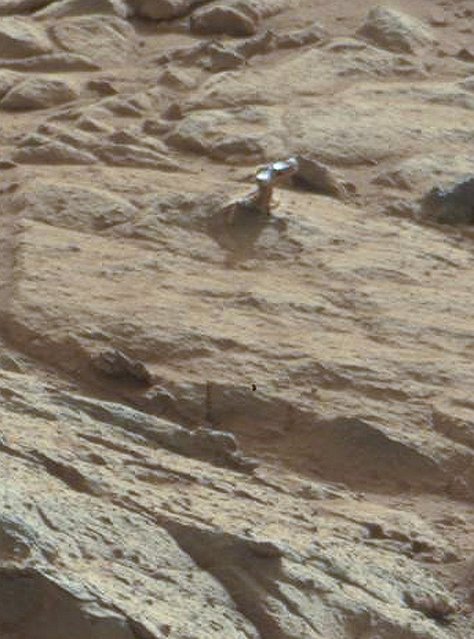
Another Weird Shiny Thing on Mars

“The Curiosity Mars rover has imaged a small metallic-looking protuberance on a rock. Visible (in the image below the green lines point to it), the protuberance appears to have a high albedo and even projects a shadow on the rock below...”
Details
06 Feb 2013 18:41:00
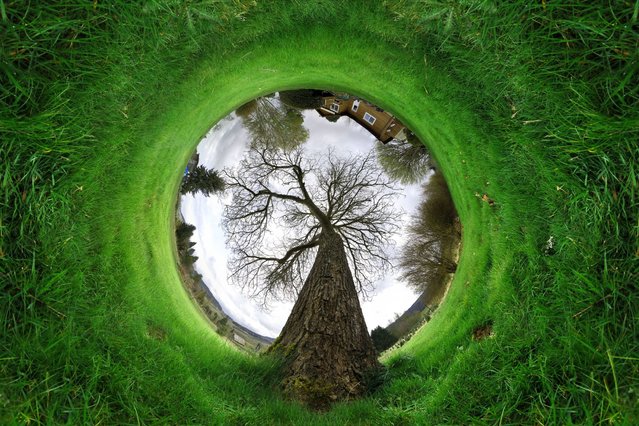
This incredible panoramic photographs are distorted to create miniature worlds and terrifying tunnels. (Photo by Caters News)

This incredible panoramic photographs are distorted to create miniature worlds and terrifying tunnels. (Photo by Caters News)
Details
25 Jan 2014 12:16:00
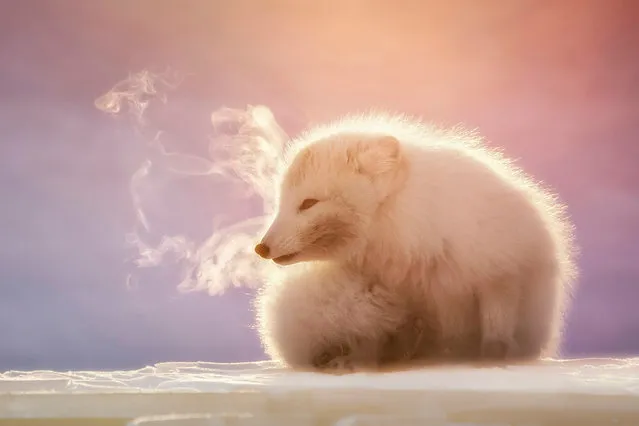
Breath of an Arctic fox by Marco Gaiotti, Italy. Marco was watching this little Arctic fox as it incessantly called another nearby. Gradually he noticed the fox’s wet breath was quickly freezing in the air after each call. It was late winter in Spitsbergen, Svalbard, and the air was -35C (-31F). Photographing Arctic foxes is often frustrating, as they are normally running around fast in search of food, but this one was very relaxed and let Marco get close enough to focus on it, with the light glowing perfectly in the background. (Photo by Marco Gaiotti/Wildlife Photographer of the Year 2021)

Breath of an Arctic fox by Marco Gaiotti, Italy. Marco was watching this little Arctic fox as it incessantly called another nearby. Gradually he noticed the fox’s wet breath was quickly freezing in the air after each call. It was late winter in Spitsbergen, Svalbard, and the air was -35C (-31F). Photographing Arctic foxes is often frustrating, as they are normally running around fast in search of food, but this one was very relaxed and let Marco get close enough to focus on it, with the light glowing perfectly in the background. (Photo by Marco Gaiotti/Wildlife Photographer of the Year 2021)
Details
05 Dec 2021 06:36:00
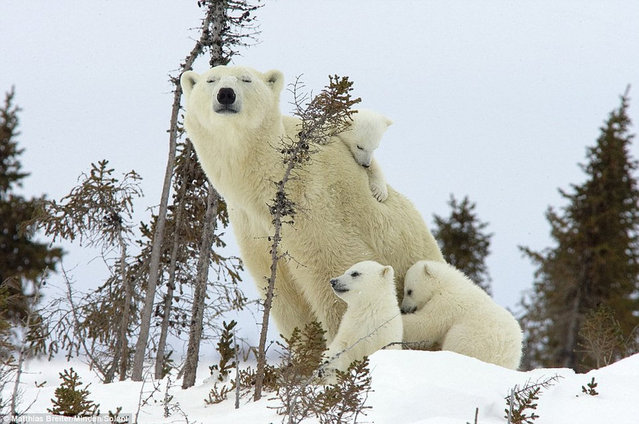
Family Of Polar Bears

A mother polar bear cooled down on ice while her trio of adorable cubs playfully wrestled with each other.
Details
13 Feb 2013 11:40:00
Yoshkar-Ola, Matrosova Street (1995). He turned his lens upon Russians – particularly young people – in the newly liberated state. (Photo by Sergey Chilikov)

Russian pop art photographer Sergey Chilikov captures a nation liberated from the social oppression of late-era Soviet rule – at parties, in the streets, and bouncing high. His exhibition, Photoprovocations, will be at Photo London, 19-22 May. Here: Yoshkar-Ola, Matrosova Street (1995). (Photo by Sergey Chilikov)
Details
20 May 2016 13:10:00
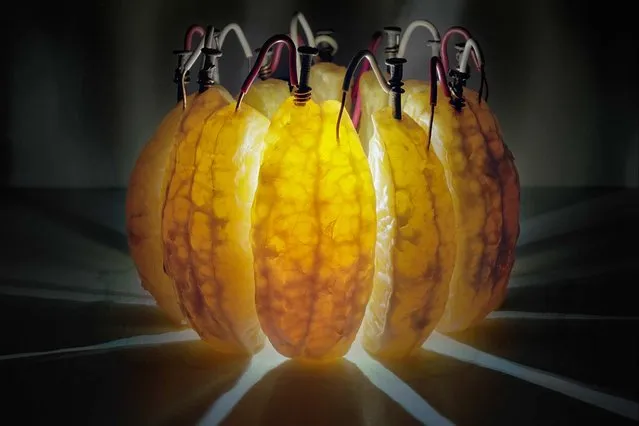
Wedges of an orange generate enough current and electrical juice – 3.5 volts – to power an LED. The fruit’s citric acid helps electrons flow from galvanized nails to copper wire in this 14-hour exposure. This image was published in September’s Visions of Earth, a trio of photos that appear in each issue of National Geographic. (Photo by Caleb Charland/National Geographic)

Wedges of an orange generate enough current and electrical juice – 3.5 volts – to power an LED. The fruit’s citric acid helps electrons flow from galvanized nails to copper wire in this 14-hour exposure. This image was published in September’s Visions of Earth, a trio of photos that appear in each issue of National Geographic. (Photo by Caleb Charland/National Geographic)
Details
06 Jan 2014 12:09:00