Loading...
Done
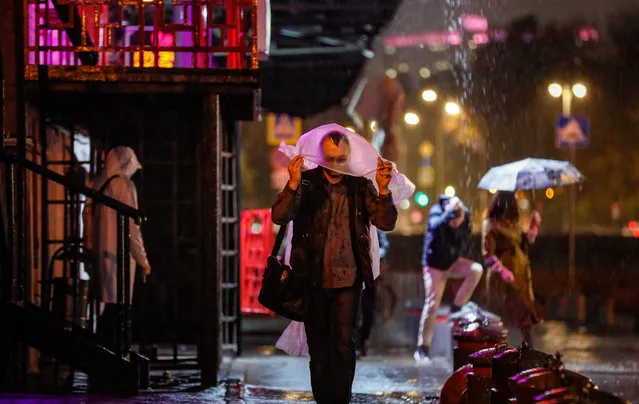
Russian people walk during heavy rain in Moscow, Russia 17 September 2020. Over two hours a third of the monthly average rainfall fell in Moscow. (Photo by Yuri Kochetkov/EPA/EFE)

Russian people walk during heavy rain in Moscow, Russia on 17 September 2020. Over two hours a third of the monthly average rainfall fell in Moscow. (Photo by Yuri Kochetkov/EPA/EFE)
Details
26 Sep 2020 00:03:00
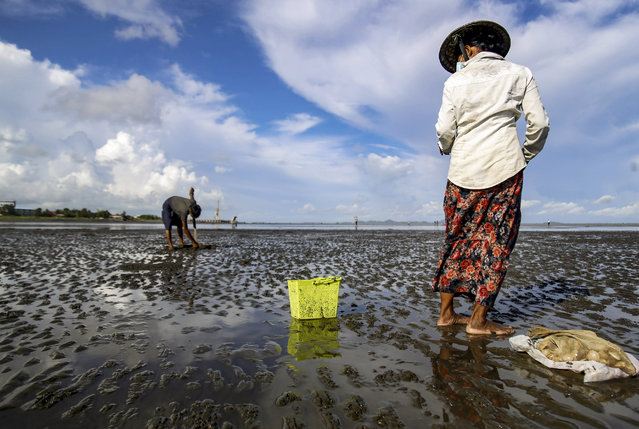
People search for shells on a beach in Sittwe, Rakhine State, Myanmar, 17 September 2020. International Coastal Cleanup Day is observed annually on the third Saturday of September and will occur on 19 September this year. The day was established to encourage global efforts to clean up garbage on beaches and coastal areas and raise awareness on protecting the world's oceans and waterways. According to a report released by the US-based nonprofit environmental advocacy group Ocean Conservancy on 08 September 2020, plastic food packaging topped the list of most common items found in beach trash. Close to five million food wrappers were collected in a single day during the International Coastal Cleanup Day in 2019. An approximate 11 million metric tons of plastic enters the ocean every year according to a 2016 analysis, affecting more than 800 marine species and causing contamination to human food chains and drinking water. (Photo by Nyunt Win/EPA/EFE/Rex Features/Shutterstock)

People search for shells on a beach in Sittwe, Rakhine State, Myanmar, 17 September 2020. International Coastal Cleanup Day is observed annually on the third Saturday of September and will occur on 19 September this year. (Photo by Nyunt Win/EPA/EFE/Rex Features/Shutterstock)
Details
24 Oct 2020 00:05:00
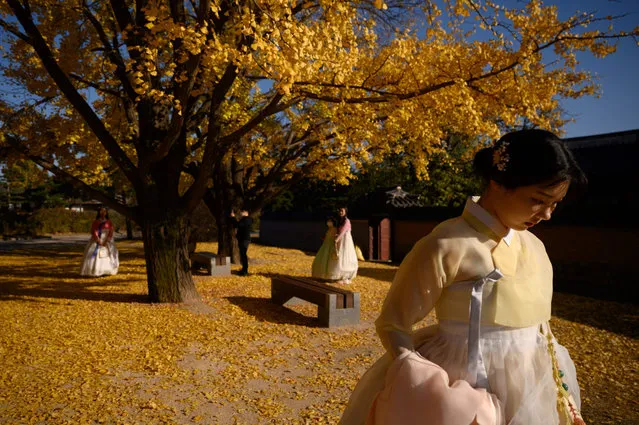
In a photo taken on November 4, 2020 visitors wearing traditional Korean hanbok dress walk beneath yellow ginko leaves in a courtyard at Gyeongbokgung palace in Seoul. (Photo by Ed Jones/AFP Photo)

In a photo taken on November 4, 2020 visitors wearing traditional Korean hanbok dress walk beneath yellow ginko leaves in a courtyard at Gyeongbokgung palace in Seoul. (Photo by Ed Jones/AFP Photo)
Details
20 Nov 2020 00:05:00
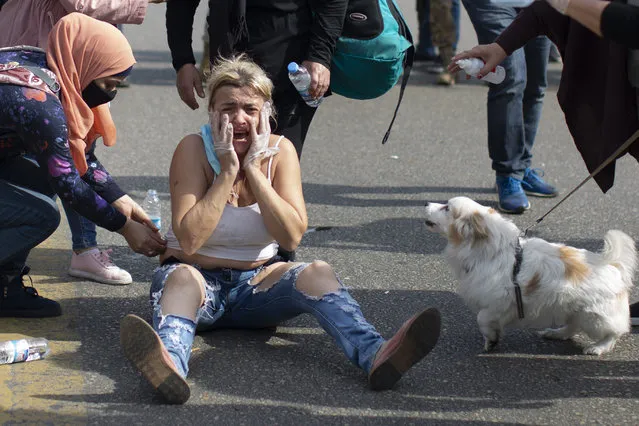
A protester reacts as riot police and army soldiers scuffle with anti-government protesters outside a military court, in Beirut, Lebanon, Monday, February 8, 2021. Riot police briefly clashed Monday in Beirut with hundreds of protesters demanding the release of anti-government activists detained following riots in northern Lebanon late last month. (Photo by Hassan Ammar/AP Photo)

A protester reacts as riot police and army soldiers scuffle with anti-government protesters outside a military court, in Beirut, Lebanon, Monday, February 8, 2021. Riot police briefly clashed Monday in Beirut with hundreds of protesters demanding the release of anti-government activists detained following riots in northern Lebanon late last month. (Photo by Hassan Ammar/AP Photo)
Details
17 Feb 2021 09:35:00
A woman looks on as she takes part in a protest on the Day of the Dead against gender violence and femicide, in Mexico City, Mexico, November 2, 2020. (Photo by Raquel Cunha/Reuters)

A woman looks on as she takes part in a protest on the Day of the Dead against gender violence and femicide, in Mexico City, Mexico, November 2, 2020. (Photo by Raquel Cunha/Reuters)
Details
18 Feb 2021 09:22:00
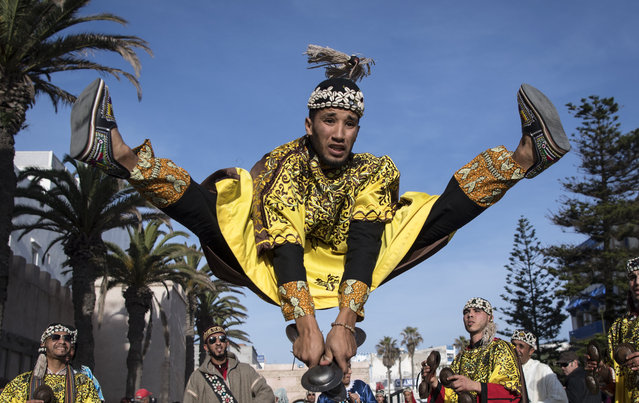
A Gnawa traditional group performs in the city of Essaouira on December 14, 2019, to celebrate the decision of adding the Gnawa culture to UNESCO's list of Intangible Cultural Heritage of Humanity. Gnawa culture, a centuries-old Moroccan practice rooted in music, African rituals and Sufi traditions, was added to UNESCO's list of Intangible Cultural Heritage of Humanity earlier in the week. Gnawa refers to a “set of musical productions, fraternal practices and therapeutic rituals where the secular mixes with the sacred”, according to the nomination submitted by Morocco. Often dressed in colourful outfits, Gnawa musicians play the guenbri, a type of lute with three strings, accompanied by steel castanets called krakebs. (Photo by Fadel Senna/AFP Photo)

A Gnawa traditional group performs in the city of Essaouira on December 14, 2019, to celebrate the decision of adding the Gnawa culture to UNESCO's list of Intangible Cultural Heritage of Humanity. Gnawa culture, a centuries-old Moroccan practice rooted in music, African rituals and Sufi traditions, was added to UNESCO's list of Intangible Cultural Heritage of Humanity earlier in the week. Gnawa refers to a “set of musical productions, fraternal practices and therapeutic rituals where the secular mixes with the sacred”, according to the nomination submitted by Morocco. Often dressed in colourful outfits, Gnawa musicians play the guenbri, a type of lute with three strings, accompanied by steel castanets called krakebs. (Photo by Fadel Senna/AFP Photo)
Details
18 Dec 2019 00:05:00
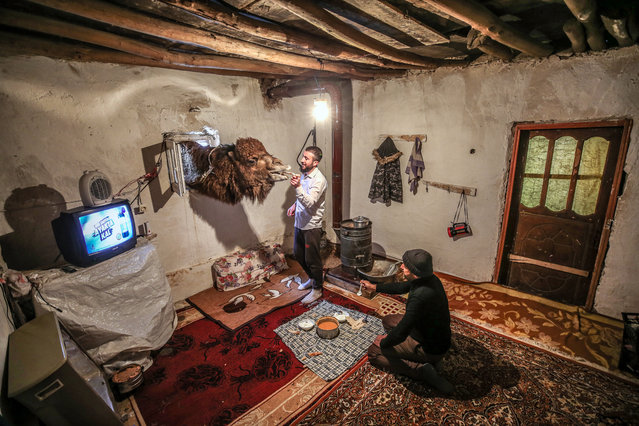
Shepherd brothers Mustafa Erbay and Baran Erbay train their camels on snowy grounds, enabling them to become champions in competitions held in the Aegean and Mediterranean regions in Baskale district of Van, Turkey on February 1, 2020. (Photo by Ozkan Bilgin/Anadolu Agency via Getty Images)

Shepherd brothers Mustafa Erbay and Baran Erbay train their camels on snowy grounds, enabling them to become champions in competitions held in the Aegean and Mediterranean regions in Baskale district of Van, Turkey on February 1, 2020. (Photo by Ozkan Bilgin/Anadolu Agency via Getty Images)
Details
07 Feb 2020 00:01:00
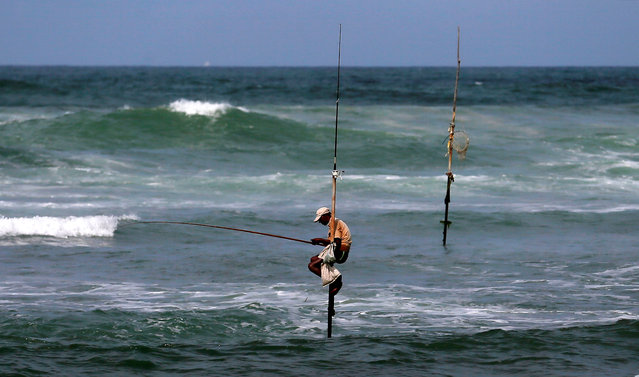
A fisherman waits to catch fish as he sits atop a stilt in the sea in Koggala, Sri Lanka on July 4, 2019. (Photo by Dinuka Liyanawatte/Reuters)

A fisherman waits to catch fish as he sits atop a stilt in the sea in Koggala, Sri Lanka on July 4, 2019. (Photo by Dinuka Liyanawatte/Reuters)
Details
11 Feb 2020 00:03:00