Thierry Neuville of Belgium drives his Hyundai i20 Coupe WRC during day 3 of Rally Mexico, in Leon, Guanajuato, Mexico, 14 March 2020. (Photo by Reporter Images/EPA/EFE)
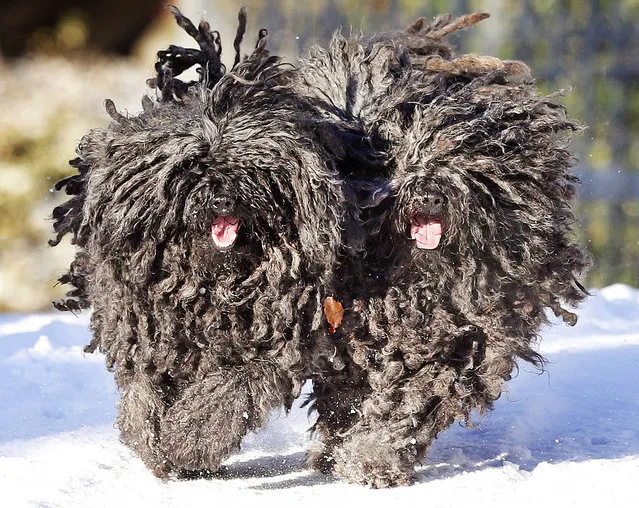
The two Pulis Quastie and Gin-Gin run in the snow in their garden in Lautertal, southern Germany, Thursday, January 5, 2017. (Photo by Michael Probst/AP Photo)
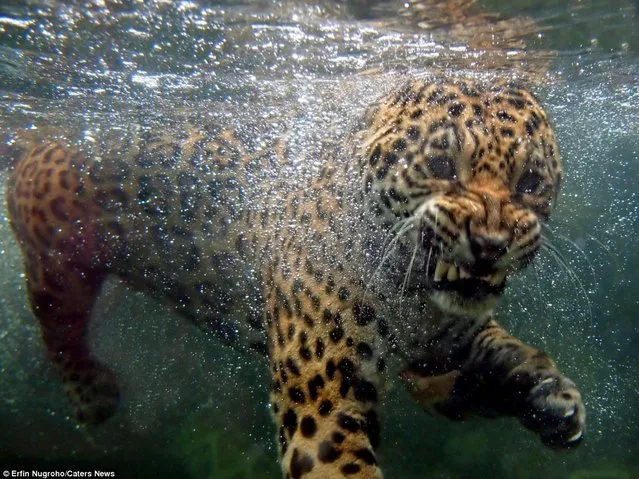
“Most cats run away at the first sign of water but this jaguar shows that some just love to make a splash. The fierce-looking feline was spotted doing an impressive moggy paddle as it swam for meat at Taman Safari in Indonesia. The spectacular shots were captured by professional photographer, Erfin Nugroho, who was visiting the centre for endangered animals with his family”. – Richard Hartley-Parkinson. (Photo by Erfin Nugroho/Caters News)
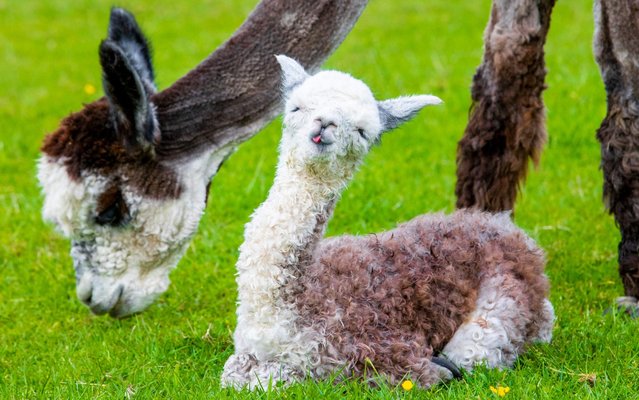
Staff at a Scottish farm say they are “absolutely delighted” to have welcomed a baby alpaca into the world this morning, June 6, 2019. Mum, Nunavut, gave birth to the baby boy huacaya alpaca, which has not yet been named, weighing 9.6kg. Stuart Ramsay, the owner of Velvet Hall Alpacas, in Innerleithen, Scottish Borders said he was surprised when the baby was born an “unusual rose grey colour”. (Photo by South West News Service)
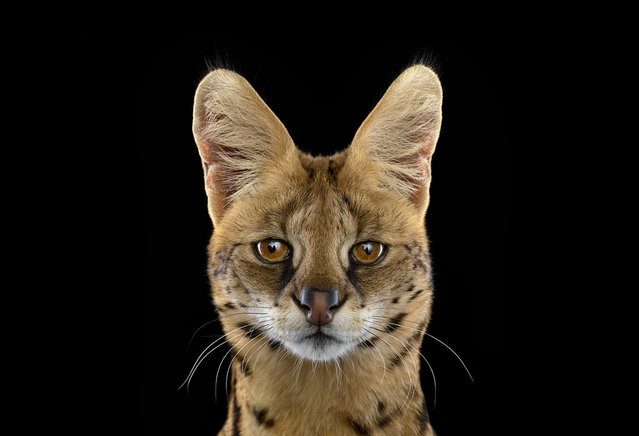
After 12 years photographing models, musicians, and celebrities, Brad Wilson decided that he wanted to photograph something a little more unpredictable: wild animals. Photo: Serval. (Photo by Brad Wilson)
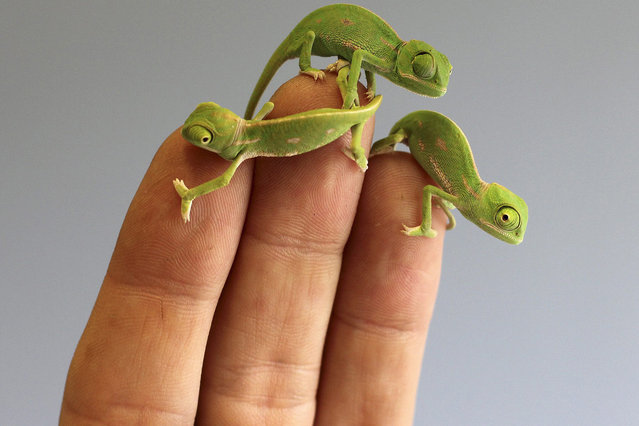
A handout image released by the Taronga Zoo shows Veiled Chameleon hatchlings at Taronga Zoo in Sydney, Australia, 11 March 2015. Taronga has welcomed more than 20 baby chameleons, with the last of three clutches of eggs hatching this week. Veiled Chameleons, or Chamaeleo calyptratus, are native to Saudi Arabia and Yemen and can live up to five years. (Photo by EPA/Taronga Zoo)
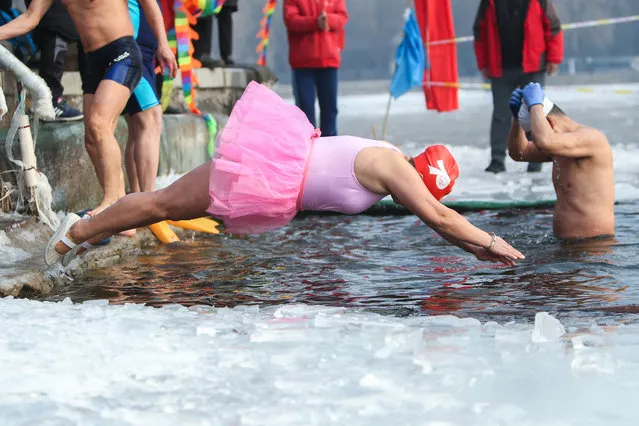
A winter swimming enthusiast dives into a partly frozen lake in a partly frozen lake in Shenyang, in northeastern China's Liaoning province on January 25, 2022. (Photo by AFP Photo/China Stringer Network)
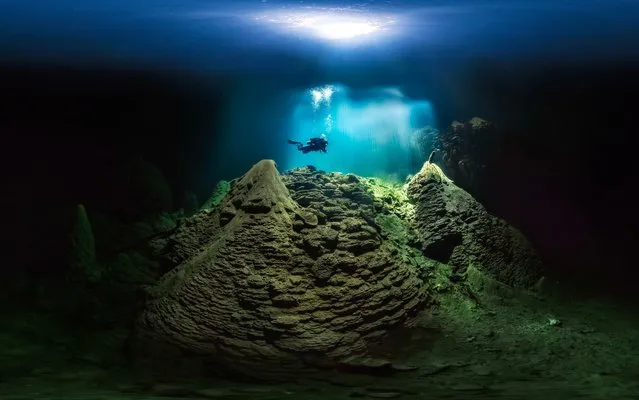
Cave Diver, Anhumas Abyss, Bonito, Brazil: The Anhumas Abyss is an underground cavern with a crystal-clear lake below, more than 260 feet (79 m) deep. A visitor must enter through a narrow opening at the top of the chamber and rappel into the cave. Snorkeling and scuba diving in the lake reveal amazing scenery. Distinctive, conical limestone stalagmites and stalactites occupy the lake and the surrounding area, some reaching 65 feet (20 m) high. (Photo by Marcio Cabral/Nature’s Best Photography Awards 2017)