Loading...
Done
A Chinese shopper sleeps on a bed in the showroom of the IKEA store on July 6, 2014 in Beijing, China. Of the world's ten biggest Ikea stores, 8 of them are in China to cater to the country's growing middle class. The stores are designed with extra room displays given the tendency for customers to make a visit an all-day affair. Store management does not discourage shoppers from sleeping on Ikea furniture, even marking them with signs inviting customers to try them out. (Photo by Kevin Frayer/Getty Images)

A Chinese shopper sleeps on a bed in the showroom of the IKEA store on July 6, 2014 in Beijing, China. Of the world's ten biggest Ikea stores, 8 of them are in China to cater to the country's growing middle class. The stores are designed with extra room displays given the tendency for customers to make a visit an all-day affair. Store management does not discourage shoppers from sleeping on Ikea furniture, even marking them with signs inviting customers to try them out. (Photo by Kevin Frayer/Getty Images)
Details
09 Jul 2014 12:27:00
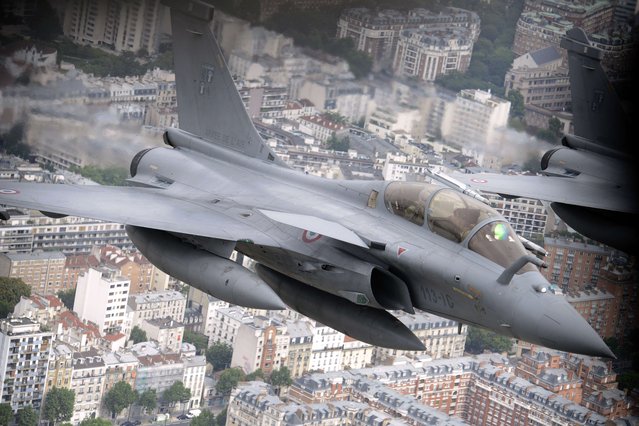
A picture taken on July 14, 2014 from a Boeing C135 refueling tanker shows two French Rafale fighter planes, flying over the French capital during the annual Bastille Day military parade on the Champs-Elysees in Paris. France has issued an unprecedented invitation to all 72 countries involved in World War I to take part in its annual Bastille Day military parade. (Photo by Franck Pennant/AFP Photo)

A picture taken on July 14, 2014 from a Boeing C135 refueling tanker shows two French Rafale fighter planes, flying over the French capital during the annual Bastille Day military parade on the Champs-Elysees in Paris. France has issued an unprecedented invitation to all 72 countries involved in World War I to take part in its annual Bastille Day military parade. (Photo by Franck Pennant/AFP Photo)
Details
15 Jul 2014 10:30:00
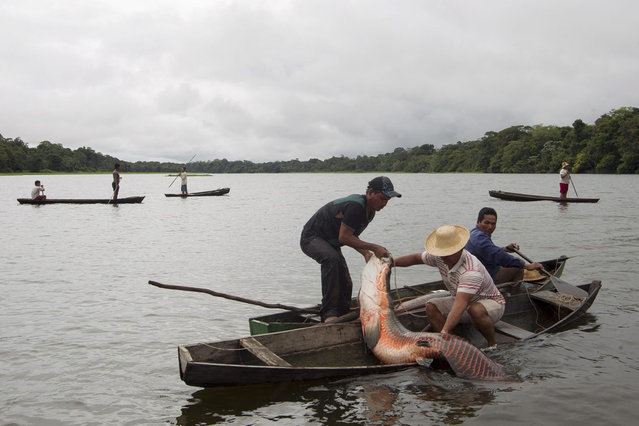
Villagers from the Porto Novo community load into their canoes arapaima or pirarucu, the largest freshwater fish species in South America and one of the largest in the world, while fishing in Poco Fundo lake along a branch of the Solimoes river, one of the main tributaries of the Amazon, in the Mamiraua nature reserve near Fonte Boa about 600 km (373 miles) west of Manaus, November 26, 2013. (Photo by Bruno Kelly/Reuters)

Villagers from the Porto Novo community load into their canoes arapaima or pirarucu, the largest freshwater fish species in South America and one of the largest in the world, while fishing in Poco Fundo lake along a branch of the Solimoes river, one of the main tributaries of the Amazon, in the Mamiraua nature reserve near Fonte Boa about 600 km (373 miles) west of Manaus, November 26, 2013. Catching the arapaima, a fish that is sought after for its meat and is considered by biologists to be a living fossil, is only allowed once a year by Brazil's environmental protection agency. The minimum size allowed for a fisherman to keep an arapaima is 1.5 meters (4.9 feet). (Photo by Bruno Kelly/Reuters)
Details
17 Dec 2013 08:03:00
Mikhail Kalashnikov, the father of the world's most popular assault rifle, is handed  an AK-74 November 23, 2002 in Izhevsk,1000 East km. from Moscow. November 23 marked the 55th anniversary of the release of the first Kalashnikov gun. According to the Moscow-based Center for Analysis of Strategic and Technologies some 70 million to 100 million Kalashnikovs have been built worldwide since 1947, compared about 7 million to Kalashnikov's Western rival the M-16 assault rifles. (Photo by Oleg Nikishin/Getty Images)

Mikhail Kalashnikov, the father of the world's most popular assault rifle, is handed an AK-74 November 23, 2002 in Izhevsk,1000 East km. from Moscow. November 23 marked the 55th anniversary of the release of the first Kalashnikov gun. According to the Moscow-based Center for Analysis of Strategic and Technologies some 70 million to 100 million Kalashnikovs have been built worldwide since 1947, compared about 7 million to Kalashnikov's Western rival the M-16 assault rifles. (Photo by Oleg Nikishin/Getty Images)
Details
24 Dec 2013 09:12:00
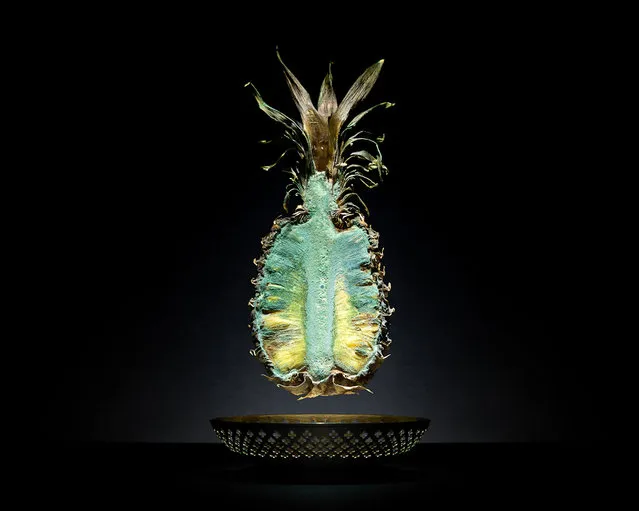
Pineapple

“One Third” – a project on food waste by an Austrian photography Klaus Pichler. According to a UN study one third of the world's food goes to waste – the largest part thereof in the industrialized nations of the global north. Equally, 925 million people around the world are threatened by starvation. The series “One Third” describes the connection between individual wastage of food and globalized food production.

Photo: Pineapple. Place of production: Guayaquil, Ecuador. Cultivation method: Outdoor plantation • Time of harvest: All- season. Transporting distance: 10.666 km (linear distance) • Means of transportation: Aircraft, truck. Carbon footprint (total) per kg: 11,94 kg • Water requirement (total) per kg: 360 l. Price: 2,10 € / kg. (Photo by Klaus Picher)
Details
02 May 2012 11:01:00


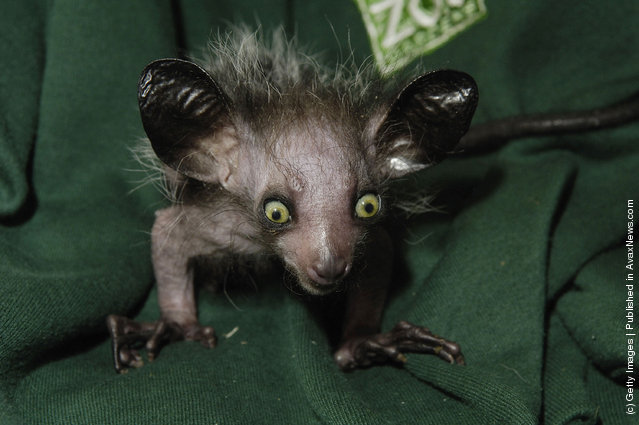
“The aye-aye (Daubentonia madagascariensis) is a lemur, a strepsirrhine primate native to Madagascar that combines rodent-like teeth and a special thin middle finger to fill the same ecological niche as a woodpecker. It is the world's largest nocturnal primate, and is characterized by its unusual method of finding food; it taps on trees to find grubs, then gnaws holes in the wood and inserts its narrow middle finger to pull the grubs out. The only other animal species known to find food in this way is the striped possum. From an ecological point of view the aye-aye fills the niche of a woodpecker as it is capable of penetrating wood to extract the invertebrates within”. – Wikipedia

Photo: In this handout image from Bristol Zoo is seen the first captive bred aye-aye in the UK named “Kintana” (meaning star in Malagasy) April 15, 2005 at Bristol Zoo Gardens, England. The zoo announced today only the second baby aye-aye to be hand-reared in the world (the first was in Jersey Zoo) and has now made his first public appearance since his birth on 11 February 2005. (Photo by Rob Cousins/Bristol Zoo via Getty Images)
Details
13 Apr 2011 13:33:00
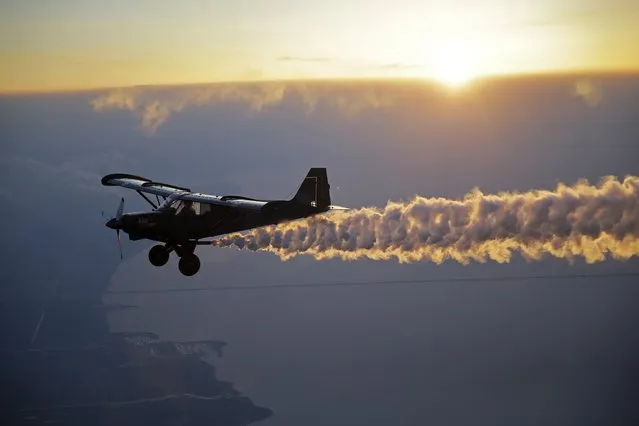
In this May 2, 2015 photo, skywriter Nathan Hammond releases smoke as he writes messages of hope and love over New Orleans, during the New Orleans Jazz & Heritage Festival. Hammond was commissioned by local entrepreneur, Frank Scurlock, who said the messages were simply his way of reminding people that goodness can still flourish in a world that seems increasingly marred by violence. (Photo by Gerald Herbert/AP Photo)

In this May 2, 2015 photo, skywriter Nathan Hammond releases smoke as he writes messages of hope and love over New Orleans, during the New Orleans Jazz & Heritage Festival. Hammond was commissioned by local entrepreneur, Frank Scurlock, who said the messages were simply his way of reminding people that goodness can still flourish in a world that seems increasingly marred by violence. (Photo by Gerald Herbert/AP Photo)
Details
06 May 2015 13:57:00
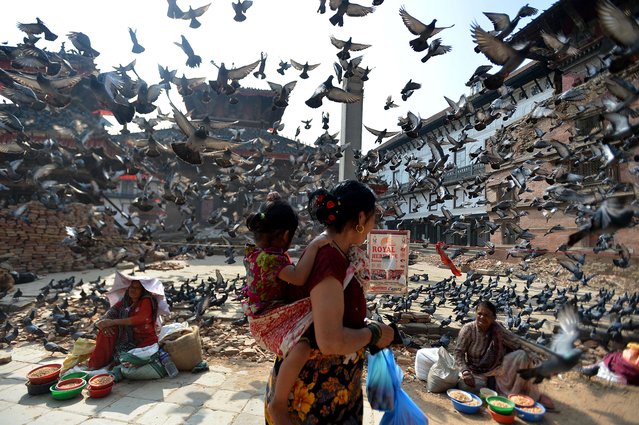
Flying pigeons pass over Nepalese street vendors near the earthquake damaged UNESCO World Heritage Site, Durbar Square in Kathmandu on May 20, 2015. Nearly 8,500 people have now been confirmed dead in the disaster, which destroyed more than half a million homes and left huge numbers of people without shelter with just weeks to go until the monsoon rains. (Photo by Ishara S. Kodikara/AFP Photo)

Flying pigeons pass over Nepalese street vendors near the earthquake damaged UNESCO World Heritage Site, Durbar Square in Kathmandu on May 20, 2015. Nearly 8,500 people have now been confirmed dead in the disaster, which destroyed more than half a million homes and left huge numbers of people without shelter with just weeks to go until the monsoon rains. (Photo by Ishara S. Kodikara/AFP Photo)
Details
23 May 2015 10:25:00