Loading...
Done
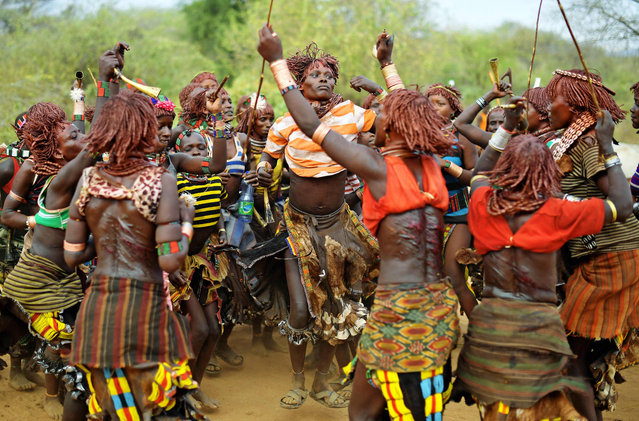
Hamar women dance before a bull jumping ceremony in Ethiopia's southern Omo Valley region near Turmi on September 19, 2016. The Hamar are a Nilotic ethnic group in Ethiopia. The construction of the Gibe III dam, the third largest hydroelectric plant in Africa, and large areas of very “thirsty” cotton and sugar plantations and factories along the Omo river are impacting heavily on the lives of tribes living in the Omo Valley who depend on the river for their survival and way of life. Human rights groups fear for the future of the tribes if they are forced to scatter, give up traditional ways through loss of land or ability to keep cattle as globalisation and development increases. (Photo by Carl De Souza/AFP Photo)

Hamar women dance before a bull jumping ceremony in Ethiopia's southern Omo Valley region near Turmi on September 19, 2016. The Hamar are a Nilotic ethnic group in Ethiopia. The construction of the Gibe III dam, the third largest hydroelectric plant in Africa, and large areas of very “thirsty” cotton and sugar plantations and factories along the Omo river are impacting heavily on the lives of tribes living in the Omo Valley who depend on the river for their survival and way of life. (Photo by Carl De Souza/AFP Photo)
Details
02 Oct 2016 08:45:00
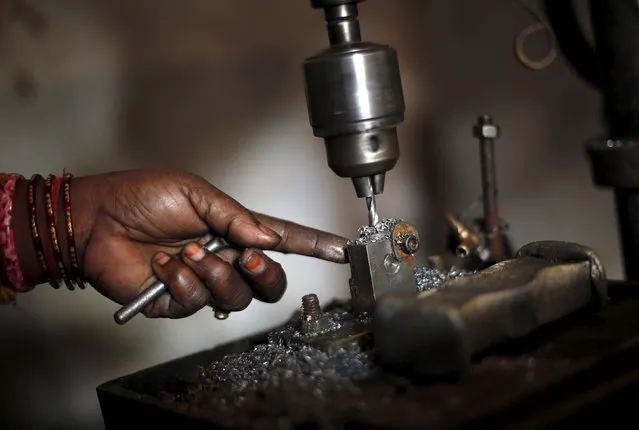
A worker makes auto parts on a machine inside a workshop in Faridabad, India, December 24, 2015. (Photo by Adnan Abidi/Reuters)

A worker makes auto parts on a machine inside a workshop in Faridabad, India, December 24, 2015. Car makers such as Maruti Suzuki India and Hyundai Motor see huge growth in India, set to become the world's third-largest auto market by 2020 as millions buy their first new car. Price tags can be as low as $3,000 for a new Tata Motors Nano mini-car. India is also becoming a low-cost export hub for global car makers such as General Motors and Ford Motor. As the sector expands, some of the work is sub-contracted out to small factories operating on paper-thin margins, where poor contract workers often have little or no access to safety equipment or health benefits. (Photo by Adnan Abidi/Reuters)
Details
23 Jan 2016 13:31:00


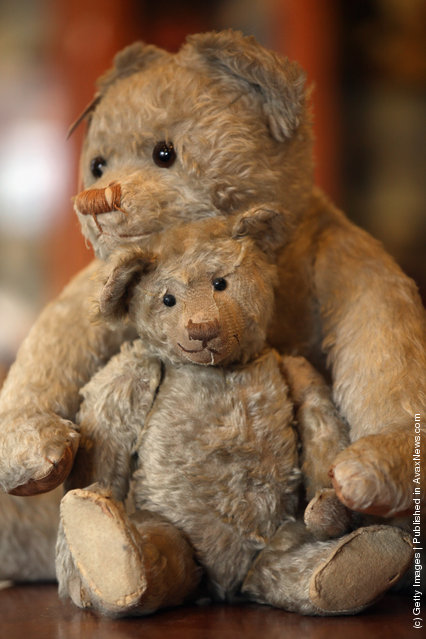
Two Teddy Bears from the 1920's sit on display in the museum section of the Merrythought Teddy Bear shop on April 5, 2011 in Ironbridge, England. Established in 1930, Merrythought has been hand-making Teddy Bears for over 80 years in Shropshire. The family-run company is the last remaining British teddy bear factory and is launching its latest limited edition bear to mark the royal wedding. The Commemorative Royal Wedding bear is limited to 75 and comes after its popular Prince William and Catherine Middleton bears completely sold out. Merrythought has also been selected by the London Olympic Games organisers to produce the official teddy bears of the London 2012 Olympic and Paralympic games. (Photo by Christopher Furlong/Getty Images)
Details
06 Apr 2011 10:27:00
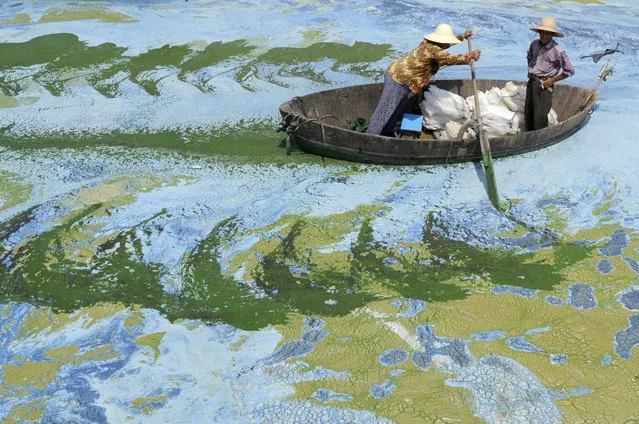
Fishermen row a boat in the algae-filled Chaohu Lake in Hefei, Anhui province, June 19, 2009. The country has invested 51 billion yuan ($7.4 billion) towards the construction of 2,712 projects for the treatment of eight rivers and lakes including Huaihe River, Haihe River, Liaohe River, Chaohu Lake, Dianchi Lake, Songhua River, the Three Gorges region of the Yangtze River and its upstream area, Xinhua News Agency reported. (Photo by Jianan Yu/Reuters)

Growing cities, overuse of fertilizers and factory wastewater have degraded China's water supplies to the extent that half the nation's rivers and lakes are severely polluted. China aims to spend $850 billion to improve filthy water supplies over the next decade, but even such huge outlays may do little to reverse damage caused by decades of pollution and overuse in Beijing's push for rapid economic growth. Photo: Fishermen row a boat in the algae-filled Chaohu Lake in Hefei, Anhui province, June 19, 2009. (Photo by Jianan Yu/Reuters)
Details
03 Aug 2014 08:01:00
How Snakeskin Handbags Are Made

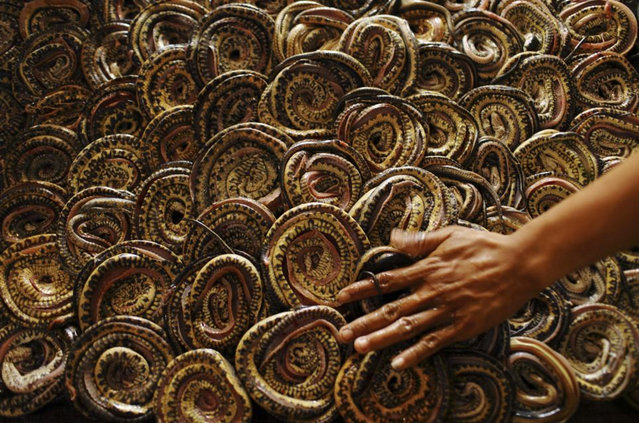
Images from a snake slaughterhouse at Kapetakan village in Indonesia’s West Java province. Wakira, who is known as “Boss Cobra”, owns the slaughterhouse that produces snake meat and skin. Snake meat is believed by some to be a remedy for skin diseases and asthma, as well as an aid to increase virility. The snake skins, measuring in the hundreds of metres, are sold to bag factories in the West and Central Java provinces on a monthly basis. The price of a bag made from snake skin costs between 150,000 rupiah ($ 15.60) and 300,000 rupiah ($31.20), depending on its size. That snakeskin handbag you’ll buy is costing a hell of a lot more.
Details
20 Feb 2013 12:00:00
Skoda Fabia vRS Mean Green

Skoda is promoting the Fabia vRS with “Mean Green”, a television commercial filmed at the factory in the Czech Republic, showing a meaner side to the 180hp 1.4L TSI turbo and supercharged Fabia hatchback. The commercial begins with the brutal destruction of the Fabia cake commercial from 2007, with the Sound of Music “Favourite Things” track providing an ongoing sense of irony. The online campaign in the UK invites visitors to decide between lovely and mean, choosing between gingerbread and venom.
Details
15 Feb 2014 13:36:00
Shovava Wing Scarves By Roza Khamitova

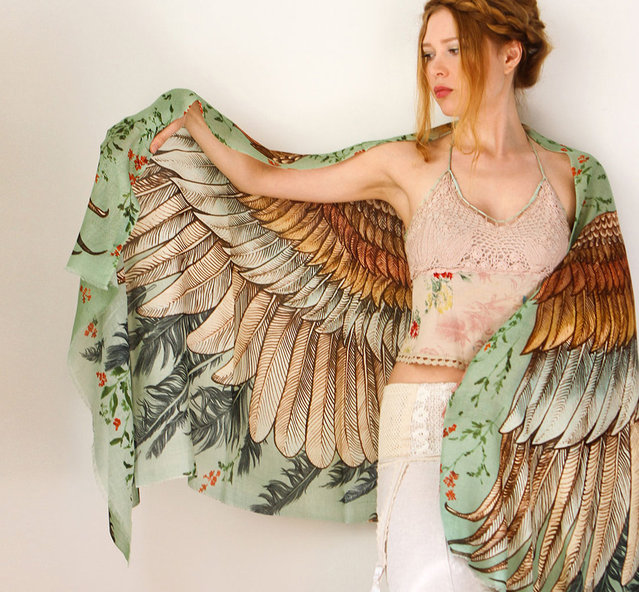
Roza Khamitova was born into a family of artists in Kazakhstan. After finishing design school in Manhattan, New York, she was working in fashion industry for about 8 years. As a visual artist Roza had always drawn most of her inspiration from the natural world around her in the mountains of Kazakhstan. In 2011 she launched Shovava, her personal line of women’s clothing based on her hand drawn paintings and prints of the animals, plants and patterns found in nature. Roza was enchanted by the beauty of wings, its structure and symbolism. First, she sketches big wide-spread wings on paper with a light pencil, adds black ink to create a three-dimensional feel and fills with stunning watercolors.
Details
06 Dec 2015 10:42:00
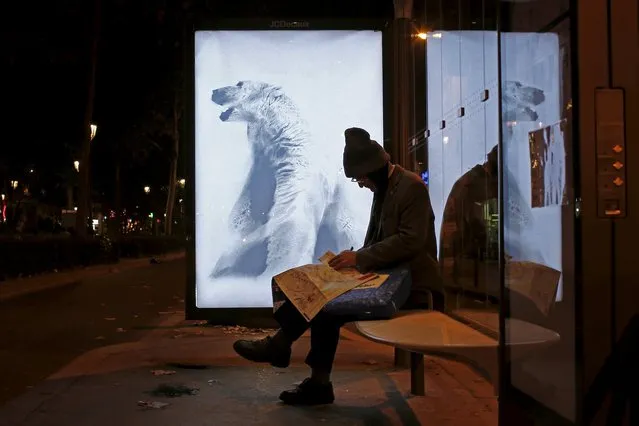
A poster by street artist Aaron Li-Hill as part of the "Brandalism" project is displayed at a bus stop in Paris, France, November 28, 2015, ahead of the United Nations COP21 Climate Change conference in Paris. (Photo by Benoit Tessier/Reuters)

A poster by street artist Aaron Li-Hill as part of the "Brandalism" project is displayed at a bus stop in Paris, France, November 28, 2015, ahead of the United Nations COP21 Climate Change conference in Paris. Brandalism is a revolt against corporate control of the visual realm. Following on in the guerilla art traditions of the 20th Century and taking inspiration from Agitprop, Situationist and Street Art movements, the Brandalism project sees artists from around the world collaborate to challenge the authority and legitimacy of commercial images within public space and within our culture. (Photo by Benoit Tessier/Reuters)
Details
30 Nov 2015 08:03:00