Loading...
Done
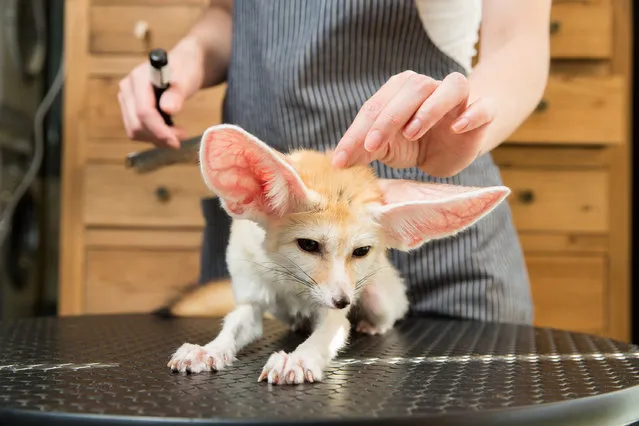
A fennec fox (Vulpes zerda) is groomed in a pet store in central Beijing. Native to the Sahara in North Africa, the species became a popular pet after being depicted as a character in Disney’s 2016 animated movie Zootopia. Individuals can cost between $2,000–$3,000. (Photo by Sean Gallagher/The Guardian)

A dramatic rise in owning exotic pets in China is fuelling global demand for threatened species. The growing trade in alligators, snakes, monkeys, crocodiles and spiders is directly linked to species loss in some of the world’s most threatened ecosystems. Here: A fennec fox (Vulpes zerda) is groomed in a pet store in central Beijing. Native to the Sahara in North Africa, the species became a popular pet after being depicted as a character in Disney’s 2016 animated movie Zootopia. Individuals can cost between $2,000–$3,000. (Photo by Sean Gallagher/The Guardian)
Details
23 Sep 2017 08:04:00
Roxy, a Red Labradoodle, Jaku, a Black and Tan Lurcher, Kobe, a White German Shepherd, Rocky, a Black and Tan German Shepherd, and Busy, an English Springer Spaniel Cross, queue outside an Aldi store in Hinckley, Leicestershire, UK on Monday, December 1, 2025. (Phoot by Lucy Ray/PA Media Assignments)

Roxy, a Red Labradoodle, Jaku, a Black and Tan Lurcher, Kobe, a White German Shepherd, Rocky, a Black and Tan German Shepherd, and Busy, an English Springer Spaniel Cross, queue outside an Aldi store in Hinckley, Leicestershire, UK on Monday, December 1, 2025. (Phoot by Lucy Ray/PA Media Assignments)
Details
07 Dec 2025 06:14:00
An aerial view of the figure of a Catrina skull made with 18,000 Cempasuchil flowers (Mexican marigold) is on display at the Church of Santa Prisca as part of Day of the Dead celebrations, in Taxco, Mexico on October 27, 2021. (Photo by Daniel Cardenas/Anadolu Agency via Getty Images)

An aerial view of the figure of a Catrina skull made with 18,000 Cempasuchil flowers (Mexican marigold) is on display at the Church of Santa Prisca as part of Day of the Dead celebrations, in Taxco, Mexico on October 27, 2021. (Photo by Daniel Cardenas/Anadolu Agency via Getty Images)
Details
26 Nov 2021 09:16:00
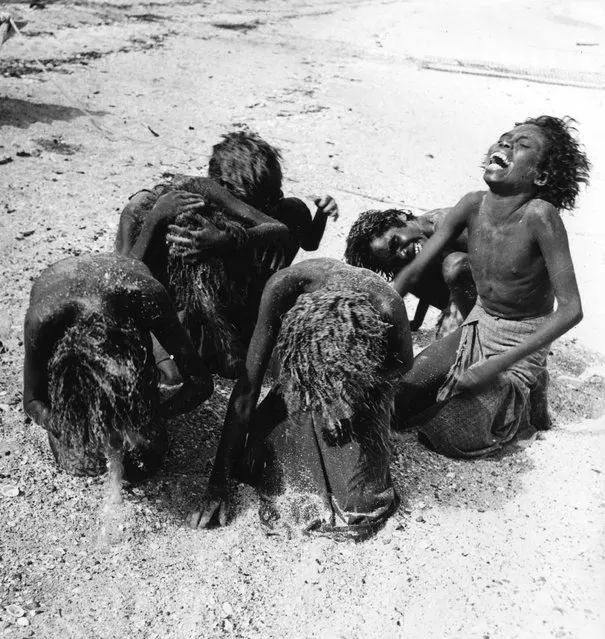
1st January 1950:  Aboriginal women washing their hair with sand at Arnhem land in the Northern Territory of Australia.  (Photo by Three Lions/Getty Images)

“Australian Aborigines are those people regarded as indigenous to the Australian continent. In the High Court of Australia, Australian Aborigines have been specifically identified as a group of people who share, in common, biological ancestry back to the original occupants of the continent”. – Wikipedia

Photo: Aboriginal women washing their hair with sand at Arnhem land in the Northern Territory of Australia. 1st January 1950. (Photo by Three Lions)
Details
02 Feb 2014 07:29:00
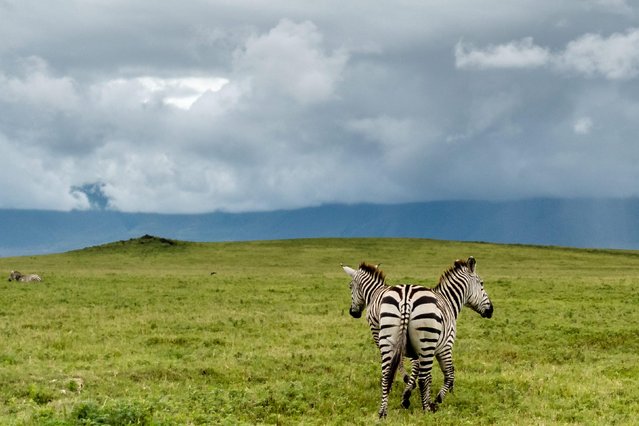
Two zebras stand so close in Ngorongoro Crater, Tanzania. (Photo by Zhayynn James/Solent News)

Two zebras stand so close in Ngorongoro Crater, Tanzania. (Photo by Zhayynn James/Solent News)
Details
10 May 2020 00:01:00
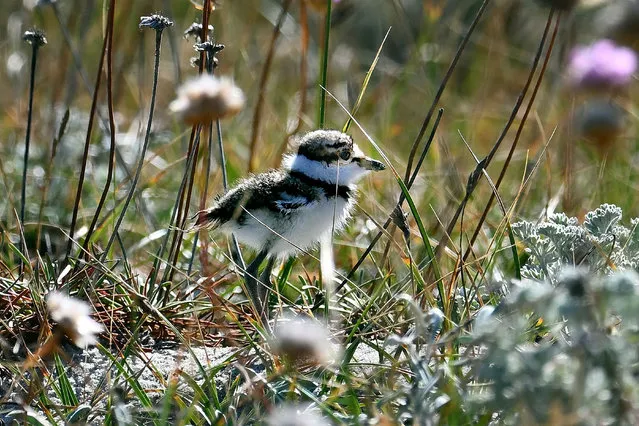
A killdeer (Charadrius vociferus) chick on sand dunes in Pacific Grove, California, US on June 21, 2023. The killdeer gets its name from its shrill, loud call. (Photo by Rory Merry/ZUMA Press Wire/Rex Features/Shutterstock)

A killdeer (Charadrius vociferus) chick on sand dunes in Pacific Grove, California, US on June 21, 2023. The killdeer gets its name from its shrill, loud call. (Photo by Rory Merry/ZUMA Press Wire/Rex Features/Shutterstock)
Details
02 Jul 2023 03:03:00
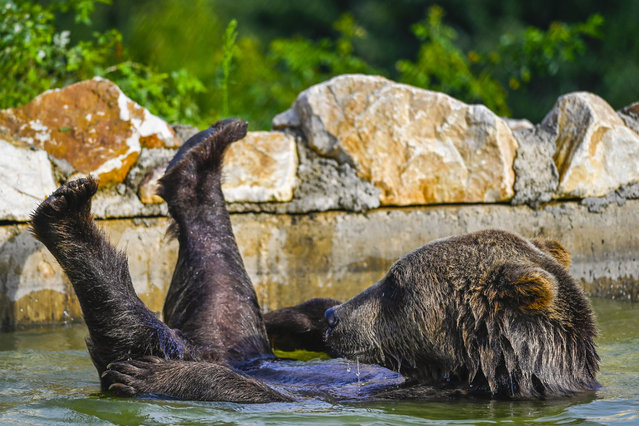
A brown bears cools off in a pool at the bear sanctuary near the village of Mramor, on August 18, 2020. The bear sanctuary was closed for visitors on August 18, as part of safety measures to curb the spread of the COVID-19 (novel coronavirus) disease. (Photo by Armend Nimani/AFP Photo)

A brown bears cools off in a pool at the bear sanctuary near the village of Mramor, on August 18, 2020. The bear sanctuary was closed for visitors on August 18, as part of safety measures to curb the spread of the COVID-19 (novel coronavirus) disease. (Photo by Armend Nimani/AFP Photo)
Details
23 Aug 2020 00:03:00
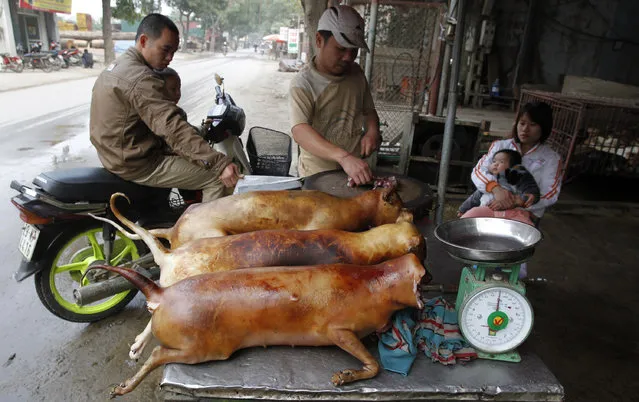
A vendor (C) cuts slaughtered dogs for sale at his roadside stall in Duong Noi village, outside Hanoi December 16, 2011. While animal rights activists have condemned eating dog meat as cruel treatment of the animals, it is still an accepted popular delicacy for some Vietnamese, as well in some other Asian countries. (Photo by Reuters/Kham)

A vendor (C) cuts slaughtered dogs for sale at his roadside stall in Duong Noi village, outside Hanoi December 16, 2011. While animal rights activists have condemned eating dog meat as cruel treatment of the animals, it is still an accepted popular delicacy for some Vietnamese, as well in some other Asian countries. Duong Noi is well-known as a dog-meat village, where hundreds of dogs are killed each day for sale as popular traditional food. Dog-eating as a custom is rooted in Vietnam and was developed as a result of poverty. One kilogram of dog meat costs about 130,000 dongs ($6.2). (Photo by Reuters/Kham)
Details
16 Jul 2013 11:40:00