Loading...
Done
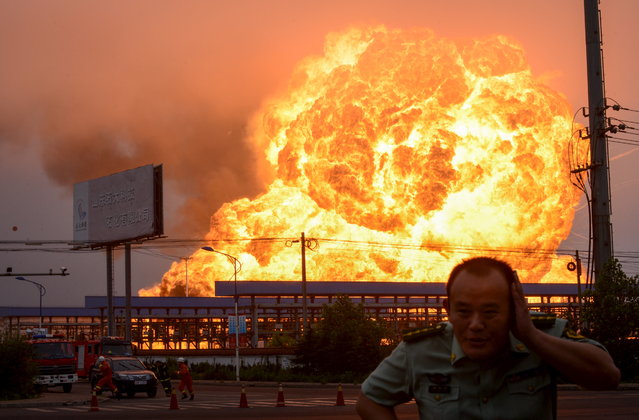
An explosion at a petrochemical plant is seen in Rizhao, Shandong province, July 16, 2015. According to Xinhua News Agency, a fire broke out after the explosion, which was caused by a liquified hydrocarbon leak at the plant, on Thursday morning. There was no report of casualties yet. (Photo by Reuters/China Daily)

An explosion at a petrochemical plant is seen in Rizhao, Shandong province, July 16, 2015. According to Xinhua News Agency, a fire broke out after the explosion, which was caused by a liquified hydrocarbon leak at the plant, on Thursday morning. There was no report of casualties yet. (Photo by Reuters/China Daily)
Details
17 Jul 2015 14:03:00
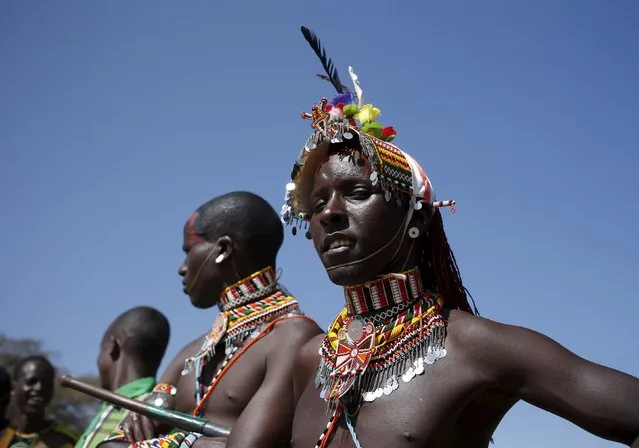
Samburu tribesmen stand during the Maralal Camel Derby, Kenya, August 15, 2015. (Photo by Goran Tomasevic/Reuters)

Samburu tribesmen stand during the Maralal Camel Derby, Kenya, August 15, 2015. Maralal, a small, arid town about an eight-hour drive north of the Kenyan capital Nairobi, holds an annual camel festival, bringing together members of the Samburu, Turkana and Pokot semi-nomadic cattle-herding tribes. (Photo by Goran Tomasevic/Reuters)
Details
20 Aug 2015 13:37:00
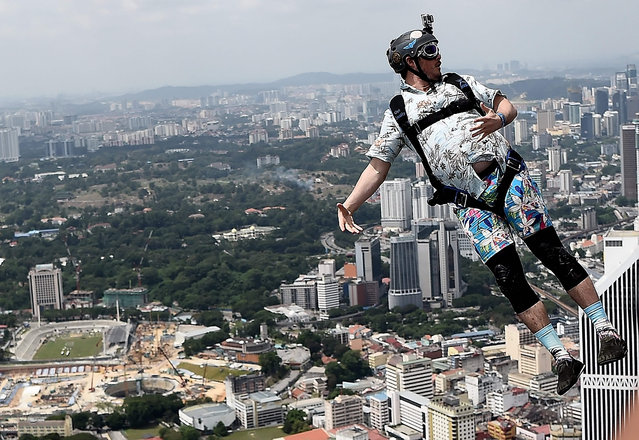
Base jumpers leap from the 300-metre high skydeck of Malaysia's landmark Kuala Lumpur Tower against the backdrop of the city's skyline on October 3, 2016 during the annual International KL Tower Base-Jump event. (Photo by Manan Vatsyayana/AFP Photo)

Base jumpers leap from the 300-metre high skydeck of Malaysia's landmark Kuala Lumpur Tower against the backdrop of the city's skyline on October 3, 2016 during the annual International KL Tower Base-Jump event. (Photo by Manan Vatsyayana/AFP Photo)
Details
04 Oct 2016 11:01:00
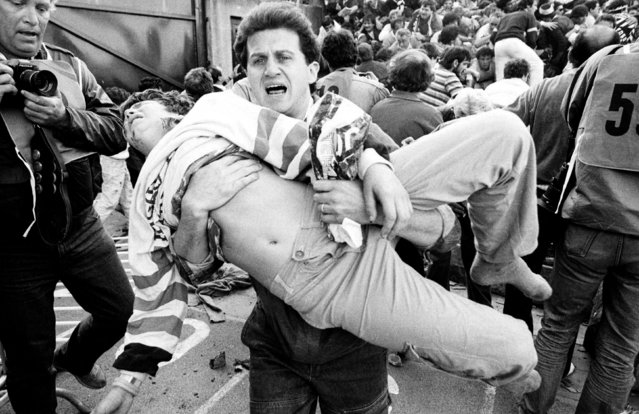
An injured soccer fan is carried to safety by a friend after a wall collapsed during violence between fans before the European Cup final between Juventus and Liverpool at the Heysel stadium in Brussels, May 29, 1985. 39 people died, and a further 600 were injured. (Photo by Nick Didlick/Reuters)

Reuters multi-award winning photographers are celebrated here in a three part retrospective on the 30th anniversary of the service's launch. They have captured dramatic images illustrating the human tragedy of natural disaster and war as well as the fallout of economic events across the continents, creating iconic images, recognised around the world. Here: an injured soccer fan is carried to safety by a friend after a wall collapsed during violence between fans before the European Cup final between Juventus and Liverpool at the Heysel stadium in Brussels, May 29, 1985. 39 people died, and a further 600 were injured. (Photo by Nick Didlick/Reuters)
Details
15 Feb 2015 13:43:00
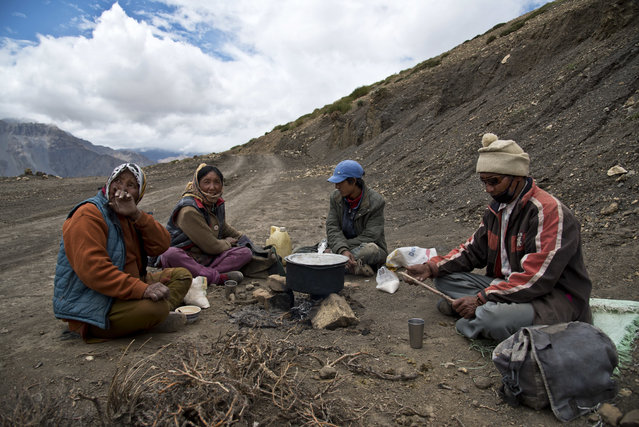
In this August 17, 2016, photo, from left to right, Chhering Chodom, 60, Tashi Yangzom, 50, Lobsang Chhering, 27, and Dorje Tandup, 58, drink milk tea on the side of the road. For centuries, the sleepy valley nestled in the Indian Himalayas remained a hidden Buddhist enclave forbidden to outsiders. Enduring the harsh year-round conditions of the high mountain desert, the people of Spiti Valley lived by a simple communal code – share the Earth's bounty, be hospitable to neighbors, and eschew greed and temptation at all turns. That's all starting to change, for better or worse. Since India began allowing its own citizens as well as outsiders to visit the valley in the early 1990s, tourism and trade have boomed. And the marks of modernization, such as solar panels, asphalt roads and concrete buildings, have begun to appear around some of the villages that dot the remote landscape at altitudes above 4,000 meters (13,000 feet). (Photo by Thomas Cytrynowicz/AP Photo)

In this August 17, 2016, photo, from left to right, Chhering Chodom, 60, Tashi Yangzom, 50, Lobsang Chhering, 27, and Dorje Tandup, 58, drink milk tea on the side of the road. For centuries, the sleepy valley nestled in the Indian Himalayas remained a hidden Buddhist enclave forbidden to outsiders. Enduring the harsh year-round conditions of the high mountain desert, the people of Spiti Valley lived by a simple communal code – share the Earth's bounty, be hospitable to neighbors, and eschew greed and temptation at all turns. That's all starting to change, for better or worse. (Photo by Thomas Cytrynowicz/AP Photo)
Details
15 Sep 2016 09:22:00
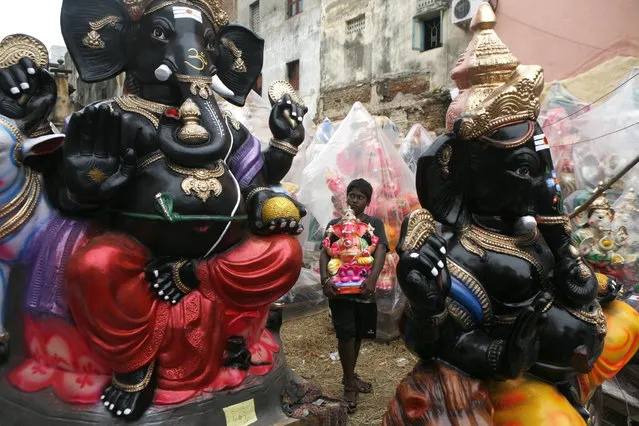
An Indian child artisan carries an idol of elephant-headed Hindu God Ganesha at a workshop ahead of Ganesh Chaturthi festival in Chennai, India, Saturday, September 7, 2013. Ganesh Chaturthi, which begins from September 9, is celebrated as the birthday of Lord Ganesha who is widely worshiped by Hindus as the God of wisdom, prosperity and good fortune. (Photo by Arun Sankar K./AP Photo)

An Indian child artisan carries an idol of elephant-headed Hindu God Ganesha at a workshop ahead of Ganesh Chaturthi festival in Chennai, India, Saturday, September 7, 2013. Ganesh Chaturthi, which begins from September 9, is celebrated as the birthday of Lord Ganesha who is widely worshiped by Hindus as the God of wisdom, prosperity and good fortune. (Photo by Arun Sankar K./AP Photo)
Details
09 Sep 2013 08:07:00


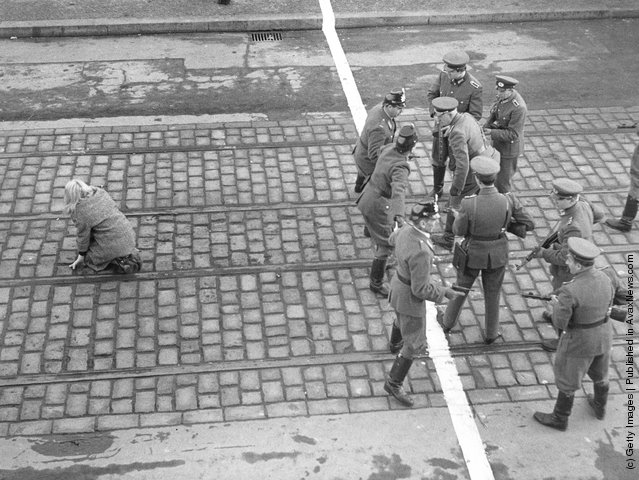
“The Berlin Wall (German: Berliner Mauer) was a barrier constructed by the German Democratic Republic (GDR, East Germany) starting on 13 August 1961, that completely cut off West Berlin from surrounding East Germany and from East Berlin. The barrier included guard towers placed along large concrete walls, which circumscribed a wide area (later known as the “death strip”) that contained anti-vehicle trenches, “fakir beds” and other defenses. The Soviet-dominated Eastern Bloc officially claimed that the wall was erected to protect its population from fascist elements conspiring to prevent the “will of the people” in building a socialist state in East Germany. However, in practice, the Wall served to prevent the massive emigration and defection that marked Germany and the communist Eastern Bloc during the post-World War II period”. – Wikipedia

Photo: West Berlin policemen and East German Volkspolizei face each other across the border in Berlin, circa 1955. (Photo by Three Lions/Hulton Archive/Getty Images)
Details
22 May 2011 10:49:00


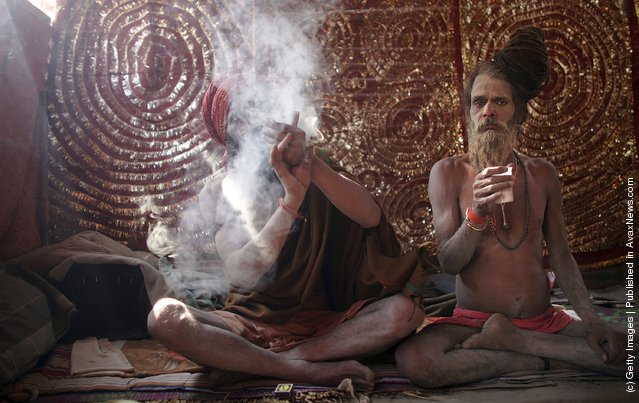
“Kumbh Mela is a mass Hindu pilgrimage in which Hindus gather at the Ganges river. The normal Kumbh Mela is celebrated every 3 years, the Ardh (half) Kumbh Mela is celebrated every six years at Haridwar and Prayag, the Purna (complete) Kumbh takes place every twelve years, at four places (Prayag (Allahabad), Haridwar, Ujjain, and Nashik). The Maha (great) Kumbh Mela which comes after 12 “Purna Kumbh Melas”, or 144 years, is held at Allahabad.

The last Ardh Kumbh Mela was held over a period of 45 days beginning in January 2007, more than 70 million Hindu pilgrims took part in the Ardh Kumbh Mela at Prayag, and on January 15, the most auspicious day of the festival of Makar Sankranti, more than 5 million participated. The previous Maha Kumbh Mela, held in 2001, was attended by around 60 million people, making it at the time the largest gathering anywhere in the world in recorded history”. – Wikipedia

Photo: Sadhus (holy men) smoke at their camp near the ritual site at Sangam, the confluence of the Ganges, Yamuna and mythical Saraswati rivers during the Ardh Kumbh Mela festival (Half Pitcher festival) January 18, 2007 in Allahabad, India. Millions of Hindu pilgrims have flocked to the largest religious gathering in the world which lasts for 45 days in northern India. The festival commemorates the mythical conflict between gods and demons over a pitcher filled with the “nectar of immortality”. Devotees believe that taking a holy dip in the Ganges at this time washes away their sins and paves the path to salvation. (Photo by Mario Tama/Getty Images)

Details
30 Jun 2011 10:27:00