Loading...
Done
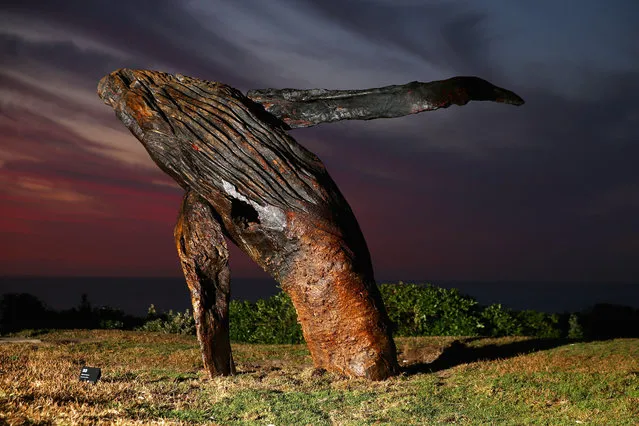
The annual Sculpture by the Sea exhibition in Sydney features dozens of sculptures on Bondi and Tamarama beaches and along the coastal path between them. The free outdoor exhibition, now in its 18th year, stretches for 2km along the coastline and includes work by artists from 16 countries. It runs from 23 October to 9 November 2014. Here: “Breaching” by Michael Greve is displayed during the 2014 Sculptures by the Sea exhibition at Marks Park on October 23, 2014 in Sydney, Australia. (Photo by Cameron Spencer/Getty Images)

The annual Sculpture by the Sea exhibition in Sydney features dozens of sculptures on Bondi and Tamarama beaches and along the coastal path between them. The free outdoor exhibition, now in its 18th year, stretches for 2km along the coastline and includes work by artists from 16 countries. It runs from 23 October to 9 November 2014. Here: “Breaching” by Michael Greve is displayed during the 2014 Sculptures by the Sea exhibition at Marks Park on October 23, 2014 in Sydney, Australia. (Photo by Cameron Spencer/Getty Images)
Details
24 Oct 2014 12:53:00
Participants dressed in Heroic Fantasy costumes pose for a picture as they wait backstage during the first edition of the HeroFestival in Marseille, November 9, 2014. The festival is dedicated to American superhero comics, Japanese mangas, Heroic Fantasy characters and video games universes. (Photo by Jean-Paul Pelissier/Reuters)

Participants dressed in Heroic Fantasy costumes pose for a picture as they wait backstage during the first edition of the HeroFestival in Marseille, November 9, 2014. The festival is dedicated to American superhero comics, Japanese mangas, Heroic Fantasy characters and video games universes. (Photo by Jean-Paul Pelissier/Reuters)
Details
12 Nov 2014 14:07:00


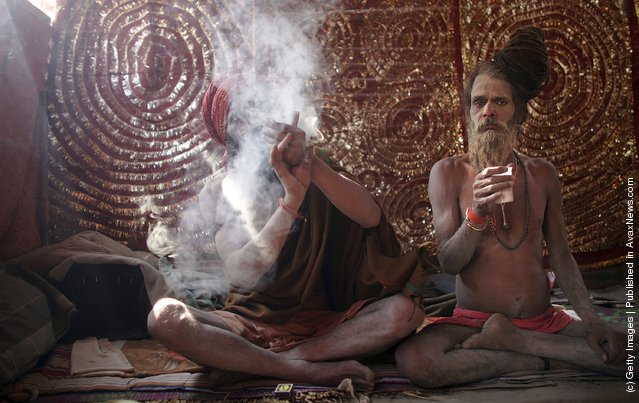
“Kumbh Mela is a mass Hindu pilgrimage in which Hindus gather at the Ganges river. The normal Kumbh Mela is celebrated every 3 years, the Ardh (half) Kumbh Mela is celebrated every six years at Haridwar and Prayag, the Purna (complete) Kumbh takes place every twelve years, at four places (Prayag (Allahabad), Haridwar, Ujjain, and Nashik). The Maha (great) Kumbh Mela which comes after 12 “Purna Kumbh Melas”, or 144 years, is held at Allahabad.

The last Ardh Kumbh Mela was held over a period of 45 days beginning in January 2007, more than 70 million Hindu pilgrims took part in the Ardh Kumbh Mela at Prayag, and on January 15, the most auspicious day of the festival of Makar Sankranti, more than 5 million participated. The previous Maha Kumbh Mela, held in 2001, was attended by around 60 million people, making it at the time the largest gathering anywhere in the world in recorded history”. – Wikipedia

Photo: Sadhus (holy men) smoke at their camp near the ritual site at Sangam, the confluence of the Ganges, Yamuna and mythical Saraswati rivers during the Ardh Kumbh Mela festival (Half Pitcher festival) January 18, 2007 in Allahabad, India. Millions of Hindu pilgrims have flocked to the largest religious gathering in the world which lasts for 45 days in northern India. The festival commemorates the mythical conflict between gods and demons over a pitcher filled with the “nectar of immortality”. Devotees believe that taking a holy dip in the Ganges at this time washes away their sins and paves the path to salvation. (Photo by Mario Tama/Getty Images)

Details
30 Jun 2011 10:27:00
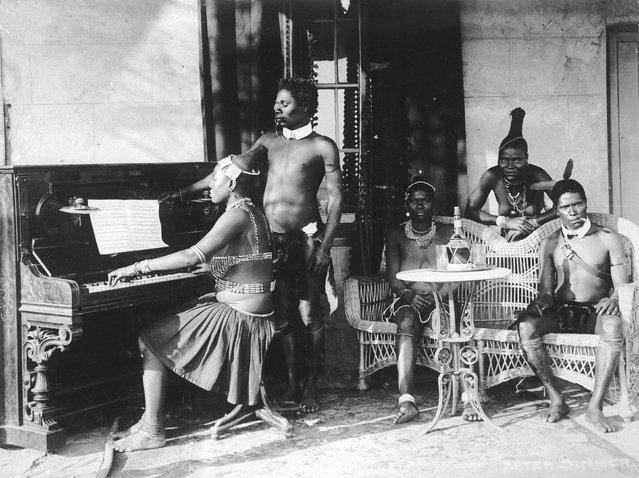
circa 1925:  A Zulu woman playing the piano while a group of others sit and listen.  (Photo by General Photographic Agency/Getty Images)

“The Zulu are the largest South African ethnic group, with an estimated 10–11 million people living mainly in the province of KwaZulu-Natal. Small numbers also live in Zimbabwe, Zambia, and Mozambique. Their language, Zulu, is a Bantu language; more specifically, part of the Nguni subgroup. The Zulu Kingdom played a major role in South African history during the 19th and 20th centuries. Under apartheid, Zulu people were classed as third-class citizens and suffered from state-sanctioned discrimination. They remain today the most numerous ethnic group in South Africa, and now have equal rights along with all other citizens”. – Wikipedia.

Photo: A Zulu woman playing the piano while a group of others sit and listen (to put it briefly, Englishmen scoff over Zulu). South Africa, circa 1925. (Photo by General Photographic Agency)

Details
03 Feb 2014 09:40:00
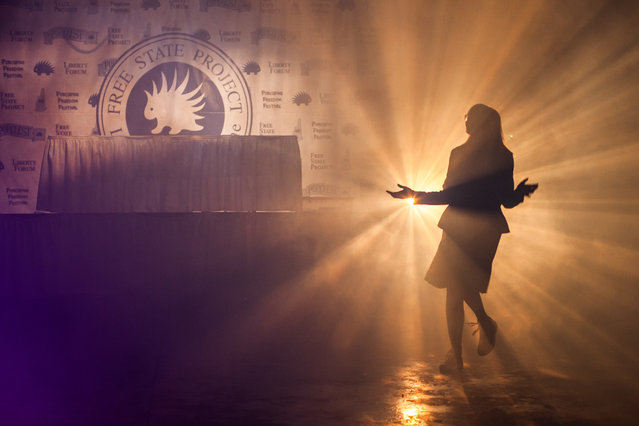
An attendee dances at the start of the “Big Goth Dance Party” during the Porcupine Freedom Festival, or PorcFest, the Free State Project's annual summer gathering in Lancaster, NH on Wednesday, June 25, 2014. (Photo by Matthew Cavanaugh/The Washington Post)

An attendee dances at the start of the “Big Goth Dance Party” during the Porcupine Freedom Festival, or PorcFest, the Free State Project's annual summer gathering in Lancaster, NH on Wednesday, June 25, 2014. (Photo by Matthew Cavanaugh/The Washington Post)
Details
07 Jul 2014 13:05:00
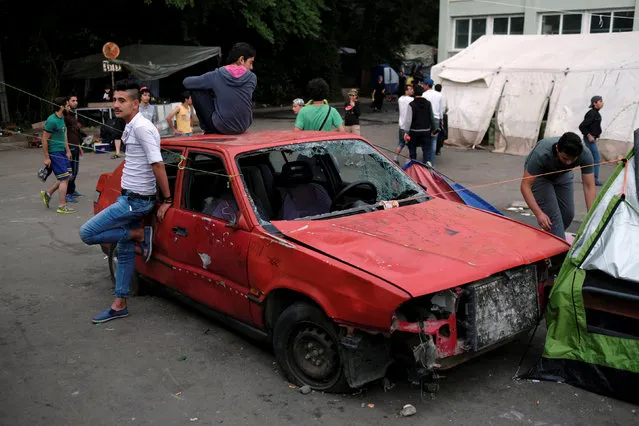
People stand by a damaged car at a train station at a makeshift camp for migrants and refugees at the Greek-Macedonian border near the village of Idomeni, Greece, May 10, 2016. (Photo by Marko Djurica/Reuters)

People stand by a damaged car at a train station at a makeshift camp for migrants and refugees at the Greek-Macedonian border near the village of Idomeni, Greece, May 10, 2016. (Photo by Marko Djurica/Reuters)
Details
12 May 2016 14:10:00
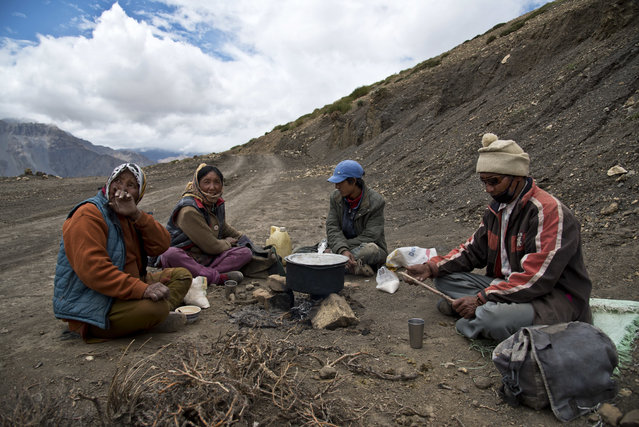
In this August 17, 2016, photo, from left to right, Chhering Chodom, 60, Tashi Yangzom, 50, Lobsang Chhering, 27, and Dorje Tandup, 58, drink milk tea on the side of the road. For centuries, the sleepy valley nestled in the Indian Himalayas remained a hidden Buddhist enclave forbidden to outsiders. Enduring the harsh year-round conditions of the high mountain desert, the people of Spiti Valley lived by a simple communal code – share the Earth's bounty, be hospitable to neighbors, and eschew greed and temptation at all turns. That's all starting to change, for better or worse. Since India began allowing its own citizens as well as outsiders to visit the valley in the early 1990s, tourism and trade have boomed. And the marks of modernization, such as solar panels, asphalt roads and concrete buildings, have begun to appear around some of the villages that dot the remote landscape at altitudes above 4,000 meters (13,000 feet). (Photo by Thomas Cytrynowicz/AP Photo)

In this August 17, 2016, photo, from left to right, Chhering Chodom, 60, Tashi Yangzom, 50, Lobsang Chhering, 27, and Dorje Tandup, 58, drink milk tea on the side of the road. For centuries, the sleepy valley nestled in the Indian Himalayas remained a hidden Buddhist enclave forbidden to outsiders. Enduring the harsh year-round conditions of the high mountain desert, the people of Spiti Valley lived by a simple communal code – share the Earth's bounty, be hospitable to neighbors, and eschew greed and temptation at all turns. That's all starting to change, for better or worse. (Photo by Thomas Cytrynowicz/AP Photo)
Details
15 Sep 2016 09:22:00
A general view of atmosphere at the annual VOLT Festival in Sopron, 208 kms west of Budapest, Hungary on August 16, 2016. (Photo by Rockstar Photographers)

A general view of atmosphere at the annual VOLT Festival in Sopron, 208 kms west of Budapest, Hungary on August 16, 2016. (Photo by Rockstar Photographers)
Details
28 Jul 2017 09:58:00