Loading...
Done
A man walks through floodwater as rain pours in Kuala Lumpur, Malaysia, on November 24, 2025. (Photo by Hasnoor Hussain/Reuters)

A man walks through floodwater as rain pours in Kuala Lumpur, Malaysia, on November 24, 2025. (Photo by Hasnoor Hussain/Reuters)
Details
26 Dec 2025 11:40:00
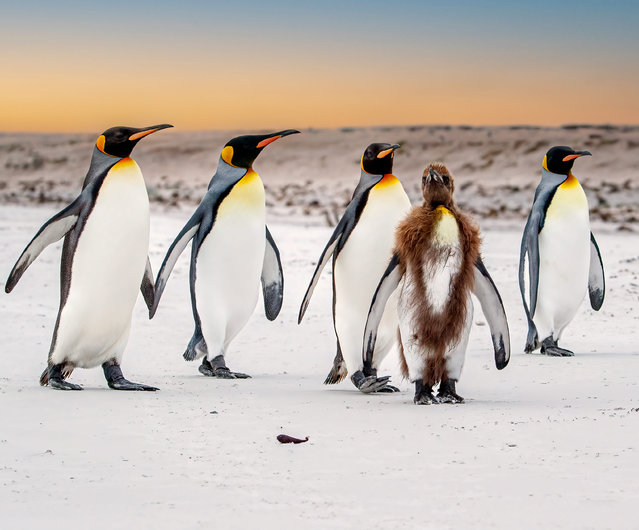
The king penguin in his moulting suit joins his waddle on their way to the water despite not being waterproof yet at Volunteer Point on the Falkland Islands, 2023. (Photo by Judy Rogero/Media Drum Images)

The king penguin in his moulting suit joins his waddle on their way to the water despite not being waterproof yet at Volunteer Point on the Falkland Islands, 2023. (Photo by Judy Rogero/Media Drum Images)
Details
26 Mar 2023 04:41:00
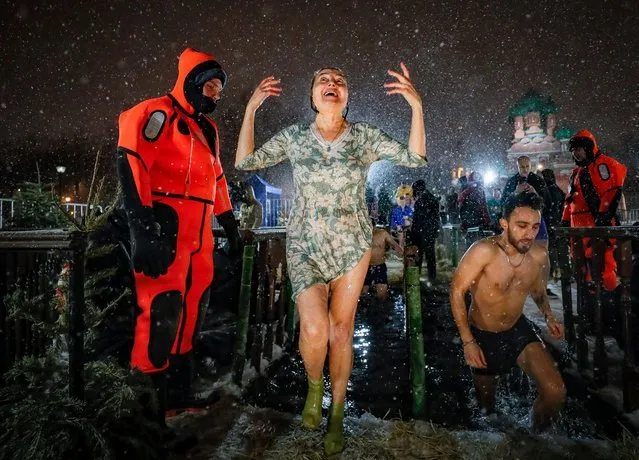
Russian Orthodox believers take a dip in the ice cold water of a pond during the celebrations of the Orthodox Epiphany holiday, in Moscow, Russia on January 18, 2024. People believe that dipping into blessed waters during the holiday of Epiphany strengthens their spirit and body. (Photo by Yuri Kochetkov/EPA/EFE)

Russian Orthodox believers take a dip in the ice cold water of a pond during the celebrations of the Orthodox Epiphany holiday, in Moscow, Russia on January 18, 2024. People believe that dipping into blessed waters during the holiday of Epiphany strengthens their spirit and body. (Photo by Yuri Kochetkov/EPA/EFE)
Details
24 Jan 2024 08:17:00
Roosters attack each other during a cockfight as part of Jonbeel festival near Jagiroad, in Morigaon district, India, Friday, January 17, 2025. (Photo by Anupam Nath/AP Photo)

Roosters attack each other during a cockfight as part of Jonbeel festival near Jagiroad, in Morigaon district, India, Friday, January 17, 2025. (Photo by Anupam Nath/AP Photo)
Details
29 Jan 2025 03:26:00
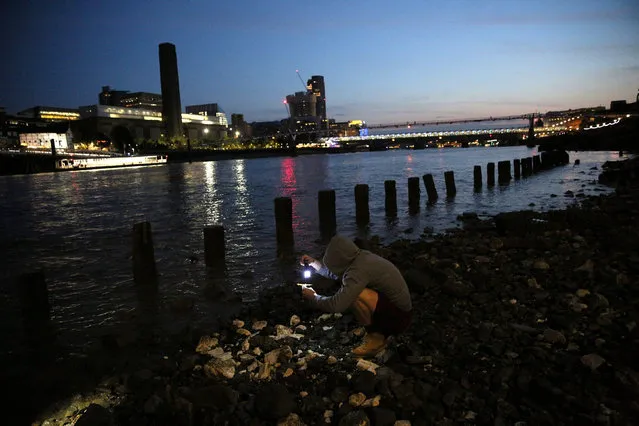
A mudlark uses a torch to look for items on the bank of the River Thames in London, Britain June 06, 2016. Mudlarking is believed to trace its origins to the 18th and 19th century, when scavengers searched the Thames' shores for items to sell. These days, history and archaeology fans are the ones hoping to find old relics such as coins, ceramics, artifacts or everyday items from across centuries. They wait for the low tide and then scour specific areas of exposed shores. "If you're in a field you could be out all day long, with the river you're restricted to about two or three hours," mudlark Nick Stevens said. While many just use the naked eye for their searches, others rely on metal detectors for which a permit from the Port of London Authority is needed. Digging also requires consent. (Photo by Neil Hall/Reuters)

A mudlark uses a torch to look for items on the bank of the River Thames in London, Britain June 06, 2016. Mudlarking is believed to trace its origins to the 18th and 19th century, when scavengers searched the Thames' shores for items to sell. These days, history and archaeology fans are the ones hoping to find old relics such as coins, ceramics, artifacts or everyday items from across centuries. their finds with the Portable Antiquities Scheme. Any item over 300 years old must be recorded. (Photo by Neil Hall/Reuters)
Details
27 Aug 2016 10:43:00
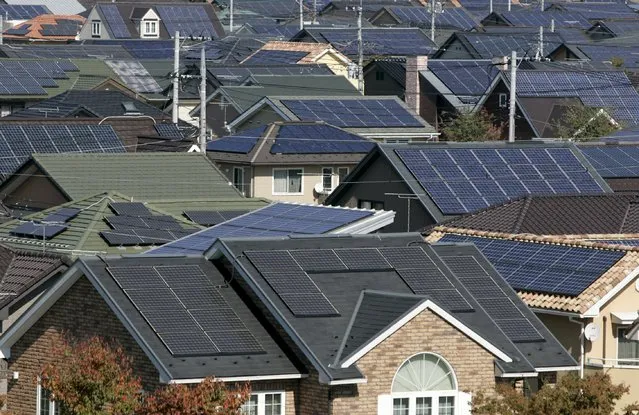
Rooftops of solar powered houses are pictured in Ota, 80 km northwest of Tokyo in this October 28, 2008 file photo. One by one, Japan is turning off the lights at the giant oil-fired power plants that propelled it to the ranks of the world's top industrialised nations. With nuclear power in the doldrums after the Fukushima disaster, it's solar energy that is becoming the alternative. (Photo by Yuriko Nakao/Reuters)

Rooftops of solar powered houses are pictured in Ota, 80 km northwest of Tokyo in this October 28, 2008 file photo. One by one, Japan is turning off the lights at the giant oil-fired power plants that propelled it to the ranks of the world's top industrialised nations. With nuclear power in the doldrums after the Fukushima disaster, it's solar energy that is becoming the alternative. Solar power is set to become profitable in Japan as early as this quarter, according to the Japan Renewable Energy Foundation (JREF), freeing it from the need for government subsidies and making it the last of the G7 economies where the technology has become economically viable. (Photo by Yuriko Nakao/Reuters)
Details
24 Nov 2015 08:04:00
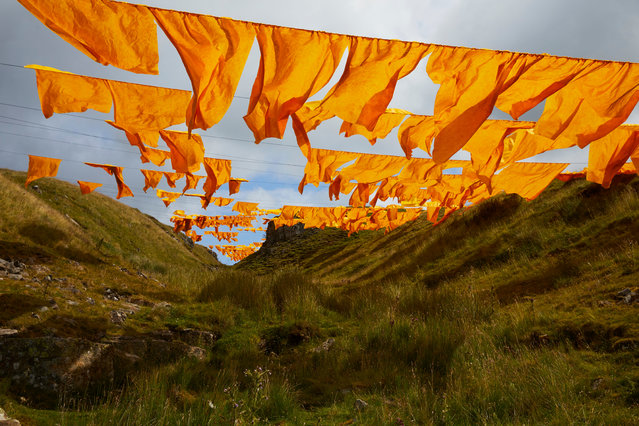
Monumental landscape artwork “Hush” by installation artist Steve Messam hangs in the moors of Teesdale on July 18, 2019 in Barnard Castle, England. The outdoor installation is inspired by the geology, mining history and landscape of the area. It hangs over Bales Hush, a deep gauge in the terrain created when miners flushed the area with water to reveal the geological riches below. Hundreds of metres of recyclable saffron yellow fabric blow in the wind. (Photo by Christopher Thomond/The Guardian)

Monumental landscape artwork “Hush” by installation artist Steve Messam hangs in the moors of Teesdale on July 18, 2019 in Barnard Castle, England. The outdoor installation is inspired by the geology, mining history and landscape of the area. It hangs over Bales Hush, a deep gauge in the terrain created when miners flushed the area with water to reveal the geological riches below. Hundreds of metres of recyclable saffron yellow fabric blow in the wind. (Photo by Christopher Thomond/The Guardian)
Details
20 Jul 2019 00:03:00
A man is silhouetted as he stands on a walkway in the sky lobby at the Chancellery, the seat of German Chancellor Angela Merkel (not pictured) in Berlin, May 7, 2014. (Photo by Thomas Peter/Reuters)

A man is silhouetted as he stands on a walkway in the sky lobby at the Chancellery, the seat of German Chancellor Angela Merkel (not pictured) in Berlin, May 7, 2014. (Photo by Thomas Peter/Reuters)
Details
15 May 2014 07:21:00