Loading...
Done
Wooden Churches - Travelling In The Russian North By Richard Davies Part 2

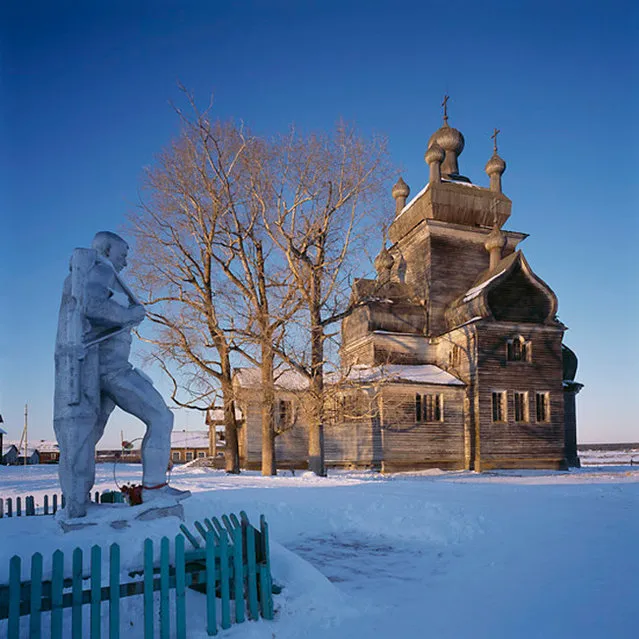
While communism, collectivism, worms, dry rot and casual looting failed to destroy the majestic wooden churches of Russia, it may be ordinary neglect that finally does them in. Dwindled now to several hundred remaining examples, these glories of vernacular architecture lie scattered amid the vastness of the world’s largest country. Just over a decade ago, Richard Davies, a British architectural photographer, struck out on a mission to record the fragile and poetic structures. Austerely beautiful and haunting, “Wooden Churches: Traveling in the Russian North” (White Sea Publishing; $132) is the result. Covering thousands of miles, Mr. Davies described how he and the writer Matilda Moreton tracked down the survivors from among the thousands of onion-domed structures built after Prince Vladimir converted to Christianity in 988.

See also: Wooden Churches Part1
Details
28 Nov 2013 12:13:00
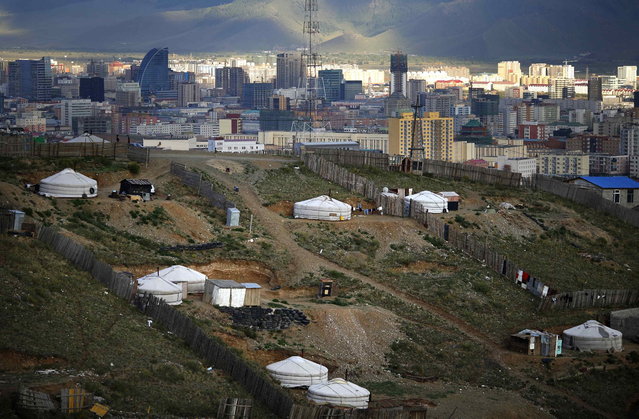
Gers, traditional Mongolian tents, are seen on a hill in an area known as a ger district in Ulan Bator June 26, 2013. (Photo by Carlos Barria/Reuters)

Gers, traditional Mongolian tents, are seen on a hill in an area known as a ger district in Ulan Bator June 26, 2013. Approximately 60 percent of the population of Ulan Bator live in settlements known as ger districts and in many cases residents have limited access to basic services such as water and sanitation. According to a 2010 National Population Center census, every year between thirty and forty thousand people migrate from the countryside to the capital Ulan Bator. Ger districts in the city have been expanding rapidly in recent years. Mongolia is the world's least densely populated country, with 2.8 million people spread across an area around three times the size of France. (Photo by Carlos Barria/Reuters)
Details
11 Aug 2013 11:45:00
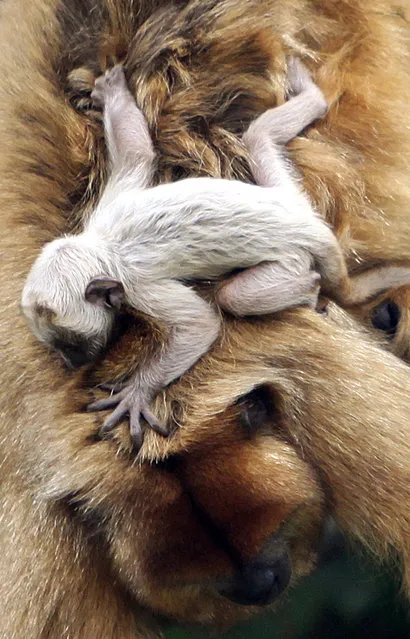
A baby black howler monkey (Alouatta caraya) clings onto its mother's back on Thursday January 29, 2009 in Singapore where it's national zoo is actively involved in the conservation and education of wildlife reserves. (Photo by Wong Maye-E/AP Photo)

“Wong Maye-E joined AP as a staff photographer in 2003. Based in Singapore, Maye-E's work is centered around Sports reportage, entertainment, politics, and regional news stories. Maye-E has covered headlining events such as the 2014 World Cup, Thailand political protests, and the devastation of the Philippines Typhoon”. – Associated Press. Photo: A baby black howler monkey (Alouatta caraya) clings onto its mother's back on Thursday January 29, 2009 in Singapore where it's national zoo is actively involved in the conservation and education of wildlife reserves. (Photo by Wong Maye-E/AP Photo)
Details
27 Aug 2014 09:14:00
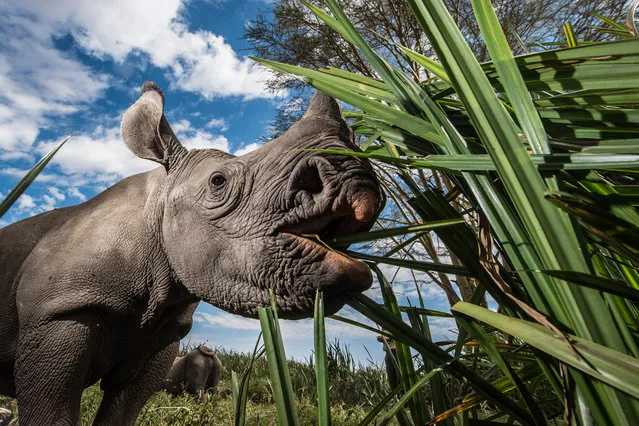
Orphaned baby rhinos seen on August 28, 2014 in Lewa Wildlife Conservancy, Ngare Ndare Forest, Kenya. (Photo by Luca Ghidoni/Barcroft Media)

Orphaned baby rhinos seen on August 28, 2014 in Lewa Wildlife Conservancy, Ngare Ndare Forest, Kenya. Lewa Wildlife Conservancy in Kenya is hand-raising three orphaned baby rhinos; Nicky, Hope and Kilifi. Baby rhino Hope was rescued by rangers when the poachers killed his mother – now he is been taken care off 24 hours-a-day at Lewa Wildlife Conservancy. The wildlife reserve hit the headlines when Prince William proposed to Kate Middleton there in 2010. Rhinos around the world are becoming extinct as a result of the brutal poaching fuelled by an illegal international market for their horns. (Photo by Luca Ghidoni/Barcroft Media)
Details
14 Sep 2014 10:27:00
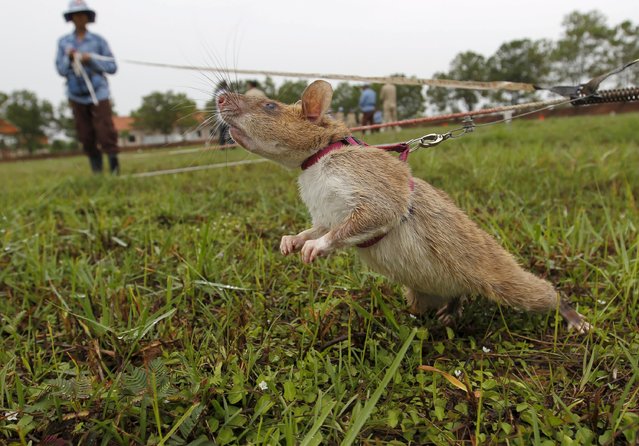
A rat being trained by the Cambodian Mine Action Centre (CMAC) is pictured on an inactive landmine field in Siem Reap province July 9, 2015. Gambian pouched rats were deployed to Cambodia from Tanzania in April by a Belgian non-profit organization, APOPO, to help clear mines. (Photo by Samrang Pring/Reuters)

A rat being trained by the Cambodian Mine Action Centre (CMAC) is pictured on an inactive landmine field in Siem Reap province July 9, 2015. Gambian pouched rats were deployed to Cambodia from Tanzania in April by a Belgian non-profit organization, APOPO, to help clear mines. They've been trained since they were 4 weeks old. Cambodia is still littered with landmines after emerging from decades of civil war, including the 1970s Khmer Rough “Killing Fields” genocide, leaving it with one of the world's highest disability rates. APOPO has used the rodents for mine-clearing projects in several countries, including Angola, Mozambique, Thailand, Laos, and Vietnam. (Photo by Samrang Pring/Reuters)
Details
14 Jul 2015 13:35:00
A soup for the students is pictured during an activity for the end of the school year at the Padre Jose Maria Velaz school in Caracas, Venezuela July 12, 2016. (Photo by Carlos Jasso/Reuters)

A soup for the students is pictured during an activity for the end of the school year at the Padre Jose Maria Velaz school in Caracas, Venezuela July 12, 2016. Due to the faltering socialist economy and the plunge in global oil prices, Venezuela has been in recession since early 2014. Due to the faltering socialist economy and the plunge in global oil prices, Venezuela has been in recession since early 2014. It suffers from the world's highest inflation and is experiencing shortages of basic goods, from milk to medicines. (Photo by Carlos Jasso/Reuters)
Details
26 Jul 2016 10:42:00
A U.S. Navy F18 fighter jet takes off from aircraft carrier USS Carl Vinson during a FONOPS (Freedom of Navigation Operation Patrol) in South China Sea, March 3, 2017. (Photo by Erik De Castro/Reuters)

A U.S. Navy F18 fighter jet takes off from aircraft carrier USS Carl Vinson during a FONOPS (Freedom of Navigation Operation Patrol) in South China Sea, March 3, 2017. The U.S. military took journalists Friday to the carrier on routine patrol off the disputed South China Sea, sending a signal to China and American allies of its resolve to ensure freedom of navigation and overflight in one of the world's security hotspots. (Photo by Erik De Castro/Reuters)
Details
06 Mar 2017 00:01:00
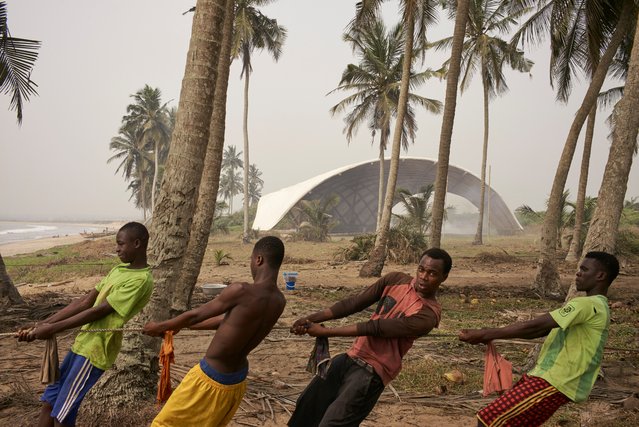
The stage for Haduwa Arts & Culture Institute, Ghana. Architect: (applied) Foreign Affairs. Nominated in the Sense of Place category. The open-air auditorium of this arts institute in Apam, Ghana, is built from ultra-strong curved bamboo. (Photo by Julien Lanoo)

The Arcaid awards highlight the best architectural photographs of the year – pictures of everything from giant arenas to tiny huts. The shortlisted photographs will be exhibited at the World Architecture Festival in Berlin, from 16 to 18 November, with an overall winner announced during the event’s gala dinner. Here: The stage for Haduwa Arts & Culture Institute, Ghana. Architect: (applied) Foreign Affairs. Nominated in the Sense of Place category. The open-air auditorium of this arts institute in Apam, Ghana, is built from ultra-strong curved bamboo. (Photo by Julien Lanoo)
Details
16 Nov 2016 11:03:00