Loading...
Done
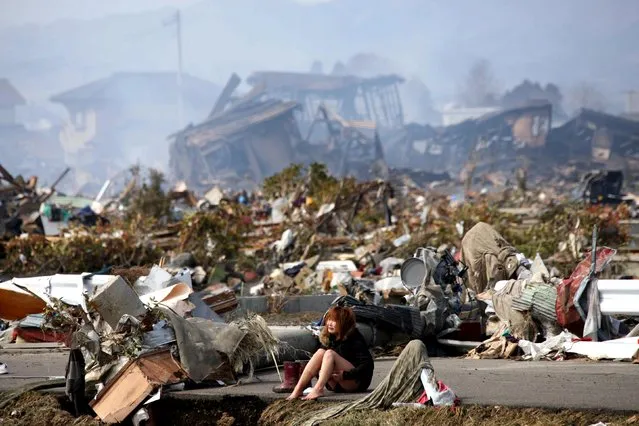
A woman cries while sitting on a road amid the destroyed city of Natori, Miyagi Prefecture in northern Japan March 13, 2011, after a massive earthquake and tsunami that are feared to have killed more than 10,000 people. (Photo by Asahi Shimbun/Reuters)

A woman cries while sitting on a road amid the destroyed city of Natori, Miyagi Prefecture in northern Japan March 13, 2011, after a massive earthquake and tsunami. Five years on from the tsunami that triggered meltdowns at Japan's Fukushima nuclear plant, the page is anything but turned. A magnitude 9 earthquake and towering tsunami on March 11, 2011 killed nearly 16,000 people along Japan's northeastern coast and left more than 2,500 missing. The 10-metre (33-foot) tsunami swept away everything in its path, including houses, ships, cars and farm buildings. (Photo by Asahi Shimbun/Reuters)
Details
09 Mar 2016 12:40:00
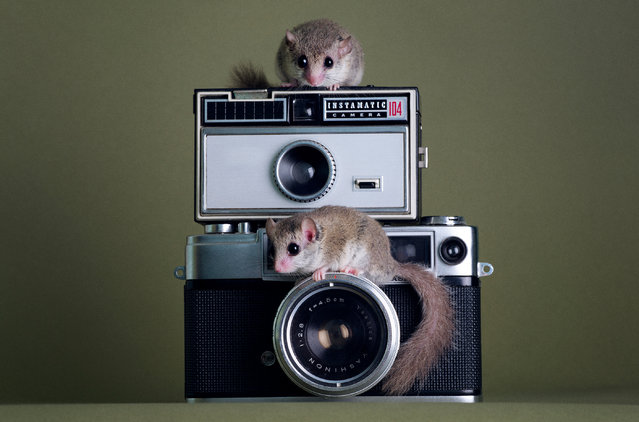
“The most difficult aspect of this shoot was to get each African pygmy dormouse – also known as micro squirrels – on to a separate camera. Once in place, they needed to remain still long enough to get them both in the frame and looking at me. Often solitary, they naturally wanted to move away”. (Photo by David Yeo/Leica Studio Mayfair/The Guardian)

David Yeo’s photography places naturally small species alongside animals that have been selectively bred to be tiny and cute. Here: “The most difficult aspect of this shoot was to get each African pygmy dormouse – also known as micro squirrels – on to a separate camera. Once in place, they needed to remain still long enough to get them both in the frame and looking at me. Often solitary, they naturally wanted to move away”. (Photo by David Yeo/Leica Studio Mayfair/The Guardian)
Details
24 Oct 2017 08:20:00
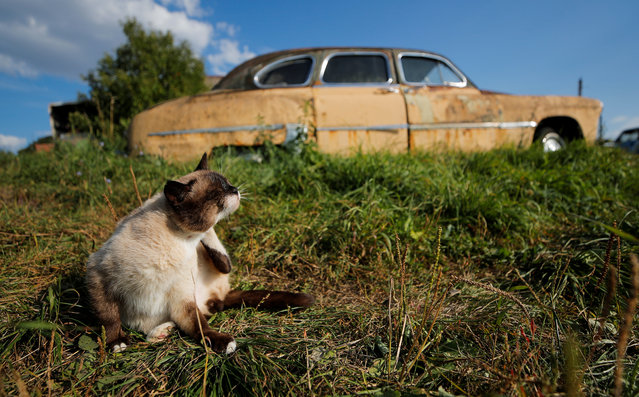
A cat sits in front of a retro car owned by retired mechanic Mikhail Krasinets at an open-air museum of Soviet-era vehicles in the village of Chernousovo, Tula region, Russia on September 27, 2018. In the remote village of Chernousovo, retired mechanic Mikhail Krasinets tends to more than 300 ramshackle, Soviet-era cars, remnants of a once vibrant auto industry that crumbled with the fall of the Soviet Union. (Photo by Maxim Shemetov/Reuters)

A cat sits in front of a retro car owned by retired mechanic Mikhail Krasinets at an open-air museum of Soviet-era vehicles in the village of Chernousovo, Tula region, Russia on September 27, 2018. In the remote village of Chernousovo, retired mechanic Mikhail Krasinets tends to more than 300 ramshackle, Soviet-era cars, remnants of a once vibrant auto industry that crumbled with the fall of the Soviet Union. (Photo by Maxim Shemetov/Reuters)
Details
01 Oct 2018 00:01:00
“At the height of the Korean war, I was moving across the front lines as a soldier experiencing this tragedy, witnessing countless scenes that enraged me”. Here: Seoul, Korea. (Photo by Han Youngsoo/The Guardian)

Photographer Han Youngsoo captured the ordinary people of Korea as the country emerged from war into an age of prosperity. Han Youngsoo: Photographs of Seoul 1956–63 is at the International Center of Photography (ICP), Jersey City, New Jersey, until June 9, 2017. Here: Seoul, Korea. (Photo by Han Youngsoo/The Guardian)
Details
01 Mar 2017 00:05:00
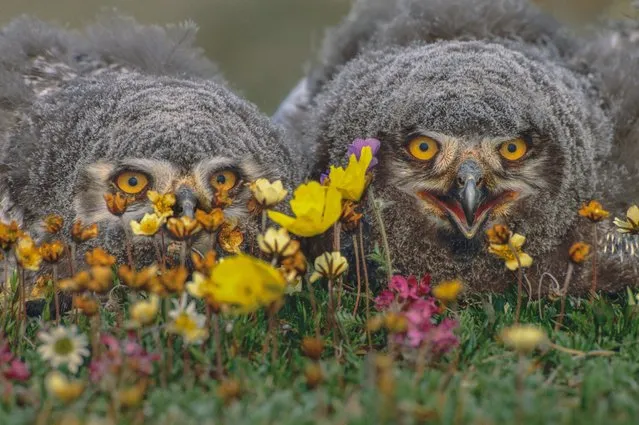
Snowy owlets (Bubo scandiacus), Arctic National Wildlife Refuge, Alaska, USA. “A pair of gray-feathered snowy owlets hunker down in the abundant flowers that flourish in the dropping-enriched soil of their nest mound”. (Photo by Art Wolfe/Art Wolfe Stock)

The photography of Art Wolfe covers the globe, capturing landscapes, wildlife, and cultures from every continent; here he talks through a selection of his favourite images. Art Wolfe is an American photographer and conservationist. His photographs have been noted by environmental advocacy groups for their “stunning” visual impact. Here: Snowy owlets (Bubo scandiacus), Arctic National Wildlife Refuge, Alaska, USA. (Photo by Art Wolfe/Art Wolfe Stock)
Details
19 Mar 2018 00:05:00
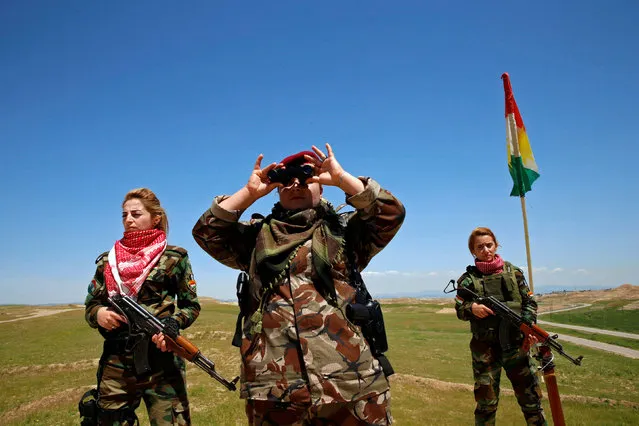
Iraqi Kurdish female fighter Haseba Nauzad looks through a pair of binoculars during a deployment near the frontline of the fight against Islamic State militants in Nawaran near Mosul, Iraq, April 20, 2016. (Photo by Ahmed Jadallah/Reuters)

Iraqi Kurdish female fighter Haseba Nauzad looks through a pair of binoculars during a deployment near the frontline of the fight against Islamic State militants in Nawaran near Mosul, Iraq, April 20, 2016. (Photo by Ahmed Jadallah/Reuters)
Details
05 May 2016 14:00:00
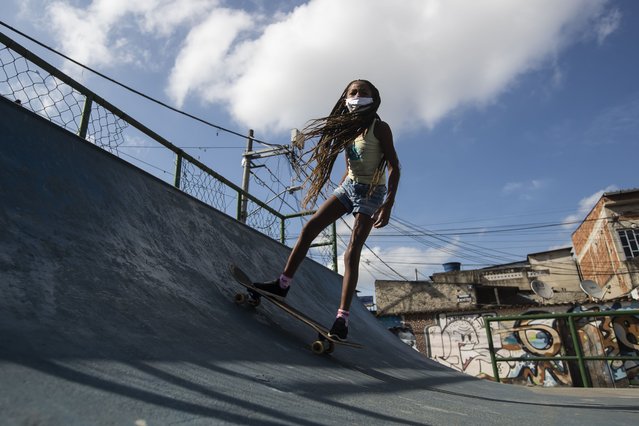
A girl takes a skateboard class from the NGO “CDD Skate Arte”, at a public skate park in the City of God favela of Rio de Janeiro, Brazil, Thursday, August 5, 2021. (Photo by Bruna Prado/AP Photo)

A girl takes a skateboard class from the NGO “CDD Skate Arte”, at a public skate park in the City of God favela of Rio de Janeiro, Brazil, Thursday, August 5, 2021. (Photo by Bruna Prado/AP Photo)
Details
27 Aug 2021 08:19:00
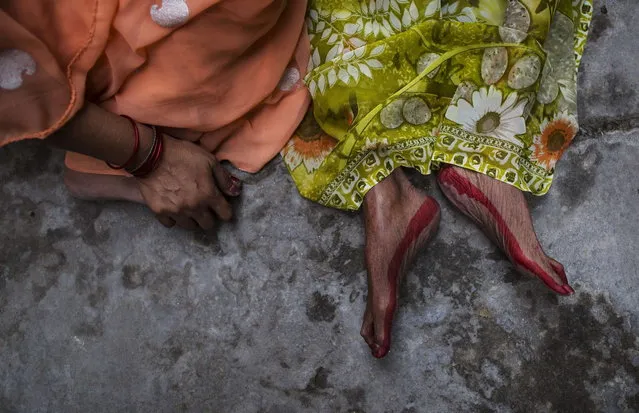
A relative (L) of Champa Devi, 88, sits next to her body, minutes after her death at Mukti Bhavan (Salvation House) at Varanasi, in the northern Indian state of Uttar Pradesh, June 21, 2014. (Photo by Danish Siddiqui/Reuters)

A relative (L) of Champa Devi, 88, sits next to her body, minutes after her death at Mukti Bhavan (Salvation House) at Varanasi, in the northern Indian state of Uttar Pradesh, June 21, 2014. The city of Varanasi, on the banks of the River Ganges, is widely considered Hinduism's holiest city and many Hindus believe that dying there and having their remains scattered in the Ganges allows their soul to escape a cycle of death and rebirth, attaining “moksha” or salvation. “Mukti Bhavan” or “Salvation House”, is a charity-run hostel that caters for people who wish to come to Varanasi to die. Guests can normally stay up to two weeks after which, if they haven't yet passed away, they are gently asked to leave. (Photo by Danish Siddiqui/Reuters)
Details
24 Jul 2014 12:32:00