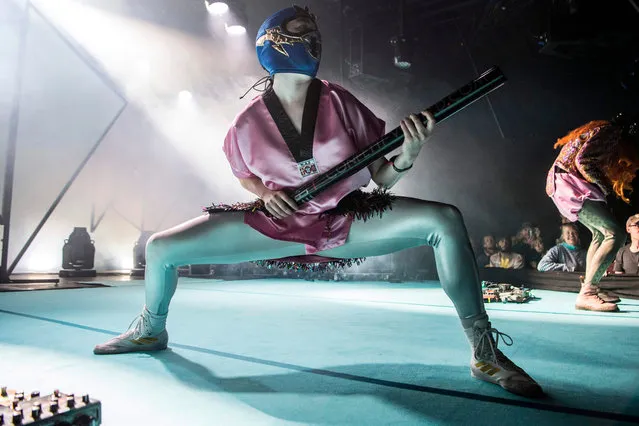
The band “Baby In Vain” and the dancegroup Corpus perform at the Gloria Stage at Roskilde Festival on July 3, 2019. (Photo by Helle Arensbak/Ritzau Scanpix/AFP Photo)
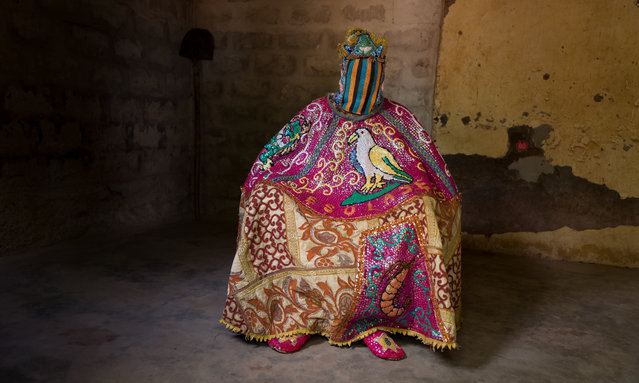
A member of an Egungun masquerade group, his identity obscured under his ornate costume in Ouidah, Benin on March 13, 2019. The exclusively male practitioners, found across Yoruba culture, use dance and spinning in the belief that they will summon the spirits of ancestors. (Photo by Massimo Rumi/Barcroft Images)
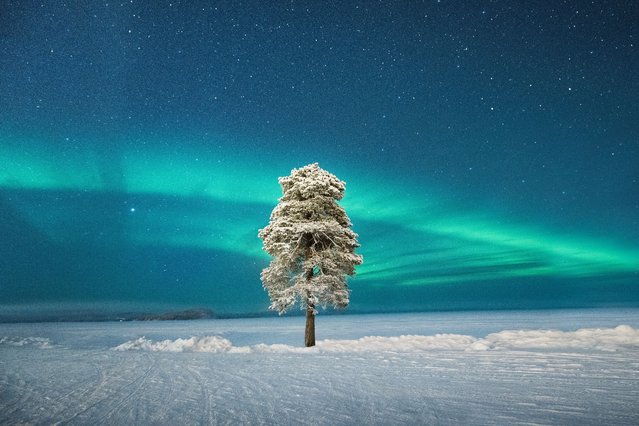
Aurorae category runner-up: Lone Tree under a Scandinavian Aurora by Tom Archer (UK). The photographer decided to explore the area around the hotel on a very crisp -35C evening in Finnish Lapland. When he found this tree, he decided to wait for the misty conditions to change and could not believe his luck when the sky cleared and the aurora came out in the perfect spot. Archer spent about an hour photographing it before his camera started to lock up because of the harsh conditions, but by then he was happy to call it a night. (Photo by Tom Archer/2020 Astronomy Photographer of the Year)
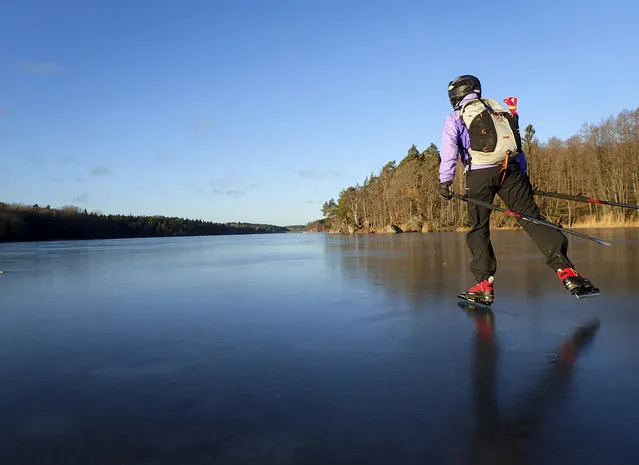
A woman tour skates on the frozen lake of Orlangen, south of Stockholm, Sweden, on December 23, 2016. Tour skating is recreational long distance ice skating on natural ice particularly popular in the Nordic countries. (Photo by Tobias Roestlund/AFP Photo/TT News Agency)
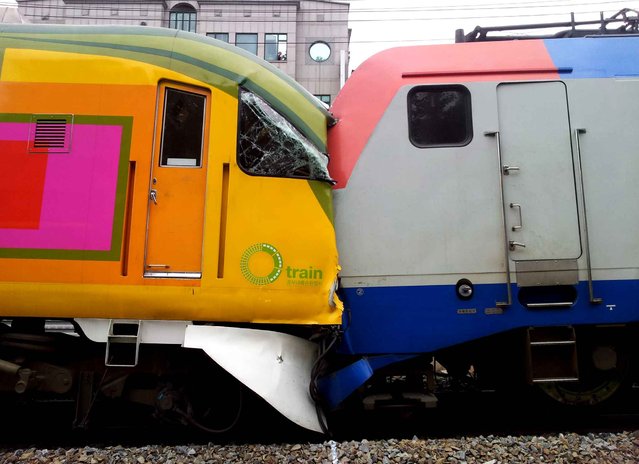
Collided passenger train cars are seen in Taebaek, South Korea, Tuesday, July 22, 2014. Two passenger trains collided head-on in eastern South Korea on Tuesday afternoon, killing one passenger and injuring dozens, fire officials said. (Photo by AFP Photo/Yonhap)
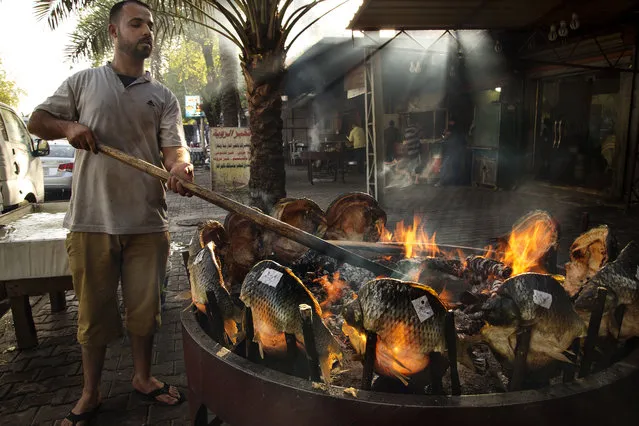
An Iraqi man cooks traditional Masgouf fish on a barbecue for sale in the Karada market July 02, 2014. Masgouf, one of the national dishes of Iraq is a grilled carp seasoned with olive oil, rock salt, tamarind and ground turmeric. (Photo by Scott Nelson for the Washington Post)
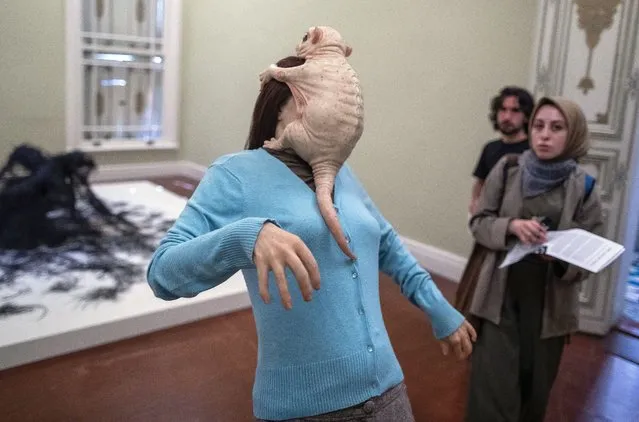
Visitors view Patricia Piccinini's “The Embrace” artwork during the “You Know Who” exhibition at the Abdulmecit Efendi mansion in Istanbul, Turkey, 27 September 2022. The exhibition, which by the organizers is described as questioning “the representation of the unknown in contemporary art, based on the symbolic world of the supernatural and unknown in the Byzantine period”, is shown from 20 September until 11 December 2022. (Photo by Erdem Sahin/EPA/EFE/Rex Features/Shutterstock)