Loading...
Done
On Dale A. Browne’s first trip to Yellowstone, he “got the best shot” he’d ever taken after chasing this weasel for 30 minutes. The trip for the 58-year-old from Manassas, Va., was a gift from his wife and an opportunity to improve his photography skills with the help of guide and professional photographer Tom Murphy. (Murphy did not assist in the taking of this photo). (Photo by Dale A. Browne)

On Dale A. Browne’s first trip to Yellowstone, he “got the best shot” he’d ever taken after chasing this weasel for 30 minutes. The trip for the 58-year-old from Manassas, Va., was a gift from his wife and an opportunity to improve his photography skills with the help of guide and professional photographer Tom Murphy. (Murphy did not assist in the taking of this photo). (Photo by Dale A. Browne)
Details
26 Jul 2016 10:31:00
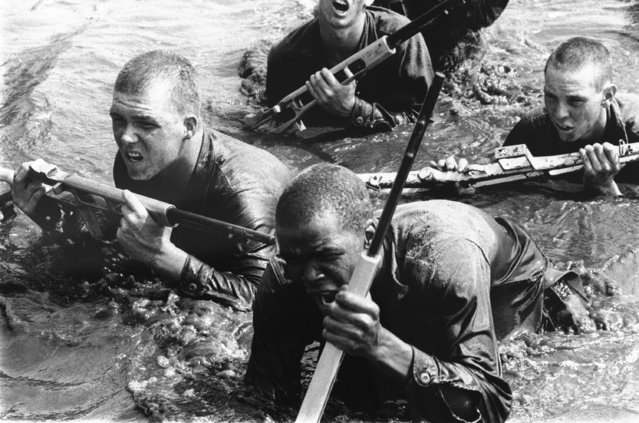
Recruits who earned a place in the Motivation Platoon struggle through water and muck on their way to becoming a Marine or going into some other line of work, October 7, 1971. (Photo by Eddie Adams/AP Photo)

Recruits who earned a place in the Motivation Platoon struggle through water and muck on their way to becoming a Marine or going into some other line of work, October 7, 1971. (Photo by Eddie Adams/AP Photo)
Details
09 Oct 2015 08:06:00
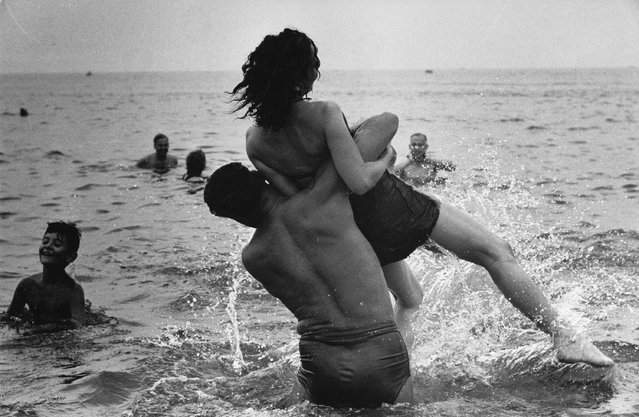
"The Family of Man" opened at The Museum of Modern Art in January 1955 and was curated by Edward Steichen. It was groundbreaking in its scope – 503 images by 273 photographers from 68 countries – as well as in the numbers of people who experienced it on its tour through 88 venues in 37 countries. The touring exhibit drew over 9 million people and the accompanying catalog sold over 2.5 million copies. Here: "Coney Island, New York," by American photographer Garry Winogrand, circa 1952. (Photo by Garry Winogrand)

“The Family of Man” opened at The Museum of Modern Art in January 1955 and was curated by Edward Steichen. It was groundbreaking in its scope – 503 images by 273 photographers from 68 countries – as well as in the numbers of people who experienced it on its tour through 88 venues in 37 countries. The touring exhibit drew over 9 million people and the accompanying catalog sold over 2.5 million copies. Here: “Coney Island, New York”, by American photographer Garry Winogrand, circa 1952. (Photo by Garry Winogrand)
Details
04 Jan 2016 08:02:00
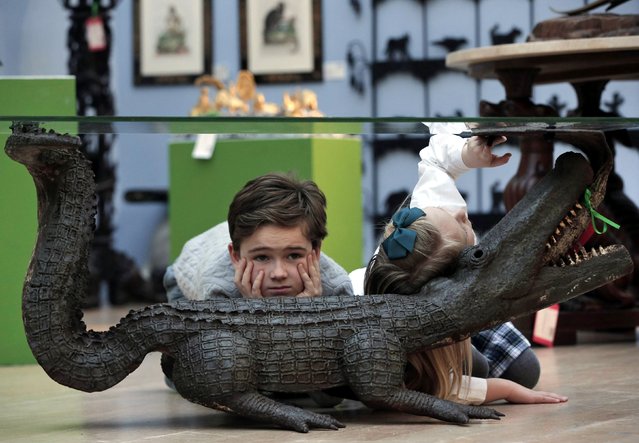
Children sit under a crocodile based table, as they pose for photographers during a press preview of a themed auction that features the animal as artistic inspiration, entitled “Creatures Great and Small”, in London, Monday, December 15, 2014. The sale scheduled for December 17, 2014, explores animals across a diverse range of mediums and styles, from intricate carving details in 19th century furniture through to contemporary sculpture, according to Christie’s auction house. (Photo by Lefteris Pitarakis/AP Photo)

Children sit under a crocodile based table, as they pose for photographers during a press preview of a themed auction that features the animal as artistic inspiration, entitled “Creatures Great and Small”, in London, Monday, December 15, 2014. The sale scheduled for December 17, 2014, explores animals across a diverse range of mediums and styles, from intricate carving details in 19th century furniture through to contemporary sculpture, according to Christie’s auction house. (Photo by Lefteris Pitarakis/AP Photo)
Details
17 Dec 2014 11:18:00
An unmanned Falcon 9 SpaceX rocket lifts off from launch complex 40 at the Cape Canaveral Air Force Station, Wednesday, February 11, 2015, in Cape Canaveral, Fla. On board is the Deep Space Climate Observatory, which will head toward a solar-storm lookout point a million miles away. (Photo by John Raoux/AP Photo)

An unmanned Falcon 9 SpaceX rocket lifts off from launch complex 40 at the Cape Canaveral Air Force Station, Wednesday, February 11, 2015, in Cape Canaveral, Fla. On board is the Deep Space Climate Observatory, which will head toward a solar-storm lookout point a million miles away. (Photo by John Raoux/AP Photo)
Details
13 Feb 2015 13:07:00
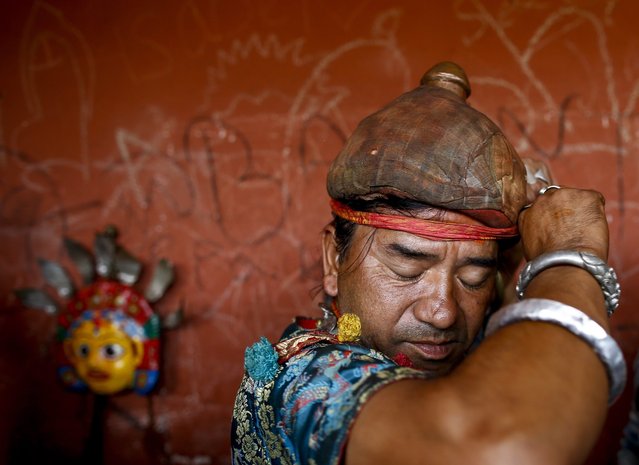
A Nepalese devotee prepares for a religious mask performance during the Seekaali Festival in Khokna village, near Kathmandu, Nepal, 07 October 2016. During the 300-year-old Seekali festival, elderly ethnic Newari devotees wear masks of 14 various goddesses including Lord Ganesha, Lord Shiva, Lord Laxmi, Lord Brahma and Lord Bishnu. The Khokna people celebrate the Seekaali festival as an alternative of the Dashain festival which is biggest festival of Nepalese Hindus that celebrates the victory of the gods over demons. (Photo by Narendra Shrestha/EPA)

A Nepalese devotee prepares for a religious mask performance during the Seekaali Festival in Khokna village, near Kathmandu, Nepal, 07 October 2016. During the 300-year-old Seekali festival, elderly ethnic Newari devotees wear masks of 14 various goddesses including Lord Ganesha, Lord Shiva, Lord Laxmi, Lord Brahma and Lord Bishnu. The Khokna people celebrate the Seekaali festival as an alternative of the Dashain festival which is biggest festival of Nepalese Hindus that celebrates the victory of the gods over demons. (Photo by Narendra Shrestha/EPA)
Details
09 Oct 2016 07:14:00
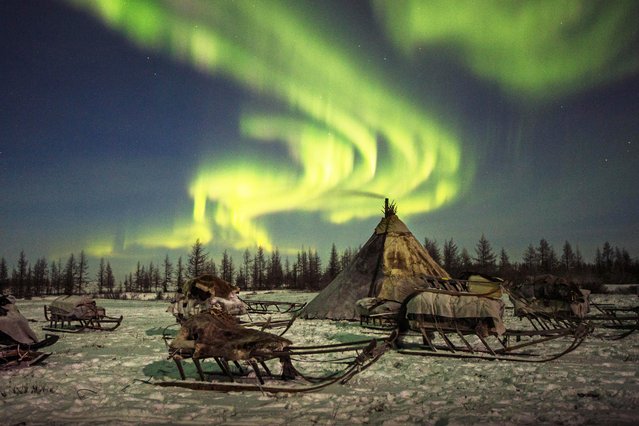
An empty camp is shown beneath a colourful sky in Siberia, December 2016. (Photo by Timothy Allen/Barcroft Productions)

A British photographer has captured life at the “edge of the world”. Timothy Allen, best known for his work on BBC's Human Planet, trekked through the freezing Siberian wilderness for 16 days as he joined part of an 800km migration of reindeer in the Yamal-Nenets region – a name that roughly translates to “edge of the world”. The stunning pictures feature the nomadic Nenets tribe, who drink blood to survive in -45°C temperatures. Timothy's epic journey, which will be revealed in an eight-minute documentary on Animal Planet USA, saw him travel across the bleak terrain of the frozen Ob River with the Nenets people in December last year. Here: An empty camp is shown beneath a colourful sky in Siberia, December 2016. (Photo by Timothy Allen/Barcroft Productions)
Details
19 Sep 2017 07:48:00
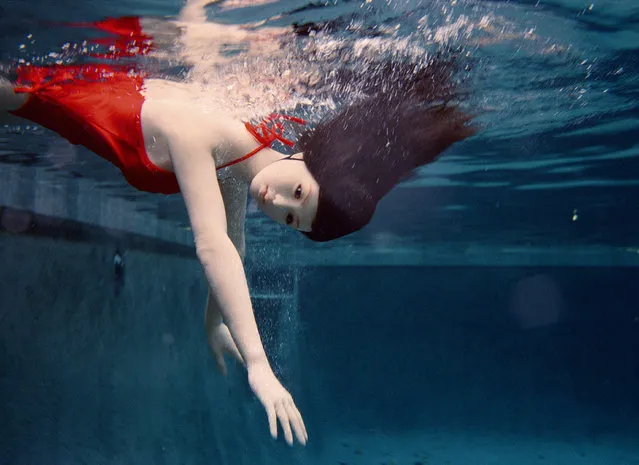
«Underwater». Laurie Simmons discovered this silicone s*x doll in a shop while on holiday in Japan and was immediately interested in the type of generic beauty their looks could add to her work. She went on to create the Love Doll series, in which she places silicone s*x dolls in positions that explore a woman’s interior life. (Photo by Laurie Simmons/Salon 94/The Guardian)

«Underwater». Laurie Simmons discovered this silicone sеx doll in a shop while on holiday in Japan and was immediately interested in the type of generic beauty their looks could add to her work. She went on to create the Love Doll series, in which she places silicone sеx dolls in positions that explore a woman’s interior life. (Photo by Laurie Simmons/Salon 94/The Guardian)
Details
28 Sep 2017 07:38:00