Loading...
Done
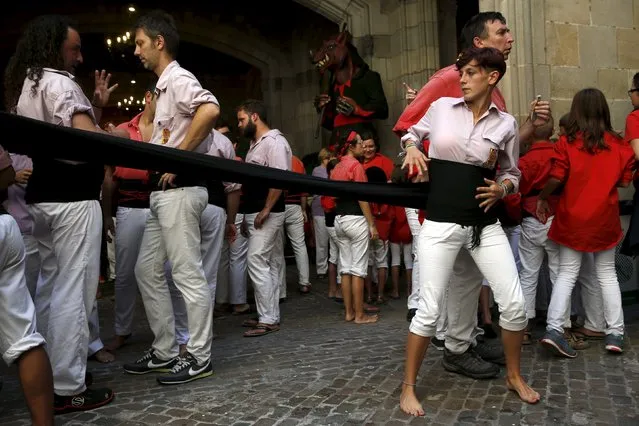
A member of the “Castellers Minyons de Terrassa” adjusts her belt before forming a human tower or ÒcastellÓ during the festival of the patron saint of Barcelona “The Virgin of Mercy” at Sant Jaume square in Barcelona, Spain, September 20, 2015. The formation of human towers is a tradition in Catalonia dating back to the 18th century. (Photo by Susana Vera/Reuters)

A member of the “Castellers Minyons de Terrassa” adjusts her belt before forming a human tower or ÒcastellÓ during the festival of the patron saint of Barcelona “The Virgin of Mercy” at Sant Jaume square in Barcelona, Spain, September 20, 2015. The formation of human towers is a tradition in Catalonia dating back to the 18th century. (Photo by Susana Vera/Reuters)
Details
21 Sep 2015 12:35:00
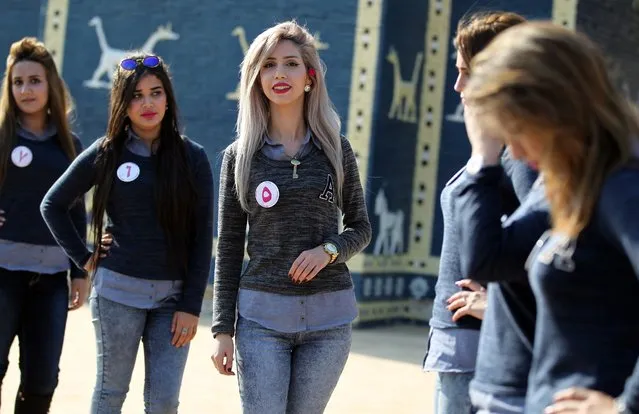
Some Iraqi candidates for Miss Iraq beauty contest pose in front of the Ishtar Gate at the ancient archaeological site of Babylon, outside the modern city of Hilla, south of the capital Baghdad on December 17, 2015. The beauty contest,  which is the first one in more than 40 years, aims to boost tourism in the city and will take place on December 19, 2015. (Photo by Ahmad Al-Rubaye/AFP Photo)

Some Iraqi candidates for Miss Iraq beauty contest pose in front of the Ishtar Gate at the ancient archaeological site of Babylon, outside the modern city of Hilla, south of the capital Baghdad on December 17, 2015. The beauty contest, which is the first one in more than 40 years, aims to boost tourism in the city and will take place on December 19, 2015. (Photo by Ahmad Al-Rubaye/AFP Photo)
Details
19 Dec 2015 10:25:00
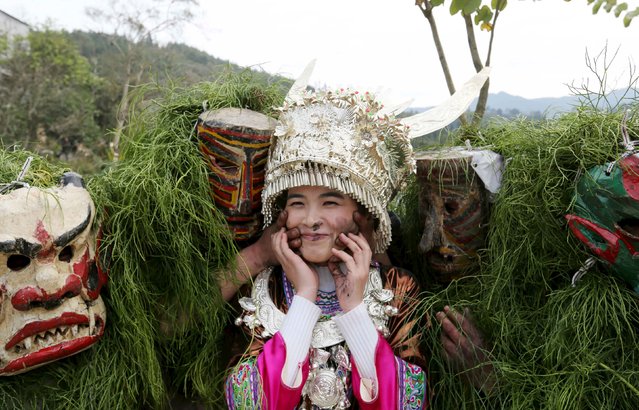
Ethnic Miao men wearing traditional masks smear dust on a woman's face to wish her good luck during local celebration event for Lunar New Year in Liuzhou, Guangxi Zhuang Autonomous Region, China, February 16, 2016. (Photo by Reuters/Stringer)

Ethnic Miao men wearing traditional masks smear dust on a woman's face to wish her good luck during local celebration event for Lunar New Year in Liuzhou, Guangxi Zhuang Autonomous Region, China, February 16, 2016. (Photo by Reuters/Stringer)
Details
19 Feb 2016 13:25:00
People cheer as the ball drops at midnight in Times Square on January 1, 2015 in New York City. An estimated one million people from around the world are expected to pack Times Square to ring in 2015. (Photo by Andrew Theodorakis/Getty Images)

People cheer as the ball drops at midnight in Times Square on January 1, 2015 in New York City. An estimated one million people from around the world are expected to pack Times Square to ring in 2015. (Photo by Andrew Theodorakis/Getty Images)
Details
01 Jan 2015 13:47:00
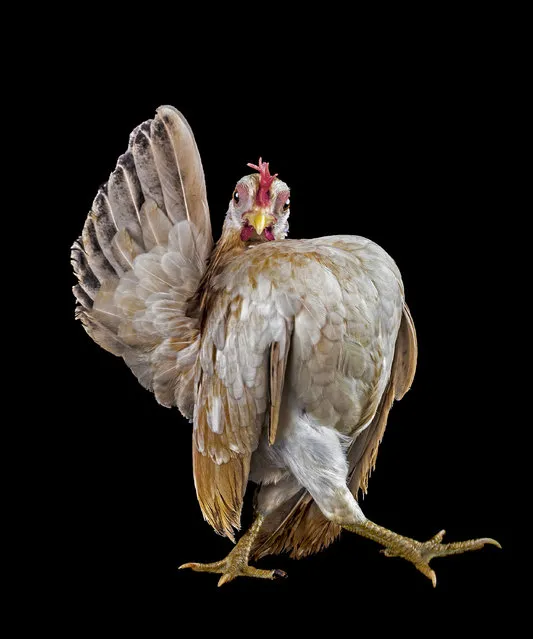
Ornamental chicken breeding clubs have emerged in Indonesia, Thailand, North America and even European countries such as the UK and France. Malaysia is however the epicenter of this cultural phenomenon. (Photo by Ernest Goh/2013 Sony World Photography Awards)

Ornamental chicken breeding clubs have emerged in Indonesia, Thailand, North America and even European countries such as the UK and France. Malaysia is however the epicenter of this cultural phenomenon. These chickens are prized for their build, size, behavior and showmanship by their owners and competitions or beauty contests as they are often described are held almost every week in at least one village in Malaysia. Judges sit around a square table inspecting each chicken for a few minutes trying to determine a champion specimen in its own weight class based on its stance, temperament and physical assets like wings, tails and comb. The walk or strut by an ornamental chicken in a beauty contest, much like a runway model, constitutes a large part of the scoring system. (Photo by Ernest Goh/2013 Sony World Photography Awards)
Details
28 Apr 2013 08:32:00


Ukraine's Ruslana performs her song Wild Dance ands wins the Eurovision Song Contest on May 15, 2004 at the Abdi Ipekci Stadium, in Istanbul, Turkey. The event – hosted by last year's winners Turkey – also celebrates the 30th Anniversary of ABBA's win. (Photo by Christopher Furlong/Getty Images)
Details
14 May 2011 13:57:00
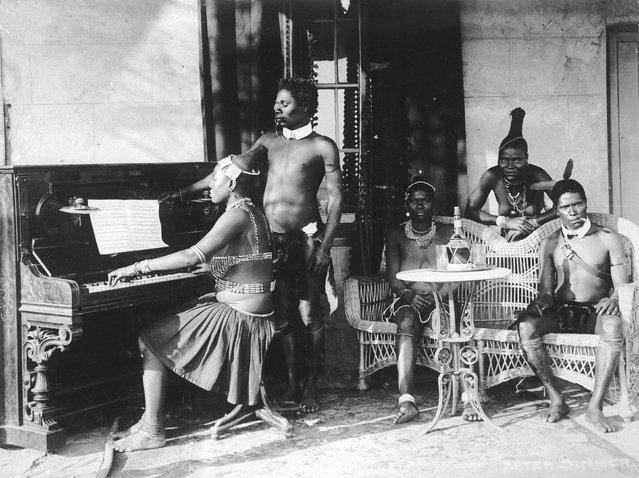
circa 1925:  A Zulu woman playing the piano while a group of others sit and listen.  (Photo by General Photographic Agency/Getty Images)

“The Zulu are the largest South African ethnic group, with an estimated 10–11 million people living mainly in the province of KwaZulu-Natal. Small numbers also live in Zimbabwe, Zambia, and Mozambique. Their language, Zulu, is a Bantu language; more specifically, part of the Nguni subgroup. The Zulu Kingdom played a major role in South African history during the 19th and 20th centuries. Under apartheid, Zulu people were classed as third-class citizens and suffered from state-sanctioned discrimination. They remain today the most numerous ethnic group in South Africa, and now have equal rights along with all other citizens”. – Wikipedia.

Photo: A Zulu woman playing the piano while a group of others sit and listen (to put it briefly, Englishmen scoff over Zulu). South Africa, circa 1925. (Photo by General Photographic Agency)

Details
03 Feb 2014 09:40:00
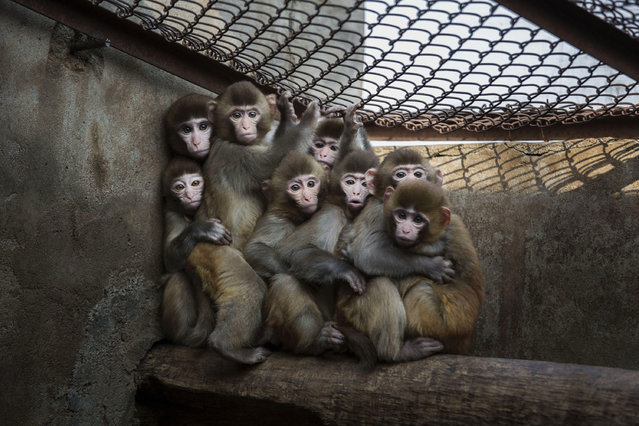
Macaque monkeys crowd together in their cage at a monkey farm on February 3, 2016 in Xinye county, Henan province, China. The area boasts a centuries-long and lucrative history of raising and training monkeys for performance. In Xinye, villagers are seeing an increase in business with the lunar calendar's “Year of the Monkey”. Farmers say most of the monkeys are bred and raised for domestic zoos, circuses, and performing groups, but add that some are also sold for medical research in China and the United States. Despite the popularity of the tradition, critics contend the training methods and conditions constitute animal cruelty. (Photo by Kevin Frayer/Getty Images)

Macaque monkeys crowd together in their cage at a monkey farm on February 3, 2016 in Xinye county, Henan province, China. The area boasts a centuries-long and lucrative history of raising and training monkeys for performance. In Xinye, villagers are seeing an increase in business with the lunar calendar's “Year of the Monkey”. Farmers say most of the monkeys are bred and raised for domestic zoos, circuses, and performing groups, but add that some are also sold for medical research in China and the United States. Despite the popularity of the tradition, critics contend the training methods and conditions constitute animal cruelty. (Photo by Kevin Frayer/Getty Images)
Details
31 Dec 2016 09:56:00