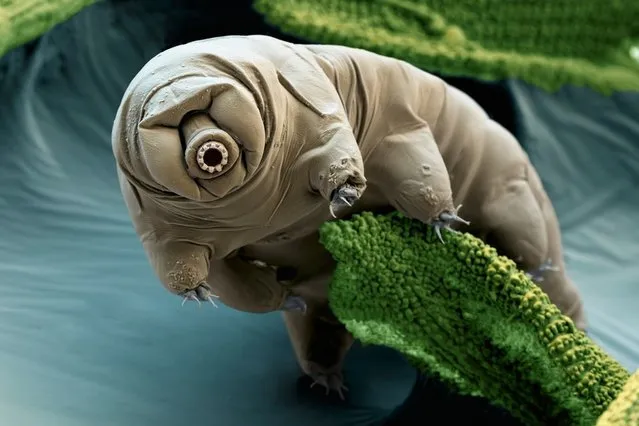
“Tardigrades (commonly known as waterbears or moss piglets) are small, water-dwelling, segmented animals with eight legs. Tardigrades were first discovered in 1773 by Johann August Ephraim Goeze, who called them kleiner Wasserbär, meaning “little water bear” in German. The name Tardigrada means “slow walker” and was given by Lazzaro Spallanzani in 1777. The name water bear comes from the way they walk, reminiscent of a bear's gait. The biggest adults may reach a body length of 1.5 millimetres (0.059 in), the smallest below 0.1 mm. Freshly hatched tardigrades may be smaller than 0.05 mm”. – Wikipedia. Photo: Tardigrades. (Photo by SPL/East News)
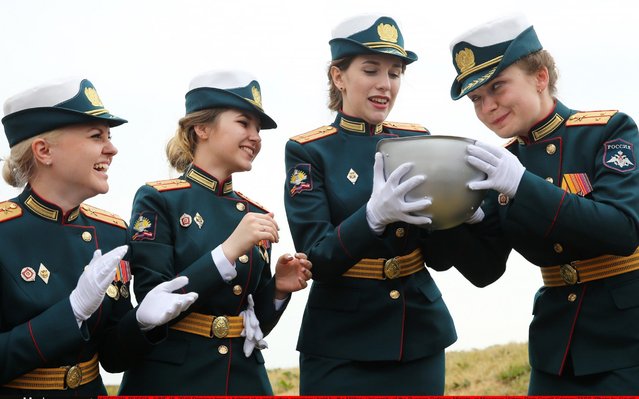
Drinking from a helmet at a graduation ceremony held by the Military University of the Russian Defence Ministry at Moscow's Victory Park in Moscow, Russia on June 15, 2019. (Photo by Gavriil Grigorov/TASS)
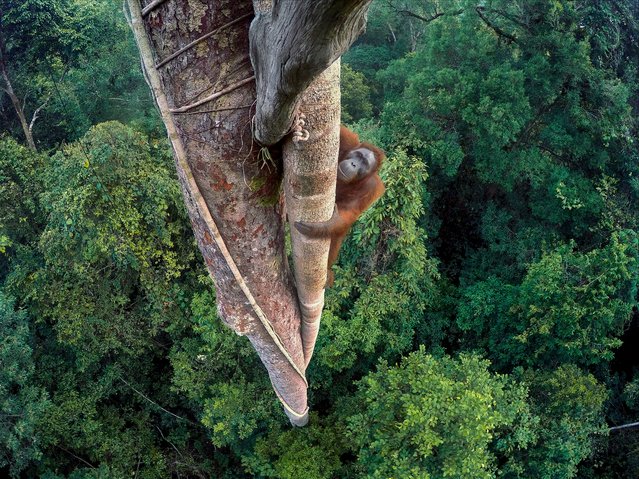
“Entwined Lives”. Tim Laman, US Winner, Wildlife photographer of the year. A young male orangutan makes the 30-metre climb up the thickest root of the strangler fig high above the canopy in Gunung Palung national park, one of the few protected orangutan strongholds in Indonesian Borneo. Laman had to do three days of climbing to position several GoPro cameras that he could trigger remotely. This shot was the one he had long visualised, looking down on the orangutan within its forest home. (Photo by Tim Laman/2016 Wildlife Photographer of the Year)
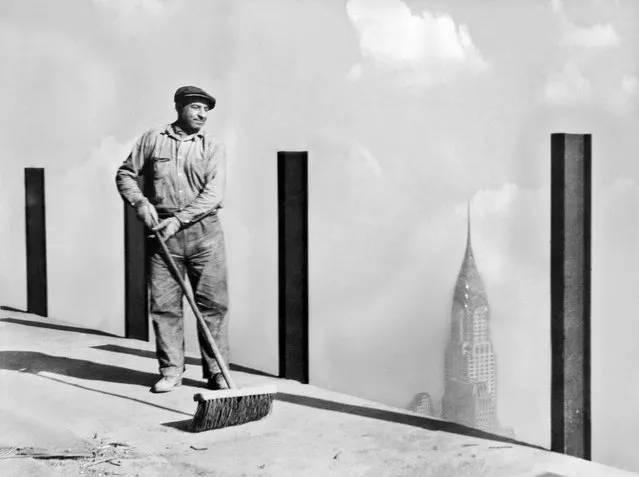
A workman sweeping the highest sidewalk in the world, the 81st story of the Empire State Building, the world's tallest building, to the top of which the greatest dirigible “Los Angeles” will attempt to moor, New York, New York, early 1930s. This photo was made 1,248 feet above street level. (Photo by Adam Glickman/Underwood Archives/Getty Images)
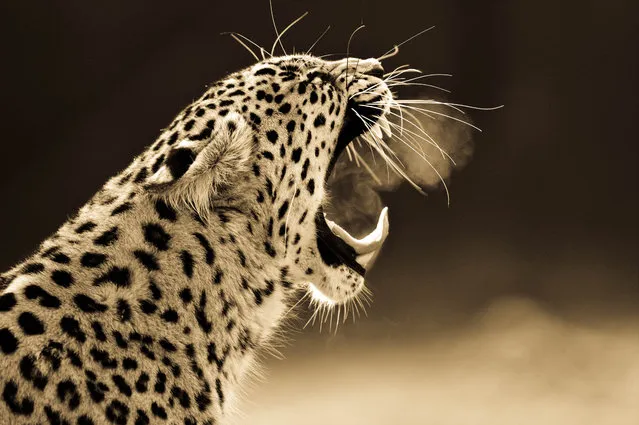
These romantic sepia shots show lovers enjoying quiet, unguarded moments together – but the subjects are not besotted couples; they are fearsome big cats. Freelance snapper Goran Anastasovski has devoted more than 10 years of his life to photographing big cats and other animals. The 46-year-old from Macedonia aims to emphasize their human qualities in his photographs. (Photo by Goran Anastasovski/Caters News)
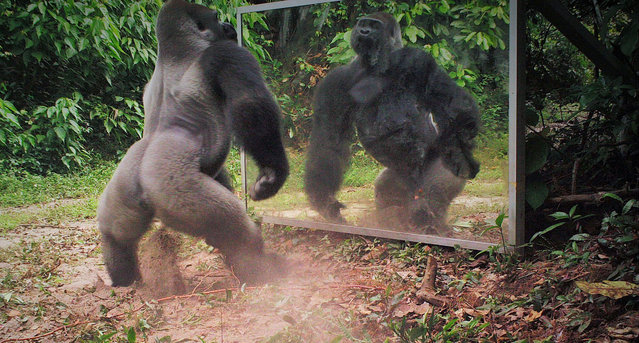
Camera trapper Xavier Hubert-Brierre put this large mirror on the side of a road through the jungle in Gabon and left a camera there to record how the animals would respond to their own reflections. A silverback gorilla thought it was seeing another silverback and responded by trying to scare off the potential challenger… (Photo by Xavier Hubert-Brierre/Johns Hopkins University Press)