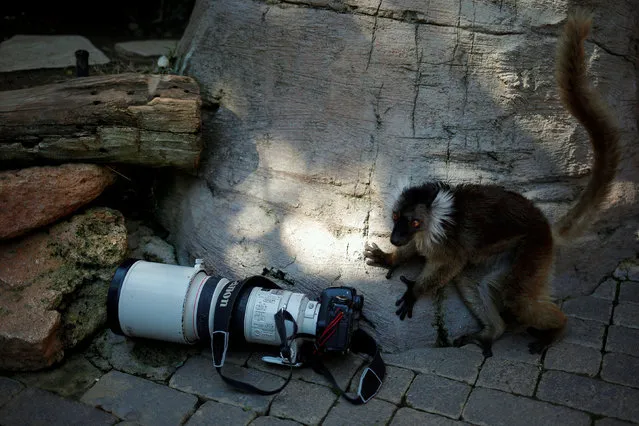
A female black lemur (Eulemur macaco), looks at a camera in its enclosure at Bioparc Fuengirola in Fuengirola, near Malaga, southern Spain, February 8, 2017. (Photo by Jon Nazca/Reuters)
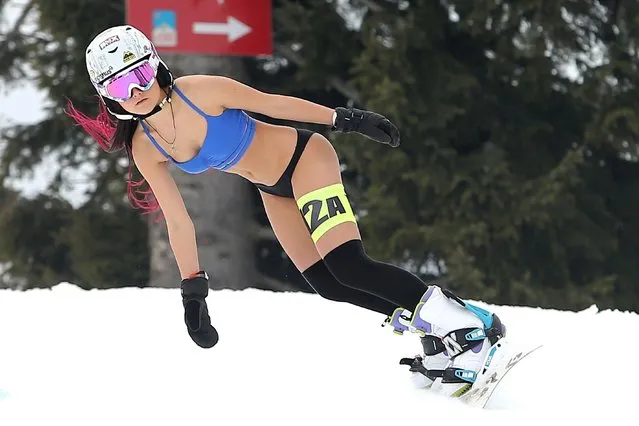
Participant Andreea Teodorescu, 17, races on a snowboard during the Bikini Race contest held at Arena Platos Paltinis winter resort, near Sibiu city, 275 km north from Bucharest, Romania, 04 March 2018. The Bikini Race is a timed show on the slopes, at the sixth edition, for women dressed only in swimmsuits and some winter accessories. (Photo by Mircea Rosca/EPA/EFE)
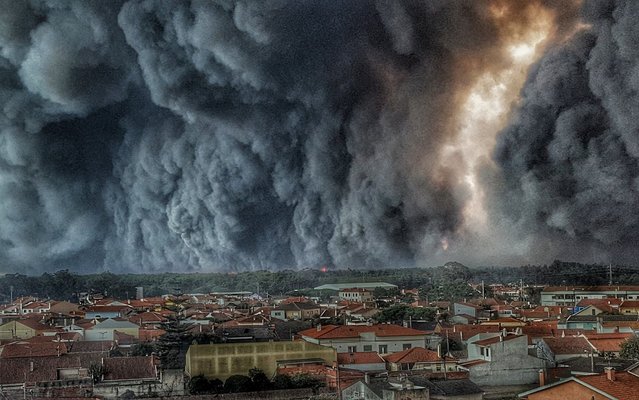
Fire over Vieira de Leiria, Portugal, on October 16, 2017 as a series of deadly wildfires broke out across Spain and Portugal as the approach of Hurricane Ophelia whipped up strong winds that fanned the flames. (Photo by Helio Madeiras/News Pictures)
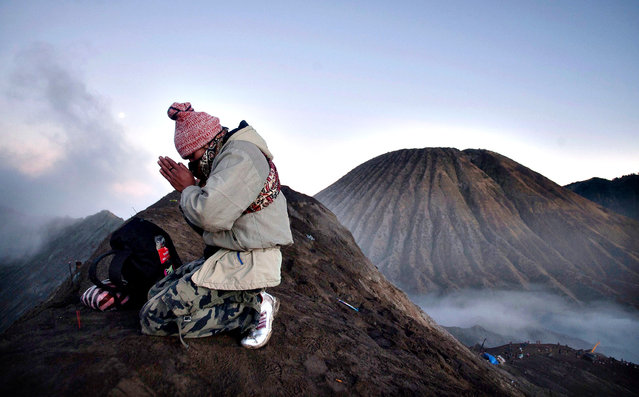
A Tengger tribesman prays at Mount Bromo during the annual Kasada ceremony in East Java on August 12, 2014. The Kasada ceremony is a festival held every 14th day of the Kasada month in the traditional Hindu lunar calender to honour Sang Hyang Widhi (God Almighty) and is based on the legend of Roro Anteng and Joko Seger from the Majapahit Kingdom, from which their Tengger tribe name originates. Hundreds of worshippers from the Tengger tribe offer food and livestock as a symbolic sacrifice which they throw into the crater for the blessings of safety and prosperity to their familyies and community. (Photo by Juni Kriswanto/AFP Photo)
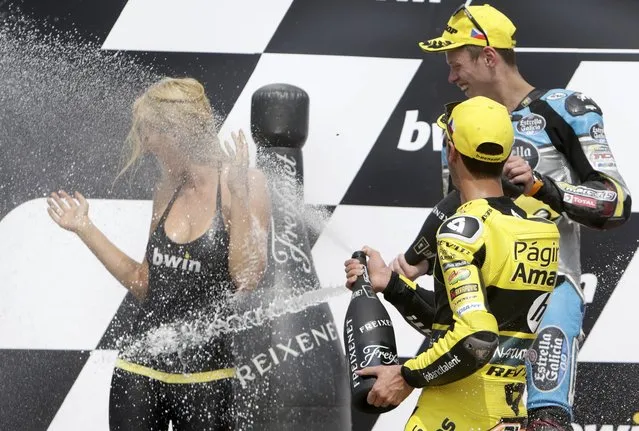
Second placed Kalex Moto2 Tito Rabat (rear R) of Spain and third placed Kalex Moto2 Alex Rins of Spain spray with champagne during the award ceremony for the Czech Grand Prix in Brno, Czech Republic, August 16, 2015. (Photo by David W. Cerny/Reuters)
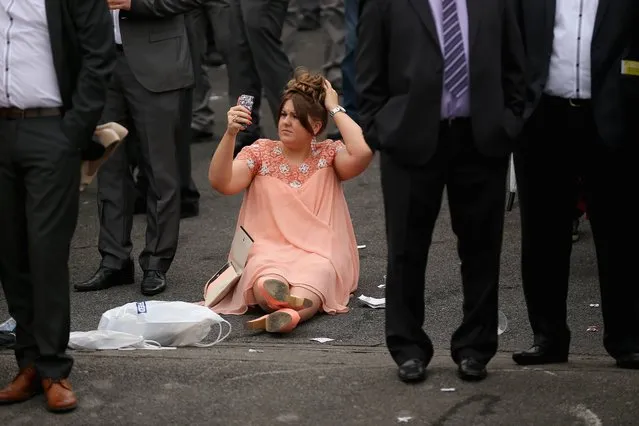
A racegoer uses the camera on her phone to check her hair on the opening day of the Grand National Festival at Aintree Racecourse on April 3, 2014 in Aintree, England. The three days of racing attracts thousands of racegoers and fans from across the world. The meeting culminates with millions of pounds being wagered on the runners taking part in Europe's richest jump race, the Grand National. (Photo by Christopher Furlong/Getty Images)
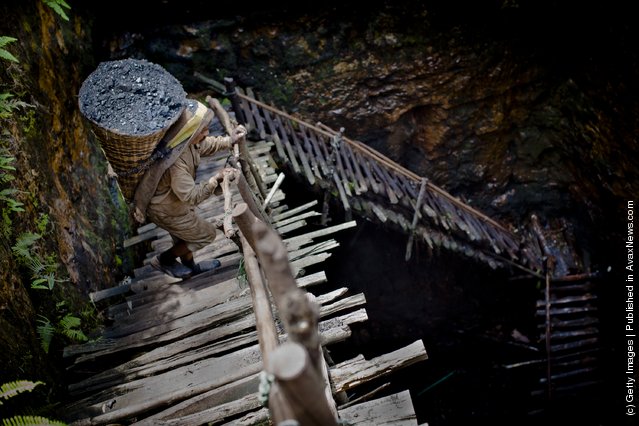
38 year old Prabhat Sinha, from Assam, carries a load of coal weighing 60kg's, supported by a head-strap, as he ascends the staircase of a coal mine on April 16, 2011 near the village of Khliehriat, in the district of Jaintia Hills, India. (Photo by Daniel Berehulak/Getty Images)
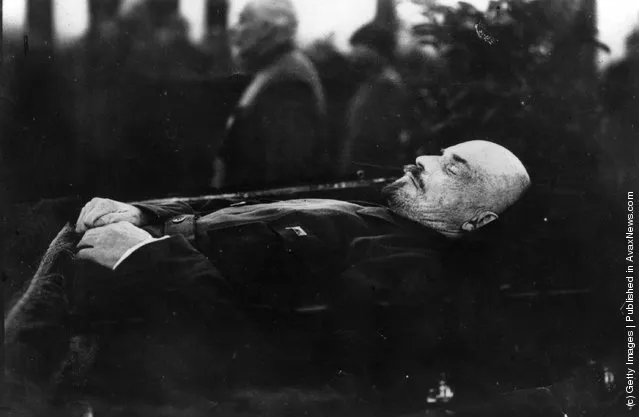
Photo: Vladimir Ilyich Lenin (1870 – 1924) lying in state in the Kremlin. (Photo by Hulton Archive/Getty Images). 1924
Important! For the same article in Russian language click here.
Something quite intriguing is happening within Russian-speaking internet during the last few – should you type a fully academic inquiry (at least, according to Russian academic requirements) in national search engines for "Lenin's mausoleum" – the first thing you get (even in top 10 searches) is website pages talking about black magic and occult. Website authors view this construction differently, but unconditionally agree on one thing: the mausoleum of the "leader of the world proletariat” – the essence of a magical artifact, a sort of “energy vampire”. It was built with a certain purpose: to drain the energy out of miserable Soviet citizens on one hand; and to poison the anthroposphere of one-sixth part of the earth with its vibes (the exact territory that was occupied by the former Soviet Union), depriving the Russian people of will to resist on the other hand. Complete nonsense? No doubt. Nevertheless, an intriguing one. Well, probably because some oddities do exist in mausoleum's history. These oddities are the thing we are going to discuss this time. First, let me refresh you memory on the subject.