Loading...
Done
The chariot of God Bhairab is pulled through the city centre of Bhaktapur near Kathmandu during the Bisket festival April 10, 2015. The festival, which runs for more than a week and coincides with the Nepalese New Year, involves devotees offering prayers and the pulling of two chariots, one carrying the idol of God Bhairab and the other with the idol of Goddess Bhadrakali, around the ancient city of Bhaktapur. (Photo by Navesh Chitrakar/Reuters)

The chariot of God Bhairab is pulled through the city centre of Bhaktapur near Kathmandu during the Bisket festival April 10, 2015. The festival, which runs for more than a week and coincides with the Nepalese New Year, involves devotees offering prayers and the pulling of two chariots, one carrying the idol of God Bhairab and the other with the idol of Goddess Bhadrakali, around the ancient city of Bhaktapur. Devotees participate in the festival with the belief that they will be blessed with good health, fortune and harvest for the coming year. (Photo by Navesh Chitrakar/Reuters)
Details
12 Apr 2015 07:52:00
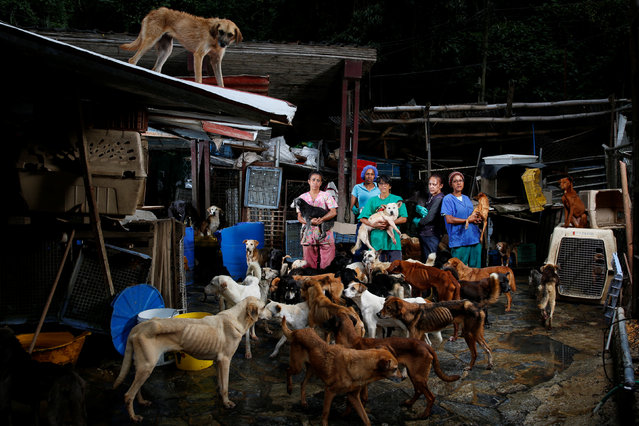
(L-R) Maria Silva, Milena Cortes, Maria Arteaga, Jackeline Bastidas and Gissy Abello pose for a picture at the Famproa dogs shelter where they work, in Los Teques, Venezuela, August 25, 2016. Venezuelans struggling to feed their families let alone their pets are dumping animals on the streets, in parks and at makeshift homes overrun with scrawny animals amid an economic crisis. An hour from Caracas in Los Teques, hundreds of dogs bark and run around the streets scavenging for food outside a makeshift shelter. People come by every few hours to hand over scrawny dogs which are fed by volunteers every day. Venezuela is undergoing a major economic and social crisis, with shortages of basic foods and medicines. Triple digit inflation is hitting everybody hard, including those who own pets. (Photo by Carlos Garcia Rawlins/Reuters)

(L-R) Maria Silva, Milena Cortes, Maria Arteaga, Jackeline Bastidas and Gissy Abello pose for a picture at the Famproa dogs shelter where they work, in Los Teques, Venezuela, August 25, 2016. Venezuelans struggling to feed their families let alone their pets are dumping animals on the streets, in parks and at makeshift homes overrun with scrawny animals amid an economic crisis. An hour from Caracas in Los Teques, hundreds of dogs bark and run around the streets scavenging for food outside a makeshift shelter. (Photo by Carlos Garcia Rawlins/Reuters)
Details
08 Sep 2016 10:01:00
Takeoka Chisaka, Hiroshima, Japan. “One morning in August 1945, I was walking home from the night shift at a factory in Hiroshima. As I reached my door, there was a huge explosion. When I came to, my head was bleeding and I had been blasted 30m away”. (Photo and caption by Sasha Maslov)

Takeoka Chisaka, Hiroshima, Japan. “One morning in August 1945, I was walking home from the night shift at a factory in Hiroshima. As I reached my door, there was a huge explosion. When I came to, my head was bleeding and I had been blasted 30m away. The atomic bomb had detonated. When I found my mother, her eyes were badly burned. A doctor said they had to come out, but he didn’t have the proper tools so used a knife instead. It was hellish. I became a peace-worker after the war. In the 1960s, at a meeting at the UN, I met one of the people who created the atomic bomb. He apologised”. (Photo and caption by Sasha Maslov)
Details
11 May 2015 11:56:00
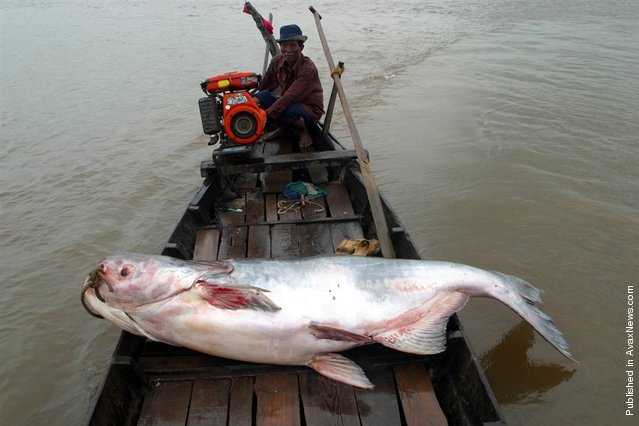
Among the fish populations that could be harmed by the Xayaburi dam in Laos is the critically endangered Mekong giant catfish, considered by the Guinness Book of World Records to be the world’s largest freshwater fish. The fish, which grows to 650 pounds and about 10 feet long, is only found in the Mekong River. It is migratory, moving between downstream habitats in Cambodia upstream to northern Thailand and Laos each year to spawn. Some experts fear the Xayaburi dam could block the migration and drive the giant catfish to extinction

Among the fish populations that could be harmed by the Xayaburi dam in Laos is the critically endangered Mekong giant catfish, considered by the Guinness Book of World Records to be the world’s largest freshwater fish. The fish, which grows to 650 pounds and about 10 feet long, is only found in the Mekong River. It is migratory, moving between downstream habitats in Cambodia upstream to northern Thailand and Laos each year to spawn. Some experts fear the Xayaburi dam could block the migration and drive the giant catfish to extinction. (Photo by Courtesy of Zeb Hogan/University of Nevada, Reno)
Details
20 Apr 2012 13:10:00
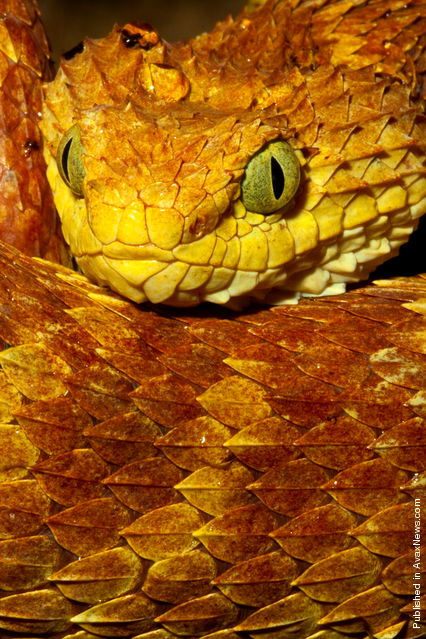
Atheris squamigera

“Atheris is a genus of venomous vipers found only in tropical subsaharan Africa, excluding southern Africa. Confined to rain forest areas, many members have isolated and fragmented distributions. In an interesting example of convergent evolution, they show many similarities to the arboreal pit vipers of Asia and South America”. – Wikipedia

Photo: Atheris squamigera. (Photo by David Williams)
Details
21 Apr 2012 13:14:00
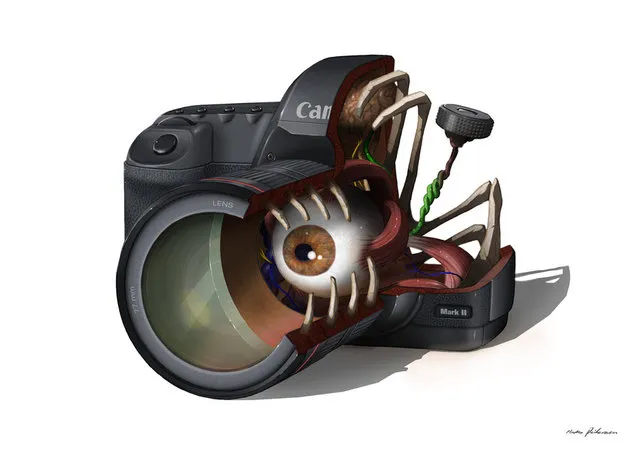
Anatomy of Tech Gadgets

Mads Peitersen, a professional artist from Denmark, came up with a clever idea of illustrating the anatomy of technology gadgets. Some of the following drawings are commissioned by the manufacturer and some are just for fun. Enjoy!
Details
31 Jul 2012 06:01:00
Russian trio Serebro

“Serebro (Серебро, Silver) are a Russian trio, formed in Moscow, Russia in 2006. Serebro is currently one of the most popular Russian bands. They are also famously known as the band who finished third in the Eurovision Song Contest 2007 in Helsinki with the song “Song #1”. On 30 July 2011, Serebro premiered their eighth single, “Mama Lover” at Europa Plus Live. It is their third official English language release after “Song #1” and “Like Mary Warner”. On 15 September 2011, the music video for “Mama Luba” (Russian version of “Mama Lover”) was released”. – Wikipedia

Photo: Russian trio «Serebro», 2008
Details
30 Sep 2011 11:56:00
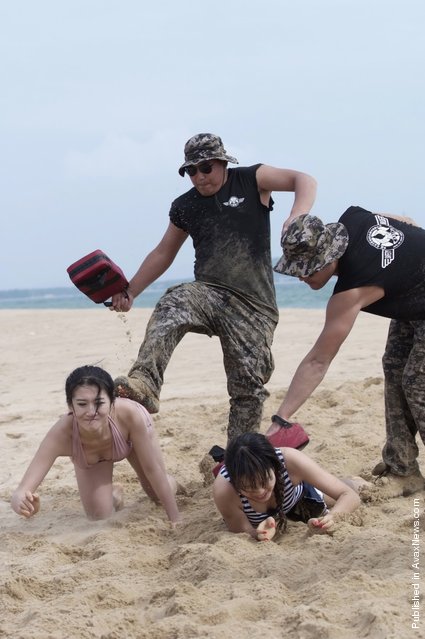
Chinese Female Bodyguard

Trainers from Tianjiao Special Guard/Security Consultant Ltd. Co. engage trainees dressed in swimming suits as they crawl on the beach during a training session in Sanya, Hainan province January 8, 2012. (Photo by CHINA DAILY/Reuters)
Details
15 Jan 2012 10:52:00