Loading...
Done
A Vietnamese woman, wearing the traditional “ao dai” long dress, poses for photos along peach blossom flowers ahead of the Vietnamese “Tet” (Lunar New Year festival), in a field in Hanoi, Vietnam, February 2, 2016. (Photo by Reuters/Kham)

A Vietnamese woman, wearing the traditional “ao dai” long dress, poses for photos along peach blossom flowers ahead of the Vietnamese “Tet” (Lunar New Year festival), in a field in Hanoi, Vietnam, February 2, 2016. (Photo by Reuters/Kham)
Details
03 Feb 2016 13:43:00
A woman spits red paint as if it is blood protesting against bullfights in Madrid, Spain on March 27, 2016. Anti-bullfighting protesters have turn the iconic square of “Puerta del Sol” into a bullring. Protesters, almost naked covered with red paint as if it was blood, have demanded the abolition of bullfights under the slogan “The bull suffers!”. (Photo by Marcos del Mazo/Pacific Press)

A woman spits red paint as if it is blood protesting against bullfights in Madrid, Spain on March 27, 2016. Anti-bullfighting protesters have turn the iconic square of “Puerta del Sol” into a bullring. Protesters, almost naked covered with red paint as if it was blood, have demanded the abolition of bullfights under the slogan “The bull suffers!”. (Photo by Marcos del Mazo/Pacific Press)
Details
29 Mar 2016 12:15:00
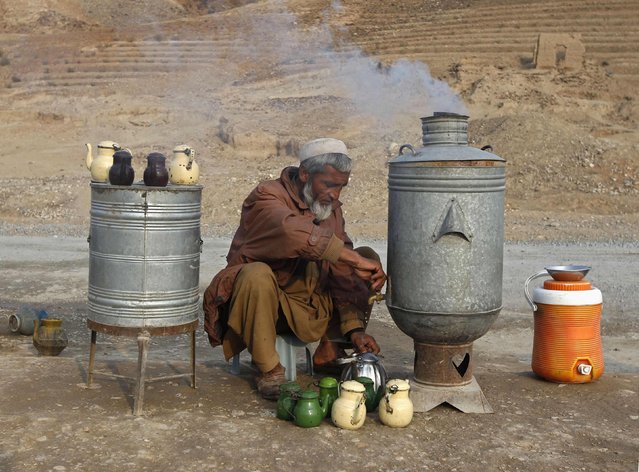
An Afghan man prepares tea for customers at a roadside tea shop on the outskirts of Jalalabad February 2, 2015. (Photo by Reuters/Parwiz)

An Afghan man prepares tea for customers at a roadside tea shop on the outskirts of Jalalabad February 2, 2015. (Photo by Reuters/Parwiz)
Details
25 Feb 2015 08:44:00
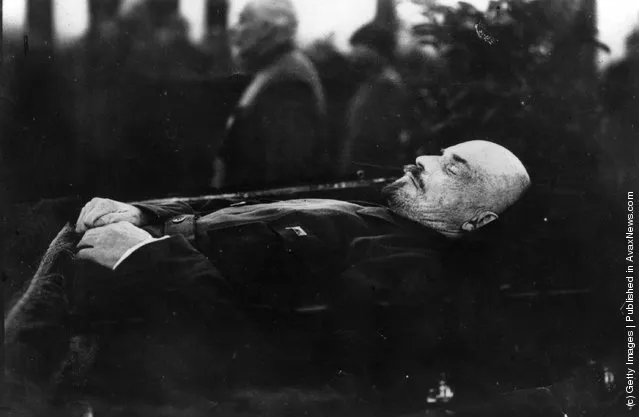
1924:  Vladimir Ilyich Lenin lying in state in the Kremlin

Photo: Vladimir Ilyich Lenin (1870 – 1924) lying in state in the Kremlin. (Photo by Hulton Archive/Getty Images). 1924

Important! For the same article in Russian language click here.

Something quite intriguing is happening within Russian-speaking internet during the last few – should you type a fully academic inquiry (at least, according to Russian academic requirements) in national search engines for "Lenin's mausoleum" – the first thing you get (even in top 10 searches) is website pages talking about black magic and occult. Website authors view this construction differently, but unconditionally agree on one thing: the mausoleum of the "leader of the world proletariat” – the essence of a magical artifact, a sort of “energy vampire”. It was built with a certain purpose: to drain the energy out of miserable Soviet citizens on one hand; and to poison the anthroposphere of one-sixth part of the earth with its vibes (the exact territory that was occupied by the former Soviet Union), depriving the Russian people of will to resist on the other hand. Complete nonsense? No doubt. Nevertheless, an intriguing one. Well, probably because some oddities do exist in mausoleum's history. These oddities are the thing we are going to discuss this time. First, let me refresh you memory on the subject.
Details
16 Oct 2011 11:27:00
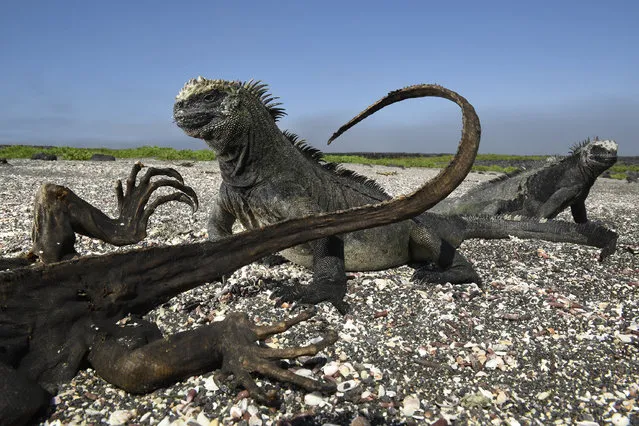
Galapagos – Rocking the Cradle: Four major ocean currents converge along the Galapagos archipelago, creating the conditions for an extraordinary diversity of animal life, April 25, 2016. The islands are home to at least 7,000 flora and fauna species, of which 97 percent of the reptiles, 80 percent of the land birds, 50 percent of the insects and 30 percent of the plants are endemic. The local ecosystem is highly sensitive to the changes in temperature, rainfall and ocean currents that characterize the climatic events known as El Niño and La Niña. These changes cause marked fluctuations in weather and food availability. Many scientists expect the frequency of El Niño and La Niña to increase as a result of climate change, making the Galapagos a possible early-warning location for its effects. (Photo by Thomas P. Peschak for National Geographic/World Press Photo)

Galapagos – Rocking the Cradle: Four major ocean currents converge along the Galapagos archipelago, creating the conditions for an extraordinary diversity of animal life, April 25, 2016. The islands are home to at least 7,000 flora and fauna species, of which 97 percent of the reptiles, 80 percent of the land birds, 50 percent of the insects and 30 percent of the plants are endemic. (Photo by Thomas P. Peschak for National Geographic/World Press Photo)
Details
16 Apr 2018 00:01:00
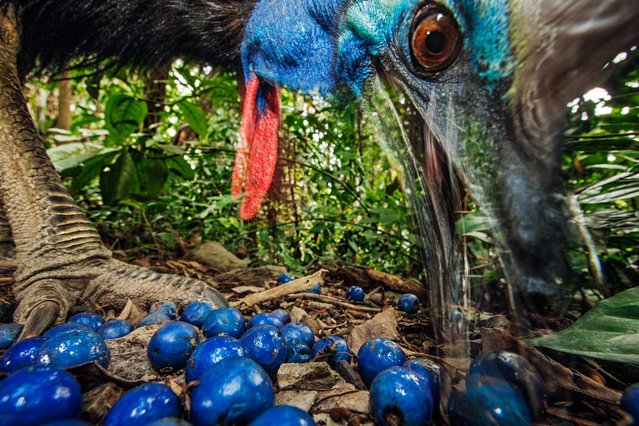
“Cassowaries are large, flightless birds related to emus and (more distantly) to ostriches, rheas, and kiwis”, writes Olivia Judson in the September issue of National Geographic magazine. (Photo by Christian Ziegler/National Geographic)

“Cassowaries are large, flightless birds related to emus and (more distantly) to ostriches, rheas, and kiwis”, writes Olivia Judson in the September issue of National Geographic magazine. How large? People-size: Adult males stand well over five foot five and top 110 pounds. Females are even taller, and can weigh more than 160 pounds. Dangerous when roused, they’re shy and peaceable when left alone. But even birds this big and tough are prey to habitat loss. The dense New Guinea and Australia rain forests where they live have dwindled. Today cassowaries might number 1,500 to 2,000. And because they help shape those same forests – by moving seeds from one place to another – “if they vanish”, Judson writes, “the structure of the forest would gradually change” too. (Photo by Christian Ziegler/National Geographic)

Details
06 Jan 2014 12:21:00
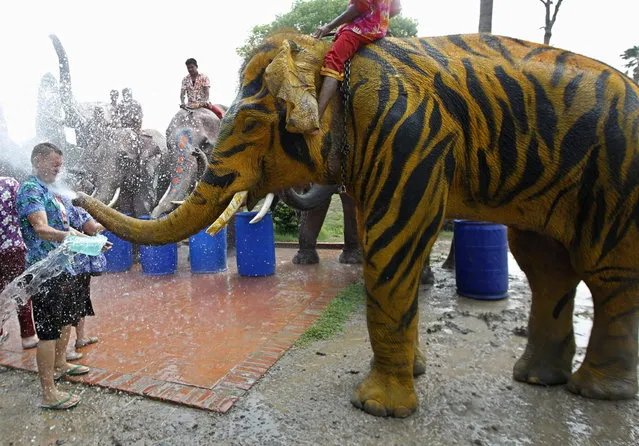
Elephants spray tourists with water in celebration of the Songkran water festival in Thailand's Ayutthaya province, about 80 km (50 miles) north of Bangkok, April 9, 2014. (Photo by Rungroj Yongrit/EFE)

Elephants spray tourists with water in celebration of the Songkran water festival in Thailand's Ayutthaya province, about 80 km (50 miles) north of Bangkok, April 9, 2014. (Photo by Rungroj Yongrit/EFE)
Details
12 Apr 2014 13:30:00
What the World Eats By Peter Menzel And Faith D'Aluisio Part 2

A stunning photographic collection featuring portraits of people from 30 countries and the food they eat in one day. In this fascinating study of people and their diets, 80 profiles are organized by the total number of calories each person puts away in a day. Featuring a Japanese sumo wrestler, a Massai herdswoman, world-renowned Spanish chef Ferran Adria, an American competitive eater, and more, these compulsively readable personal stories also include demographic particulars, including age, activity level, height, and weight. Essays from Harvard primatologist Richard Wrangham, journalist Michael Pollan, and others discuss the implications of our modern diets for our health and for the planet. This compelling blend of photography and investigative reportage expands our understanding of the complex relationships among individuals, culture, and food.
Details
02 May 2014 09:20:00