Loading...
Done
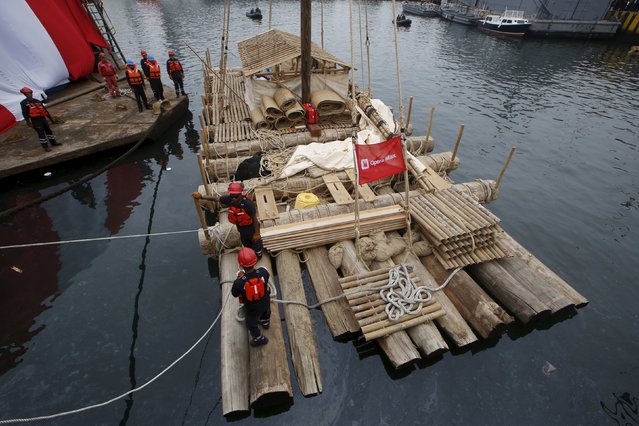
One of the two wooden rafts of the Kon-Tiki II expedition is prepared  at the port of Callao prior to the departure to Pascua island in Chile, in Callao, Peru, October 30, 2015. Fourteen men from various parts of the world set out on rafts to commemorate the  Norwegian navigator Thor Heyerdahl expedition 68 years ago. (Photo by Mariana Bazo/Reuters)

One of the two wooden rafts of the Kon-Tiki II expedition is prepared at the port of Callao prior to the departure to Pascua island in Chile, in Callao, Peru, October 30, 2015. Fourteen men from various parts of the world set out on rafts to commemorate the Norwegian navigator Thor Heyerdahl expedition 68 years ago. The original raft crossed the Pacific Ocean from South America to the Polynesian Islands. This rafts are a replica of ships used 6,000 years ago, but will be equipped with solar panel. (Photo by Mariana Bazo/Reuters)
Details
02 Nov 2015 08:00:00
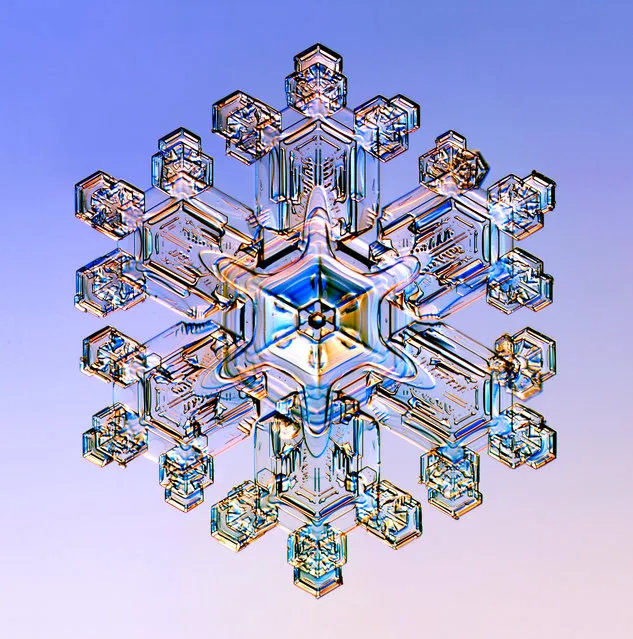
Nikon Small World Photomicrography Competition 2012. Honorable Mention. “Snow crystal, illuminated with colored lights (5x)”. (Photo by Dr. Kenneth Libbrecht, California Institute of Technology (Caltech), Department of Physics, Pasadena, California, USA)

Most people know Nikon as a purveyor of pro and consumer-grade digital cameras. But the company's expertise with optics bleeds over into related markets – it's one of the science community's major suppliers of microscopes. And each year the company asks the community to send it some of their favorite images of tiny objects. A panel of scientists and journalists have chosen the best of this past year's submissions, which Nikon has placed on its Small World site.

Photo: Honorable Mention. “Snow crystal, illuminated with colored lights (5x)”. (Photo by Dr. Kenneth Libbrecht, California Institute of Technology (Caltech), Department of Physics, Pasadena, California, USA)
Details
25 Oct 2012 13:49:00
Ocean voyage

Do you think that history is a science? Well, not exactly. First, and foremost, history is the state's “legend of wars”, it’s official regalia. Of course, public historians are not interested in scientific truth – quite the opposite. In this respect, any attempt to present a state’s history as altruistic and benevolent as possible is welcomed and encouraged – as opposed to any revisionism attempts that may be more accurate. In this matter, Chinese have surpassed us all – they revised in highly creative manner (but rather shamelessly) the technology already invented by Europeans, a process that resulted in oldest state on the planet. Here is an interesting paradox: ask any sinologist about the Middle Kingdom during second century B.C., and he will describe it to you in such a vivid manner as if he has been living there all his life – but as soon as you will ask him to describe Chinese history in the 19-20th centuries… let's say, his eagerness will be greatly diminished. However, we will discuss China in a different article, and in the meantime we will try to understand how exactly historic “legend of wars” is formed and functions – based on a specific and well-known example. A great example is Ferdinand Magellan's first voyage around the world.

Details
14 Nov 2011 09:11:00
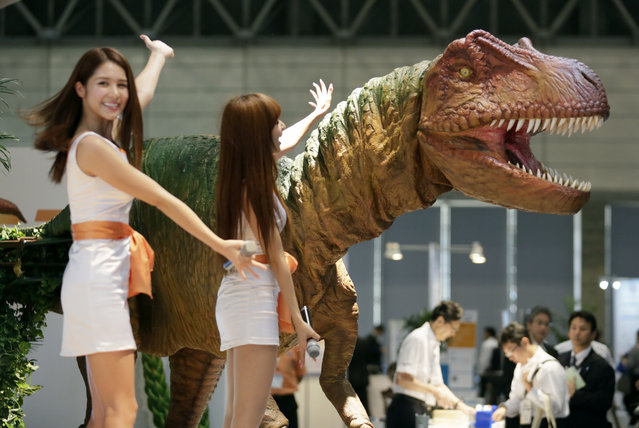
A dinosaur robot produced by Tyco Electronics Japan G.K. is controlled by a smartphone at CEATEC (Combined Exhibition of Advanced Technologies) Japan 2014 held at at Makuhari Messe in Chiba, east of Tokyo, Japan, 07 October 2014. The CEATEC opened on 07 October for a five-day exhibition. (Photo by Kimimasa Mayama/EPA)

A dinosaur robot produced by Tyco Electronics Japan G.K. is controlled by a smartphone at CEATEC (Combined Exhibition of Advanced Technologies) Japan 2014 held at at Makuhari Messe in Chiba, east of Tokyo, Japan, 07 October 2014.With a Sharp Aquos ZETA mobile phone model, users can make the 6.5-meter (21 feet, 4 inches) long, 2.1-meter (6 feet, 11 inches) tall dinosaur robot to walk forward and backward, jump, move its head, hands and legs up and down, left and right, open and close its mouth by touching the screen panel and make it bark by shaking the handheld. (Photo by Kimimasa Mayama/EPA)
Details
08 Oct 2014 11:54:00
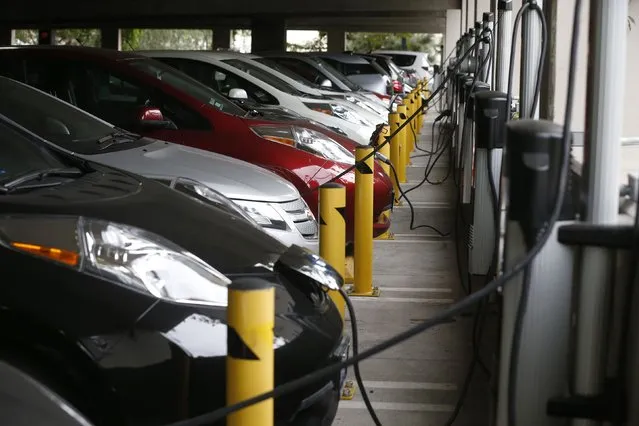
Electric cars sit charging in a parking garage at the University of California, Irvine January 26, 2015. “The Irvine Smart Grid Demonstration”, a $79 million project funded half by federal stimulus money and half by Edison and partners like UC Irvine, was launched in 2010. (Photo by Lucy Nicholson/Reuters)

Electric cars sit charging in a parking garage at the University of California, Irvine January 26, 2015. “The Irvine Smart Grid Demonstration”, a $79 million project funded half by federal stimulus money and half by Edison and partners like UC Irvine, was launched in 2010. The $12 billion utility's research team Southern California Edison is testing everything from charging electronic vehicles via cell phone to devices that smooth out the power created by rooftop solar panels. Those are some of the roughly 60 projects in the works at Edison's Advanced Technology division. It has a small $19 million annual budget, but its influence far exceeds that. (Photo by Lucy Nicholson/Reuters)
Details
28 Jan 2015 11:50:00
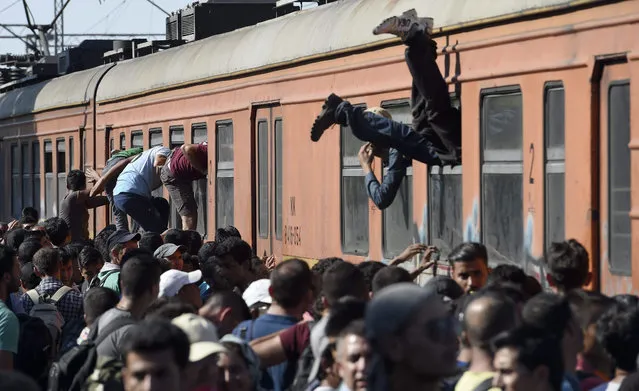
Migrants climb through the windows of a train bound for Serbia at the train station in Gevgelija, The Former Yugoslav Republic of Macedonia, 19 July 2015. Thousands of migrants who crossed Greece are on their way through Macedonia towards Serbia in order to access other European countries. (Photo by Georgi Licovski/EPA)

Migrants climb through the windows of a train bound for Serbia at the train station in Gevgelija, The Former Yugoslav Republic of Macedonia, 19 July 2015. Thousands of migrants who crossed Greece are on their way through Macedonia towards Serbia in order to access other European countries. Hungary in mid-July started to put up a fence on its border with Serbia, which makes the situation with the migrants in the transit countries even more complicated. The European countries on 20 July will discuss the quota of how many migrants each country should accept. (Photo by Georgi Licovski/EPA)
Details
20 Jul 2015 09:52:00
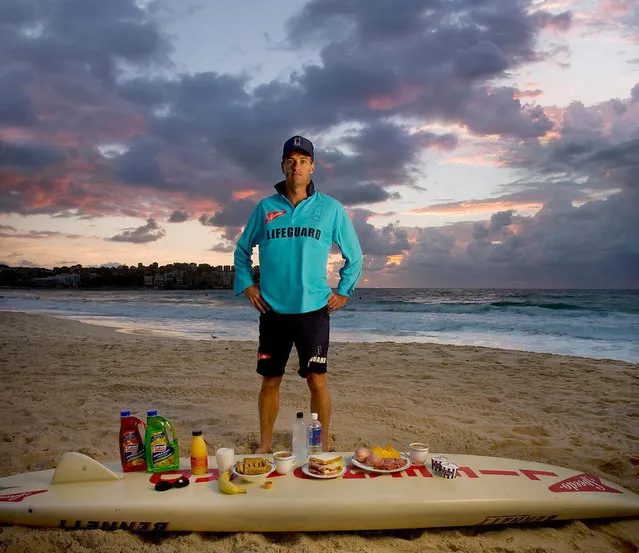
What the World Eats By Peter Menzel And Faith D'Aluisio Part 2

A stunning photographic collection featuring portraits of people from 30 countries and the food they eat in one day. In this fascinating study of people and their diets, 80 profiles are organized by the total number of calories each person puts away in a day. Featuring a Japanese sumo wrestler, a Massai herdswoman, world-renowned Spanish chef Ferran Adria, an American competitive eater, and more, these compulsively readable personal stories also include demographic particulars, including age, activity level, height, and weight. Essays from Harvard primatologist Richard Wrangham, journalist Michael Pollan, and others discuss the implications of our modern diets for our health and for the planet. This compelling blend of photography and investigative reportage expands our understanding of the complex relationships among individuals, culture, and food.
Details
02 May 2014 09:20:00
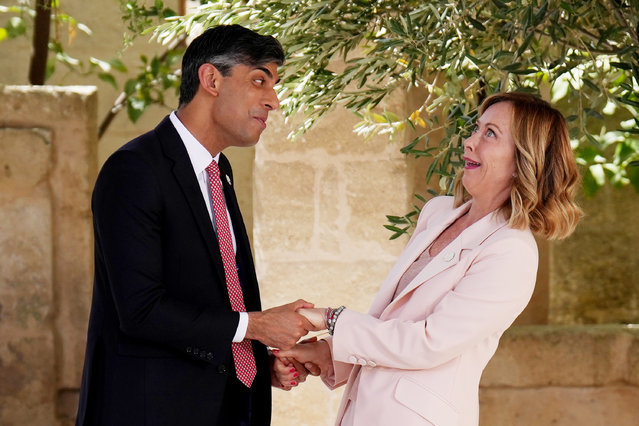
British Prime Minister Rishi Sunak is greeted by Italian Prime Minister Giorgia Meloni during a welcome ceremony on day one of the 50th G7 summit at Borgo Egnazia on June 13, 2024 in Fasano, Italy. The G7 summit in Puglia, hosted by Italian Prime Minister Giorgia Meloni, the seventh held in Italy, gathers leaders from the seven member states, the EU Council, and the EU Commission. Discussions will focus on topics including Africa, climate change, development, the Middle East, Ukraine, migration, Indo-Pacific economic security, and artificial intelligence. (Photo by Christopher Furlong/Getty Images)

British Prime Minister Rishi Sunak is greeted by Italian Prime Minister Giorgia Meloni during a welcome ceremony on day one of the 50th G7 summit at Borgo Egnazia on June 13, 2024 in Fasano, Italy. The G7 summit in Puglia, hosted by Italian Prime Minister Giorgia Meloni, the seventh held in Italy, gathers leaders from the seven member states, the EU Council, and the EU Commission. (Photo by Christopher Furlong/Getty Images)
Details
16 Jun 2024 06:00:00