Loading...
Done
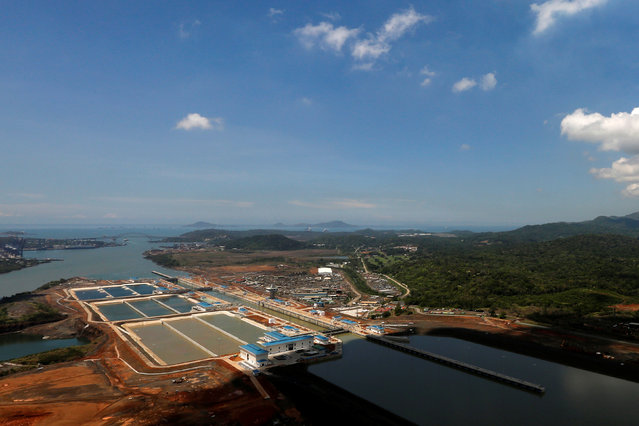
An aerial view of the new Panama Canal expansion project on the Atlantic side of the Panama Canal during an organized media tour by Italy's Salini Impregilo, one of the main sub contractors of the Panama Canal Expansion project, in Panama City May 11, 2016. The newly expanded Panama Canal will be inaugurated on June 26, 2016. (Photo by Carlos Jasso/Reuters)

An aerial view of the new Panama Canal expansion project on the Atlantic side of the Panama Canal during an organized media tour by Italy's Salini Impregilo, one of the main sub contractors of the Panama Canal Expansion project, in Panama City May 11, 2016. The newly expanded Panama Canal will be inaugurated on June 26, 2016. (Photo by Carlos Jasso/Reuters)
Details
13 May 2016 11:54:00
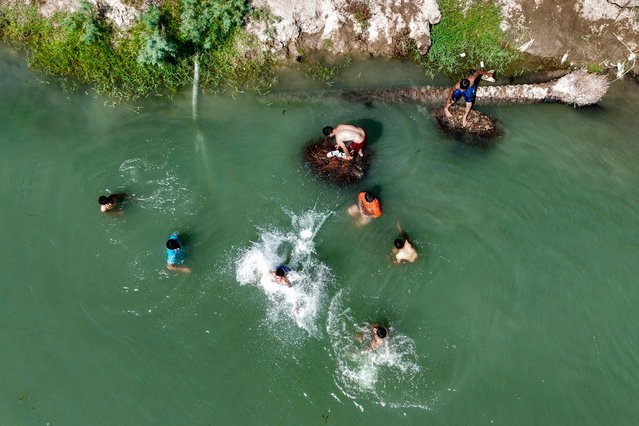
This aerial view shows youths swimming to cool off in the waters of Iraq's Euphrates river during a heatwave, in the district of al-Hindiyah east of Karbala on June 7, 2024. (Photo by Karar Jabbar/AFP Photo)

This aerial view shows youths swimming to cool off in the waters of Iraq's Euphrates river during a heatwave, in the district of al-Hindiyah east of Karbala on June 7, 2024. (Photo by Karar Jabbar/AFP Photo)
Details
04 Jul 2024 03:51:00
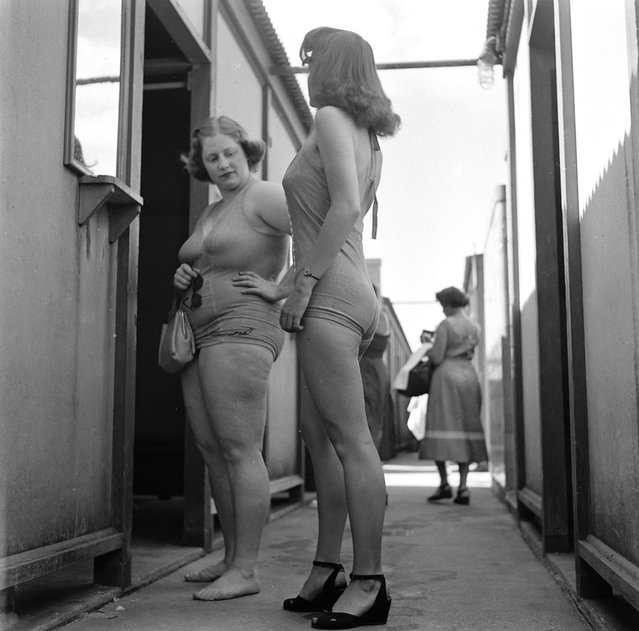
Dorothy Bradley (left), photographed for LIFE magazine article on obesity, 1949. (Photo by Martha Holmes/Time & Life Pictures)

“The most serious health problem in the U.S. today is obesity.” Sounds familiar, doesn’t it? But that pronouncement about obesity’s primacy in the hierarchy of national health problems is not new. Rather, it’s the opening line to a remarkable article published 60 years ago in LIFE magazine. This photographs made by Martha Holmes to illustrate that March 1954 article, titled “The Plague of Overweight.” Photo: Dorothy Bradley (left), photographed for LIFE magazine article on obesity, 1949. (Photo by Martha Holmes/Time & Life Pictures)
Details
11 Apr 2013 11:42:00
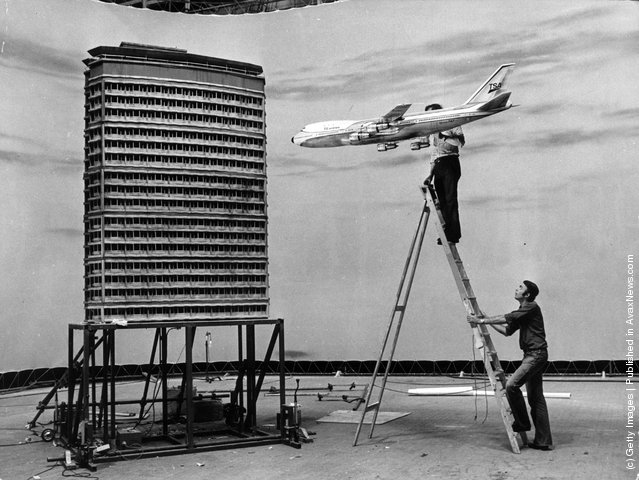
Film technicians at Pinewood Studios set up a miniature air crash sequence for the Jack Gold film The Medusa Touch, using scale models of a Boeing 747 and a skyscraper

Film technicians at Pinewood Studios set up a miniature air crash sequence for the Jack Gold film “The Medusa Touch”, using scale models of a Boeing 747 and a skyscraper. (Photo by Alan F. Davis/Keystone/Getty Images). 9th August 1977
Details
09 Sep 2011 10:16:00
Merit: A Night at Deadvlei. The night before returning to Windhoek, we spent several hours at Deadveli. The moon was bright enough to illuminate the sand dunes in the distance, but the skies were still dark enough to clearly see the milky way and magellanic clouds. Deadveli means “dead marsh. (Photo and caption by Beth McCarley/National Geographic Traveler Photo Contest)

Merit: A Night at Deadvlei. The night before returning to Windhoek, we spent several hours at Deadveli. The moon was bright enough to illuminate the sand dunes in the distance, but the skies were still dark enough to clearly see the milky way and magellanic clouds. Deadveli means “dead marsh. The camelthorn trees are believed to be about 900 years old, but have not decomposed because the environment is so dry. (Photo and caption by Beth McCarley/National Geographic Traveler Photo Contest)
Details
04 Aug 2015 11:50:00
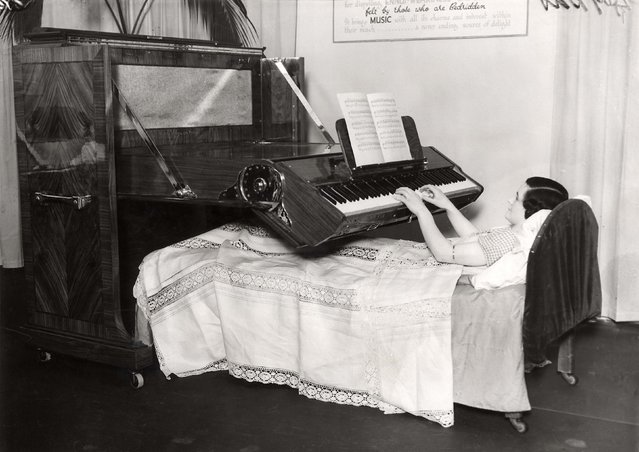
A British woman plays a piano designed especially for people who are confined to bed. Date: 1935. (Photo by Mary Evans Picture Library/Caters News)

A British woman plays a piano designed especially for people who are confined to bed. Date: 1935. (Photo by Mary Evans Picture Library/Caters News)
Details
20 Apr 2014 11:01:00
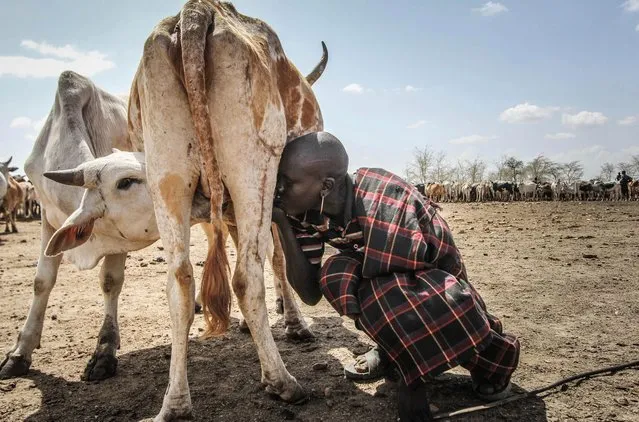
Cattle are the most important way of livelihood for the Karamojong: they provide milk, meat, blood and money when sold, Karamoja, Uganda, February 2017. (Photo by Sumy Sadurni/Barcroft Images)

Cattle are the most important way of livelihood for the Karamojong: they provide milk, meat, blood and money when sold, Karamoja, Uganda, February 2017. (Photo by Sumy Sadurni/Barcroft Images)
Details
17 Feb 2017 00:02:00
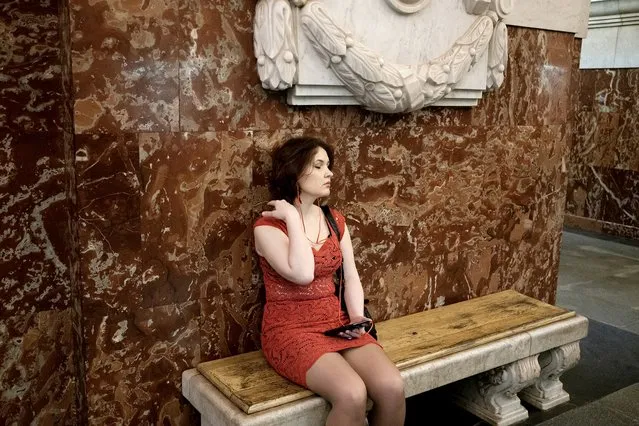
At the Krasnopresnenskaya station, the benches come from the Cathedral of Christ-Sauveur, which was built from 1839 to 1883 in memory of the victory of Russia against the army of Napoleon I. The cathedral was destroyed under Stalin in 1931, but the benches remained intact. Metro architects decided to install them in some stations. (Photo by Didier Bizet/The Washington Post)

At the Krasnopresnenskaya station, the benches come from the Cathedral of Christ-Sauveur, which was built from 1839 to 1883 in memory of the victory of Russia against the army of Napoleon I. The cathedral was destroyed under Stalin in 1931, but the benches remained intact. Metro architects decided to install them in some stations. (Photo by Didier Bizet/The Washington Post)
Details
24 Jan 2018 06:23:00