Loading...
Done
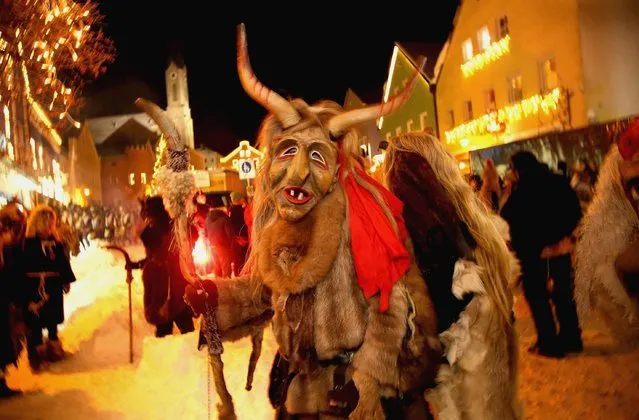
Locals dressed as “Perchten”, a traditional demonic creature in German and Austrian Alpine folklore, parade through the town center during the annual “Rauhnacht” gathering on January 5, 2017 in Waldkirchen, Germany. (Photo by Johannes Simon/Getty Images)

Locals dressed as “Perchten”, a traditional demonic creature in German and Austrian Alpine folklore, parade through the town center during the annual “Rauhnacht” gathering on January 5, 2017 in Waldkirchen, Germany. (Photo by Johannes Simon/Getty Images)
Details
07 Jan 2017 14:09:00
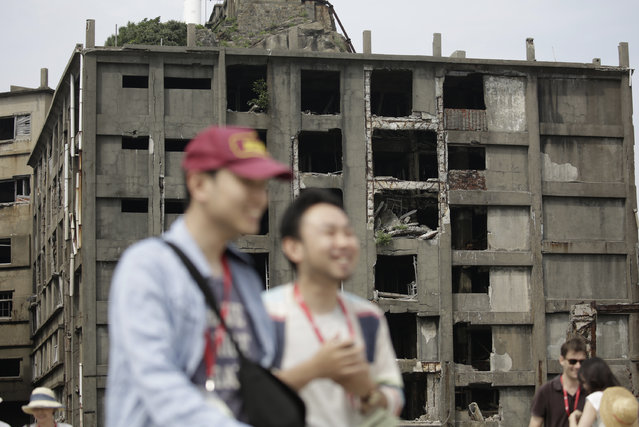
In this June 29, 2015 photo, forlorn buildings are seen at Hashima Island, commonly known as Gunkanjima, which means “Battleship Island”, off Nagasaki, Nagasaki Prefecture, southern Japan. (Photo by Eugene Hoshiko/AP Photo)

In this June 29, 2015 photo, forlorn buildings are seen at Hashima Island, commonly known as Gunkanjima, which means “Battleship Island”, off Nagasaki, Nagasaki Prefecture, southern Japan. The island is one of 23 old industrial facilities seeking UNESCO's recognition as world heritage “Sites of Japan's Meiji Industrial Revolution” meant to illustrate Japan's rapid transformation from a feudal farming society into an industrial power at the end of the 19th century. UNESCO's World Heritage Committee is expected to approve the proposal during a meeting being held in Bonn, Germany, through July 9. (Photo by Eugene Hoshiko/AP Photo)
Details
01 Jul 2015 13:41:00
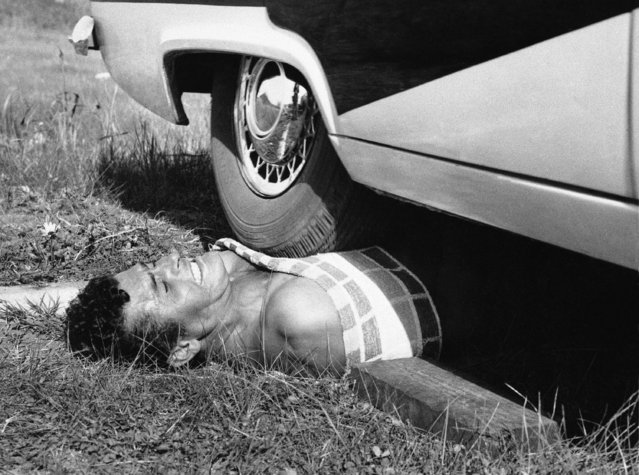
Leon Samson, 24-year-old showman, grimaces as an automobile is driven across his chest at Perth, Australia on October 9, 1960. Samson said the towel on his chest is to prevent the wheel from tearing his flesh. (Photo by AP Photo)

Leon Samson, 24-year-old showman, grimaces as an automobile is driven across his chest at Perth, Australia on October 9, 1960. Samson said the towel on his chest is to prevent the wheel from tearing his flesh. (Photo by AP Photo)
Details
11 Oct 2015 08:05:00
Residents (R to L) Luiza, Janubie, Leiticia and Lucas sit beneath an overpass near their houses in an impoverished area in the unpacified Complexo da Mare slum complex, one of the largest “favela” complexes in Rio de Janeiro. (Photo by Mario Tama/Getty Images)

Residents (R to L) Luiza, Janubie, Leiticia and Lucas sit beneath an overpass near their houses in an impoverished area in the unpacified Complexo da Mare slum complex, one of the largest “favela” complexes in Rio, on March 18, 2014 in Rio de Janeiro, Brazil. (Photo by Mario Tama/Getty Images)
Details
21 Mar 2014 06:07:00
“Mimi's Mini Tongue Action”. (Photo by Puchikumo Klara S.)

“Mimi's Mini Tongue Action”. (Photo by Puchikumo Klara S.)
Details
21 Jan 2013 12:53:00
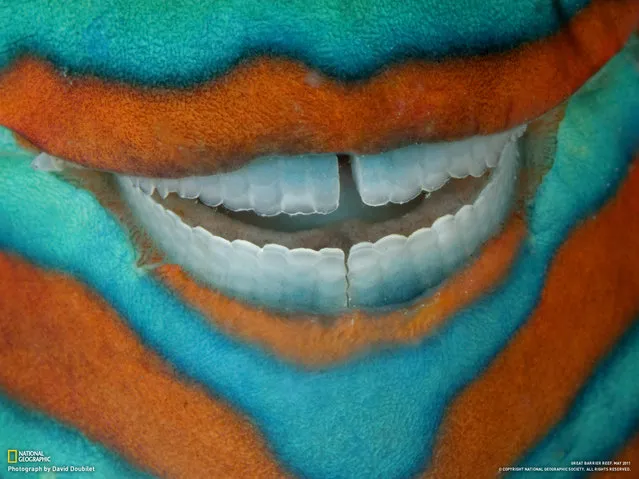
Photographers: David Doubilet

“David Doubilet (born 28 November 1946) is a well known underwater photographer known primarily for his work published in National Geographic Magazine. He was born in New York and started taking photos underwater at the young age of 12. He started with a Brownie Hawkeye in a rubber anesthesiologist's bag to keep the water out of the camera. During his summer holidays, he spent his time along the New Jersey coast. He later worked as a diver and photographer for the Sandy Hook Marine Laboratories in New Jersey. He also spent much time in the Caribbean. While a dive instructor in the Bahamas he found his motivation to capture the beauty of the sea and everything in it”. – Wikipedia. (Photo by David Doubilet/National Geographic)
Details
16 May 2012 12:21:00
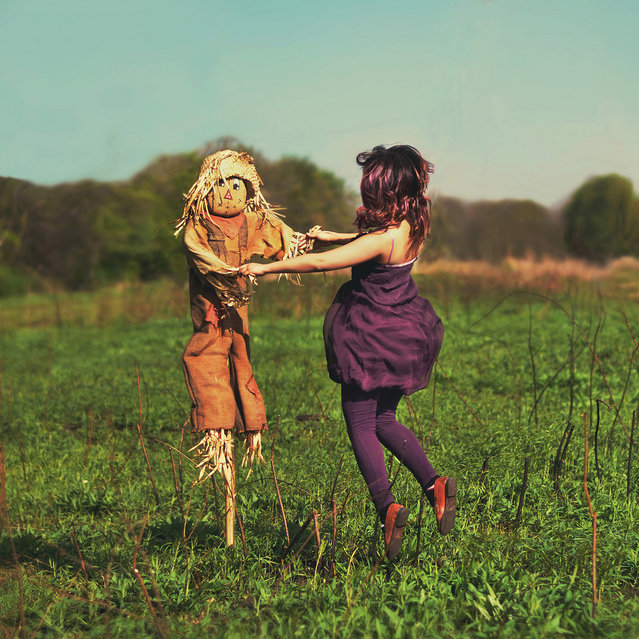
If I Only Had a Brain (365 project). (Glenda Lissette)

We received intriguing letter: “Hello! My name is Glenda Lissette, I am an 18 year old photographer from Chicago, IL. I produce surreal and conceptual photographs. I am currently working on a project where I take a photo a day for an entire year”. Well, let's look!

Photo: “If I Only Had a Brain” (365 project). (Photo by Glenda Lissette)


Details
20 Nov 2012 11:55:00
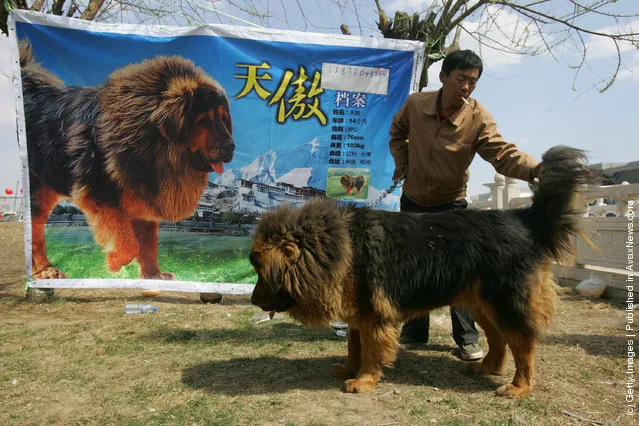
Tibetan Mastiff

“The Tibetan Mastiff also known as Do-khyi (variously translated as “home guard”, “door guard”, “dog which may be tied”, “dog which may be kept”), reflects its use as a guardian of herds, flocks, tents, villages, monasteries, and palaces, much as the old English ban-dog (also meaning tied dog) was a dog tied outside the home as a guardian. However, in nomad camps and in villages, the Do-khyi is traditionally allowed to run loose at night and woe be unto the stranger who walks abroad after dark”. – Wikipedia

Photo: A man displays a Tibetan Mastiff he raised during the Tibetan Mastiff exposition on April 7, 2007 in Langfang of Hebei Province, China. (Photo by China Photos/Getty Images)

Details
05 Oct 2011 14:27:00