Loading...
Done
A P-51 Mustang named “Charlotte's Chariot” from the Southern Heritage Air Foundation flies past a cloud of smoke and fire from a nearby battle reenactment during the Wings Over Houston Airshow in Houston, on Saturday, November 1, 2014. Battle reenactments are part of the yearly show held at Ellington Airport. (Photo by Kar Hlava/AP Photo/Bay Area Citizen)

A P-51 Mustang named “Charlotte's Chariot” from the Southern Heritage Air Foundation flies past a cloud of smoke and fire from a nearby battle reenactment during the Wings Over Houston Airshow in Houston, on Saturday, November 1, 2014. Battle reenactments are part of the yearly show held at Ellington Airport. (Photo by Kar Hlava/AP Photo/Bay Area Citizen)
Details
08 Nov 2014 12:47:00


The golden monkey (Cercopithecus kandti) is a species of Old World monkey found in the Virunga volcanic mountains of Central Africa, including four national parks: Mgahinga, in south-west Uganda; Volcanoes, in north-west Rwanda; and Virunga and Kahuzi-Biéga, in the eastern Democratic Republic of Congo. It is restricted to highland forest, especially near bamboo.
Details
07 May 2012 04:39:00
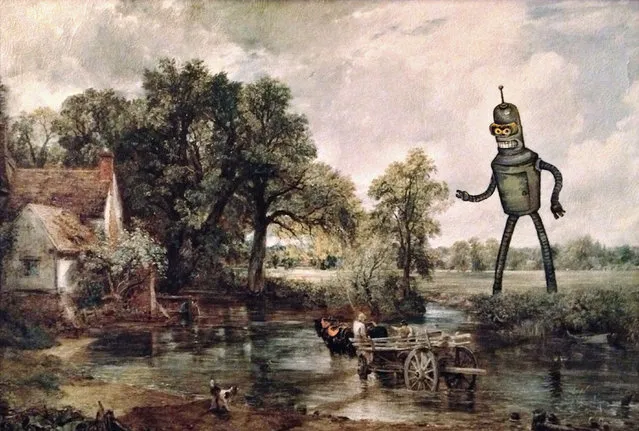
“John Constables's «The Hay Wein» meets «Bender» from «Futurama»”. (Photo and caption by Dave Pollot/Caters News)

“John Constables's «The Hay Wein» meets «Bender» from «Futurama»”. (Photo and caption by Dave Pollot/Caters News)
Details
07 Mar 2014 10:05:00
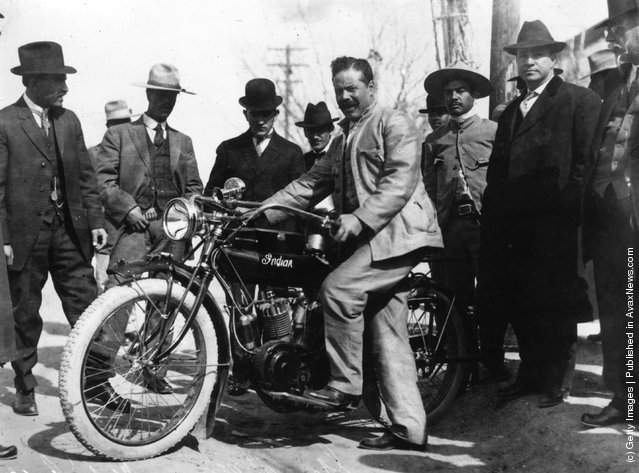
1914: Mexican rebel leader Francisco 'Pancho' Villa (1877-1923) with one of the motorcycles used in the Battle of Torrero

“José Doroteo Arango Arámbula (5 June 1878 – 20 July 1923) – better known by his pseudonym Francisco Villa or its hypocorism Pancho Villa – was one of the most prominent Mexican Revolutionary generals”. – Wikipedia

Photo: Mexican rebel leader Francisco “Pancho” Villa with one of the motorcycles used in the Battle of Torrero. (Photo by Topical Press Agency/Getty Images). August 1914
Details
11 Nov 2011 10:07:00
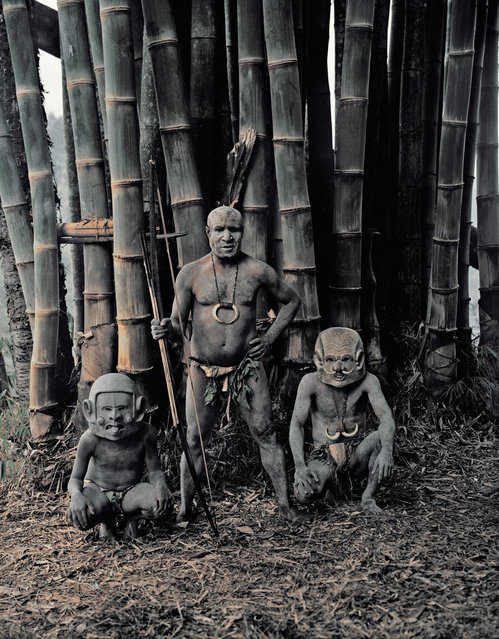
“Asaro from the Eastern Highlands”. The mudmen could not cover their faces with mud because the people of Papua New Guinea thought that the mud from the Asaro river was poisonous. So instead of covering their faces with this alleged poison, they made masks from pebbles that they heated and water from the waterfall, with unusual designs such as long or very short ears either going down to the chin or sticking up at the top, long joined eyebrows attached to the top of the ears, horns and sideways mouths. (Jimmy Nelson)

“Asaro from the Eastern Highlands”. The mudmen could not cover their faces with mud because the people of Papua New Guinea thought that the mud from the Asaro river was poisonous. So instead of covering their faces with this alleged poison, they made masks from pebbles that they heated and water from the waterfall, with unusual designs such as long or very short ears either going down to the chin or sticking up at the top, long joined eyebrows attached to the top of the ears, horns and sideways mouths. (Photo and caption by Jimmy Nelson)
Details
20 Oct 2013 08:54:00


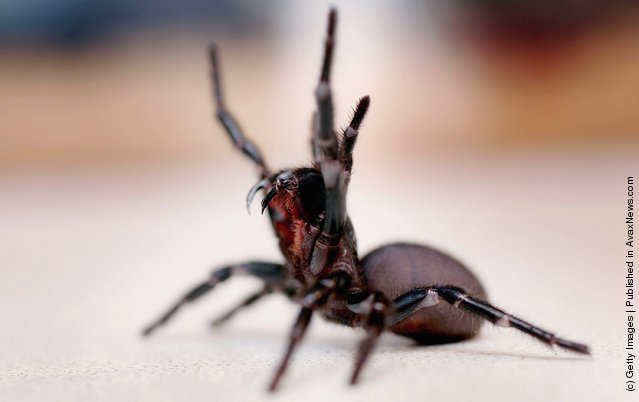
A Funnel Web spider is pictured at the Australian Reptile Park January 23, 2006 in Sydney, Australia. The Funnel Web is one of Australia's deadliest animals, with a venom that is packed with at least 40 different toxic proteins. A bite from a Funnel Web causes massive electrical over-load in the body's nervous system. Finally, fatalities occur from either heart attack or a pulmonary oedema, where the capillaries around the lungs begin to leak fluid and the patient effectively drowns. Death can come as quickly as two hours after a bite if no medical treatment is sought. Due to advances in anti-venom, there has been no death from a Funnel Web bite in Australia since 1980. Australia is home to some of the most deadly and poisonous animals on earth. (Photo by Ian Waldie/Getty Images)
Details
25 Apr 2011 07:49:00


Two drunk race-goers make their way home after the last race of the third day of the Royal Ascot horse racing week June 19, 2003 in Ascot, England. (Photo by Scott Barbour/Getty Images)
Details
07 May 2011 08:54:00


A British policewoman chasing after a group of naked street boys by the Serpentine in Hyde Park, London. (Photo by Reg Speller/Getty Images). 1926
Details
23 Jul 2011 12:43:00