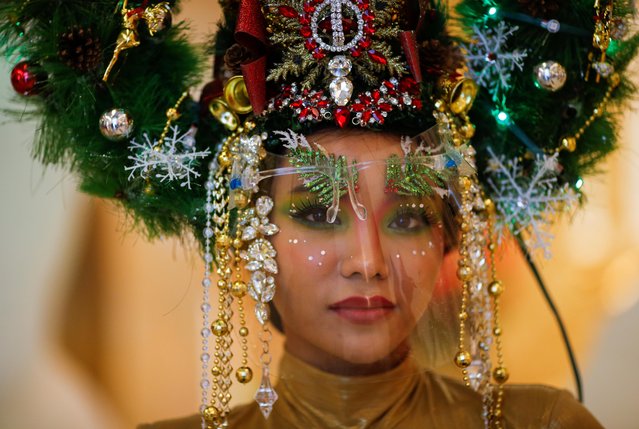
A performer wears a face shield at a shopping center on New Year's Eve during the coronavirus disease (COVID-19) outbreak, in Bangkok, Thailand on December 31, 2020. (Photo by Soe Zeya Tun/Reuters)
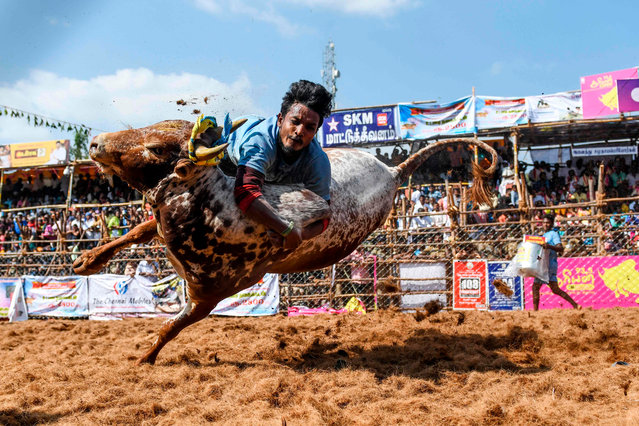
A participant jumps trying to control a bull during the annual bull taming “Jallikattu” festival in Palamedu village on the outskirts of Madurai in the southern Indian state of Tamil Nadu on January 16, 2020. (Photo by Arun Sankar/AFP Photo)
A girl carries bottles of water filled from a charity tank at a camp for internally displaced people (IDPs) near Sanaa, Yemen on March 25, 2022. (Photo by Khaled Abdullah/Reuters)
Egyptian 26-year-old dancer Nadine El Gharib, dances on the rooftop of her home in Cairo, Egypt, Monday, September 27, 2021. “Dance was crucial when COVID-19 started in terms of taking care of my well-being”, Gharib said. “When restrictions forced us to stop going to the Opera for classes I started online dance and it introduced me to a new world of dance. It was very inspiring”. (Photo by Nariman El-Mofty/AP Photo)
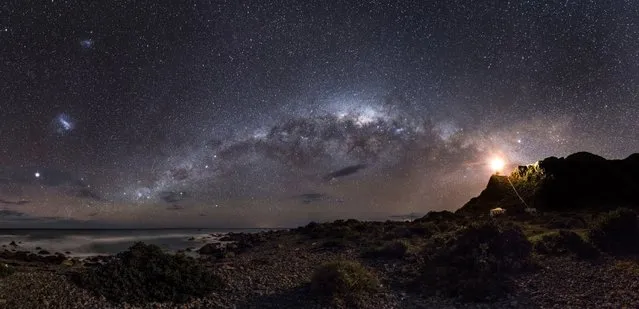
The Royal Observatory just announced its Astronomy Photographer Of The Year 2013 winners. Australian photographer Mark Gee was chosen among a thousand amateur and professional photographers around the globe to win the top title. His work is part of an exhibition of the winning photographers, which opened on Sept. 19 at the Royal Observatory Greenwich. The Royal Observatory shared with us the winners and notable mentions of the competition. Their descriptions of the prizewinners can be found below the images.
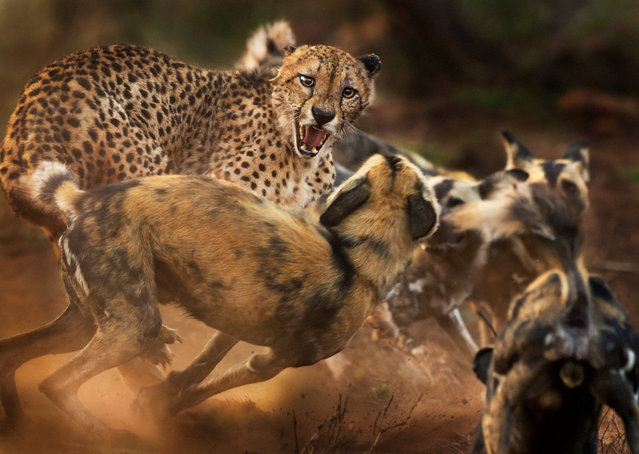
A lone male cheetah is set upon by a pack of African wild dogs. Peter Haygarth had been following the dogs as they hunted in Zimanga Private Game Reserve in KwaZulu-Natal, South Africa. On first encountering the cheetah, the dogs were wary, but as the rest of the pack arrived, their confidence grew and they began to encircle the cat. Peter kept his focus on the cat’s face. In a few minutes the spat was over as the cheetah fled. (Behaviour: mammals category). (Photo by Peter Haygarth)
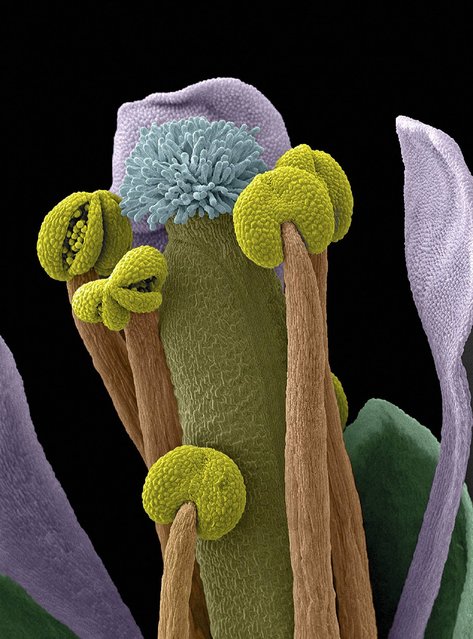
Beautiful, strange and occasionally alarming pictures from the shortlist for this year’s Wellcome image awards – which celebrate the very best in science photography and imaging – from an x-ray of a bat to a micrograph of a kidney stone. The exhibition opens on 12 March at three science centres and the Museum of Science and Industry in Manchester. Photo: Scanning electron micrograph (SEM) of an Arabidopsis thaliana flower, also commonly known as thale cress. Some of the anthers are open, revealing pollen grains ready for dispersal. Arabidopsis was the first plant to have its entire genome sequenced and is widely used as a model organism in molecular and plant biology. Horizontal width of image is 1200 microns. Magnification 100x. (Photo by Stefan Eberhard/Wellcome Images)