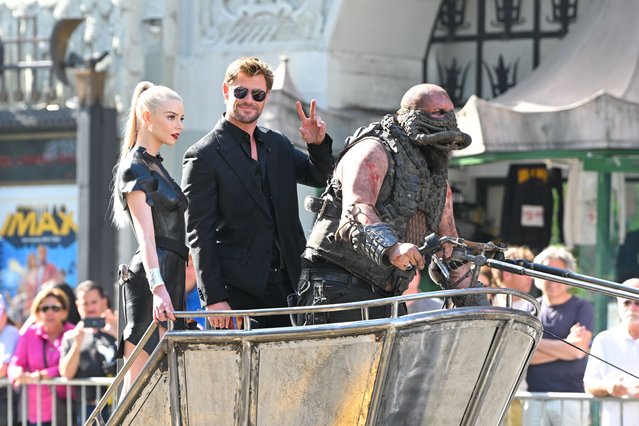
American actress Anya Taylor-Joy and Australian actor Chris Hemsworth are seen on May 08, 2024 in Los Angeles, California. (Photo by PG/Bauer-Griffin/GC Images)
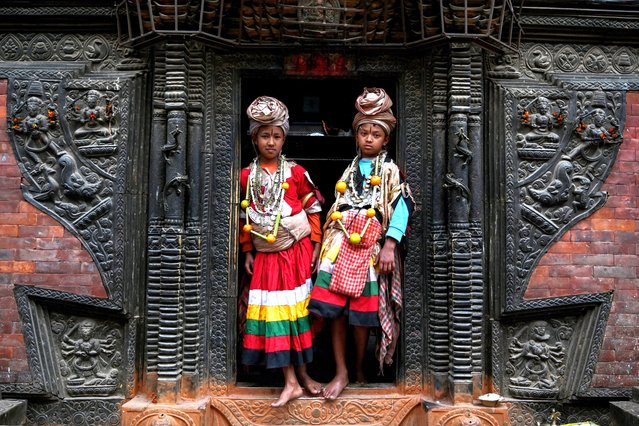
Traditional dancers with their masks look on before their performance during “Nawa Durga Nach” Hindu dance festival in Bhaktapur on the outskirts of Kathmandu on March 28, 2024. (Photo by Prakash Mathema/AFP Photo)
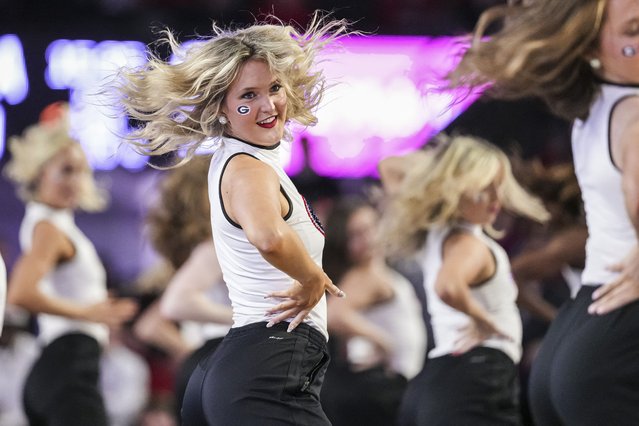
A Georgia Bulldogs dancer on the court during the game against the Oklahoma Sooners during the second half at Stegeman Coliseum in Athens, Georgia on January 11, 2025. (Photo by Dale Zanine/USA Today Sports)
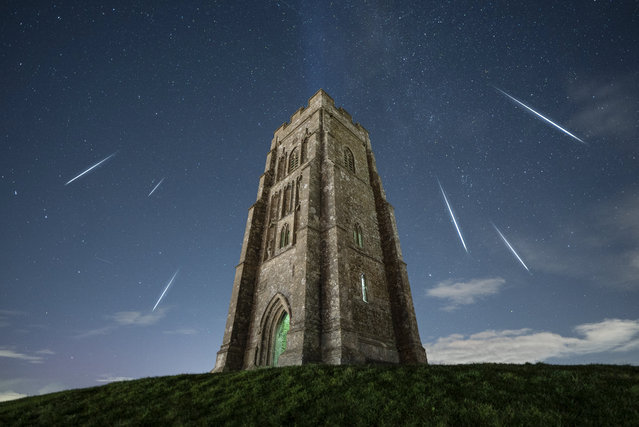
An amazing photo shows a rare meteor shower captured from Glastonbury Tor, UK. Astrophotographer Josh Dury took the photo when the skies cleared for 30 minutes in the early hours of the morning on January 4, 2024. Josh said the Quadrantids meteor shower is an active shower where up to 100 meteors can be seen per hour, although it only peaks for a few hours during January. He said that meteor showers are produced by debris left over from comets – but what produces the meteors during the Quadrantids meteor shower is unknown. (Photo by Josh Dury/South West News Service)
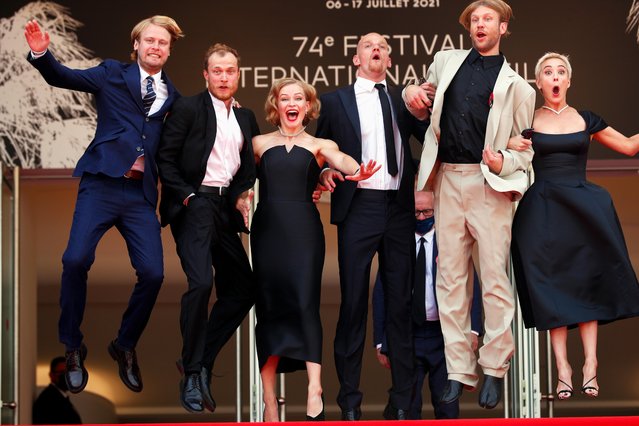
(L-R) Russian actor Semyon Serzin, Russian actor Yuriy Borisov, Russian actress Yuliya Peresild, Russian actor Yuri Kolokolnikov, Russian actor Ivan Dorn and Russian actress Chulpan Khamatova jump as they arrive for the screening of the film “Petrov's Flu” at the 74th edition of the Cannes Film Festival in Cannes, southern France, on July 12, 2021. (Photo by Johanna Geron/Reuters)
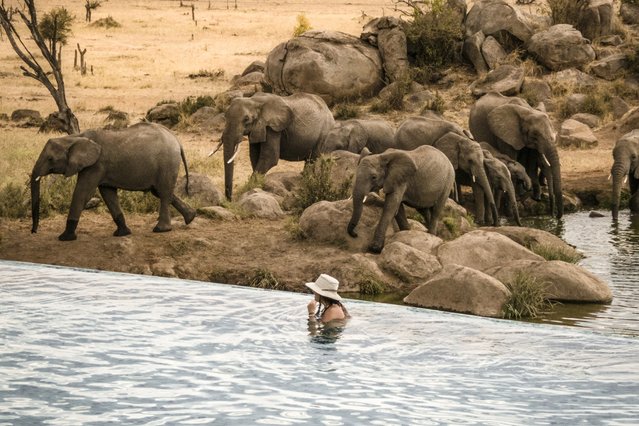
World's Greatest Swimming Pools: Four Seasons, Serengeti Pool, Tanzania. A show of elephants, buffalo and baboons awaits thanks to an active watering hole below the free-form infinity pool at this plush hideaway inside Serengeti National Park. Bonus: Because of infrared technology at the hole, guests can be notified on their bedroom TV when animals are approaching. When you've got word of wildlife on the horizon, catch them from your private terrace – or head back to the pool. (From $1,650). (Photo by Four Seasons)
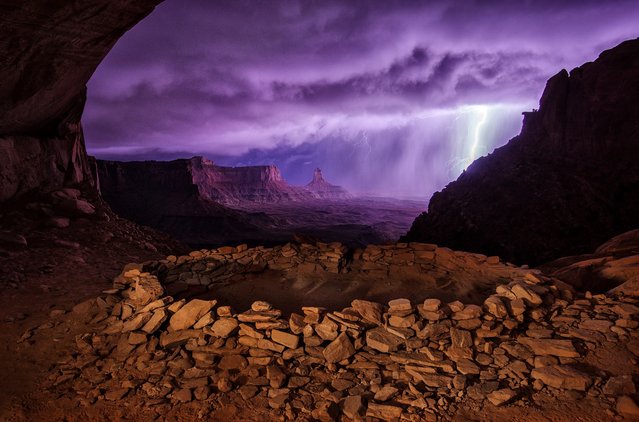
Second Place Winner: “Thunderstorm at False Kiva”. I hiked out to these ruins at night hoping to photograph them with the Milky Way, but instead a thunderstorm rolled through, creating this dramatic image. – Max Seigal. National Geographic Traveler Director of Photography Dan Westergren, one of this year's judges, shares his thoughts on the second place winner: “This photo combines two different scenes into one: the small kiva in a cliff dwelling and the grand vista of Canyonlands National Park across the valley. I really like the two different color palettes – warm inside and purple outside. This two-for-one scene was caused by the lightning storm outside the dwelling, which lit up the landscape like it was a huge electronic flash. Looking at this picture I can imagine what a wonderful sight it must have been for the ancient people who lived here. It doesn't seem too amazing now in our modern world, but might have been mind-blowing for the prehistoric residents”. Location: Utah. (Photo and caption by Max Seigal/National Geographic Traveler Photo Contest)
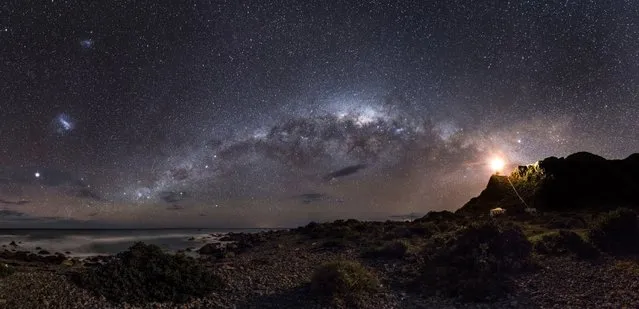
The Royal Observatory just announced its Astronomy Photographer Of The Year 2013 winners. Australian photographer Mark Gee was chosen among a thousand amateur and professional photographers around the globe to win the top title. His work is part of an exhibition of the winning photographers, which opened on Sept. 19 at the Royal Observatory Greenwich. The Royal Observatory shared with us the winners and notable mentions of the competition. Their descriptions of the prizewinners can be found below the images.