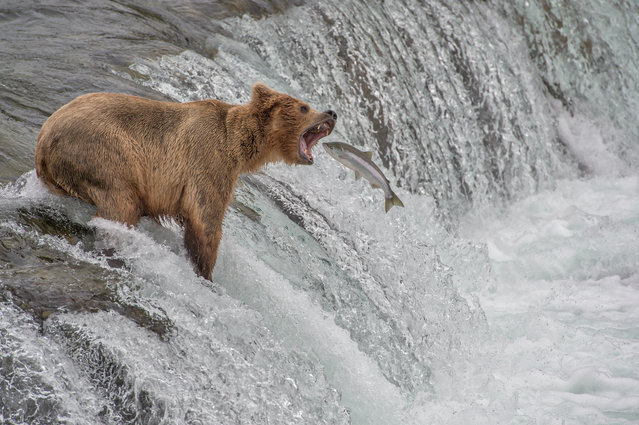
“Catch of the Decade”. Can you guess what happened next? Photo location: Katmai National Park, Alaska, USA. (Photo and caption by Aaron Baggenstos/National Geographic Photo Contest)
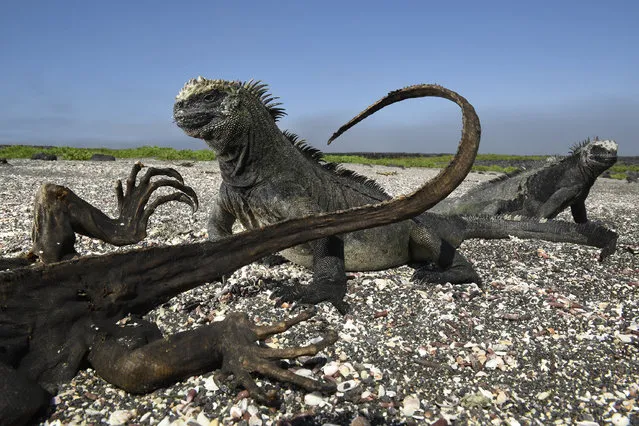
Galapagos – Rocking the Cradle: Four major ocean currents converge along the Galapagos archipelago, creating the conditions for an extraordinary diversity of animal life, April 25, 2016. The islands are home to at least 7,000 flora and fauna species, of which 97 percent of the reptiles, 80 percent of the land birds, 50 percent of the insects and 30 percent of the plants are endemic. (Photo by Thomas P. Peschak for National Geographic/World Press Photo)
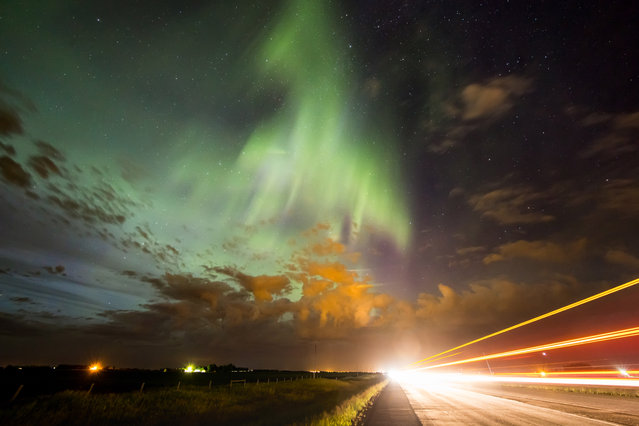
Neil Zeller's snaps were taken across Canada, where he photographs the northern lights dancing across a dark night sky. In one stunning shot, Zeller, 42, even manages to capture a flash of lightning beneath a storm cell while an aurora gives off a magnificent green glow. The photographer, from Calgary, Alberta, describes himself as a night person, and became interested in night photography about 10 years ago. (Photo by Neil Zeller/Caters News)
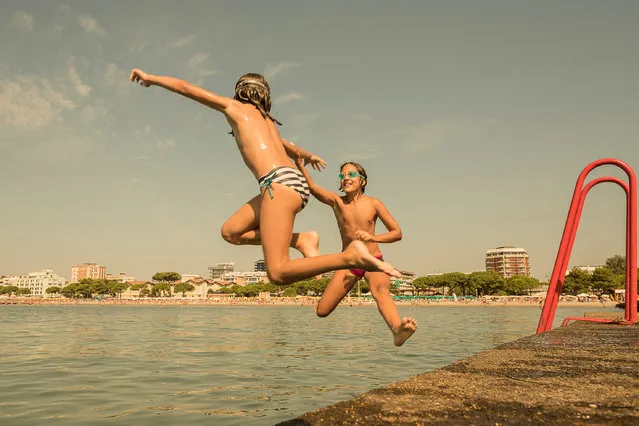
Andrea Rossato, Italy. Professional; Candid. Children enjoy the simple pleasures of a seaside holiday. (Photo by Andrea Rossato/Sony World Photography Awards)
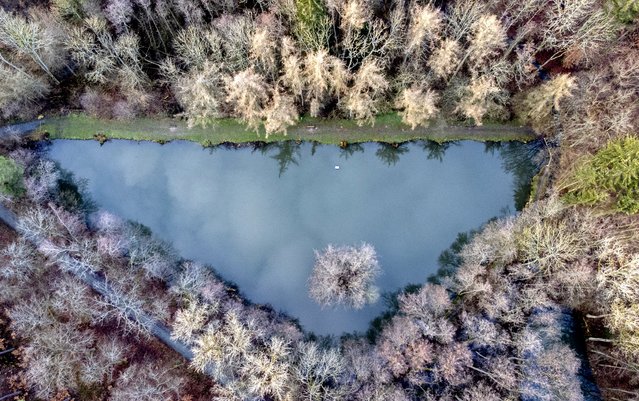
A tree stands in a lake in Usingen near Frankfurt, Germany, Wednesday, March 22, 2023, the World Water Day. World Water Day was established in 1992 by the United Nations to spread awareness about the water condition all over the world. (Photo by Michael Probst/AP Photo)
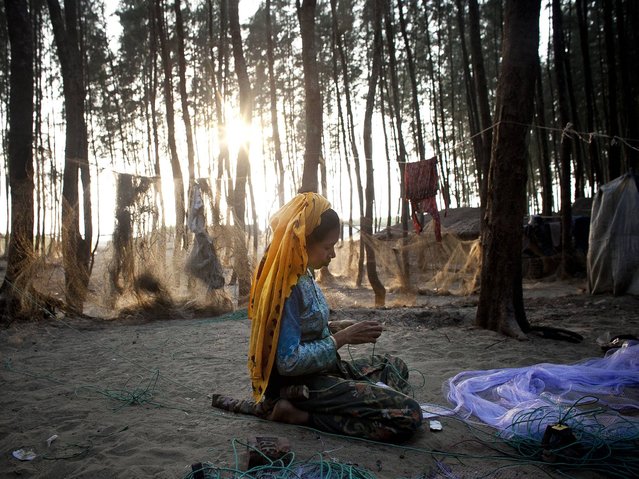
32 year old Mahada Khatum repairs a fishing net outside her home in the Shamalapur Rohingya refugee settlement on April 11, 2014 in Chittagong district, Bangladesh. Some years ago she escaped violence and discrimination from the Zomgara Baharchara village in the Meherulla district of Myanmar. (Photo by Getty Images/Stringer)
The eruption of Cordon Caulle began on June 4, 2011, located in the Region of Los Rios in Chile. For about 12 months, people and animals became accustomed to living with the daily fall of ash, which also caused problems in the air traffic in South America. The explosions and lightning during first days of the eruption could be seen from hundreds of miles around. This photograph was taken on the second night of eruption from the town of Lago Ranco. (Photo and caption by Francisco Negroni/National Geographic Traveler Photo Contest)
ATTENTION! All pictures are presented in high resolution. To see Hi-Res images – just TWICE click on any picture. In other words, click small picture – opens the BIG picture. Click BIG picture – opens VERY BIG picture.
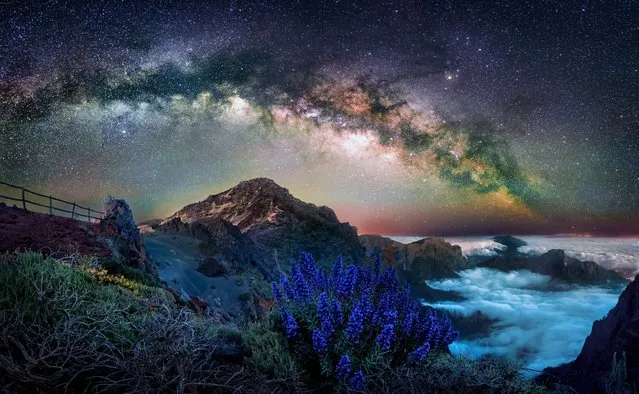
Tony North; First place, Breathing Spaces; Overall Winner; Blue Tajinaste, La Palma, Canary Islands, Spain. “Echium thyrsiflorum is endemic to the mountains of La Palma island – from high up, there was a magnificent view of both the caldera below, and the stars above. The Unesco La Palma biosphere reserve encompasses the entire island, with the Caldera de Taburiente containing mountains with a highest peak of 2,426 metres – the Roque de los Muchachos”. (Photo by Tony North/IGPOTY)